Rouages: With the Nagoya Protocol, “contributing to the conservation of biodiversity”
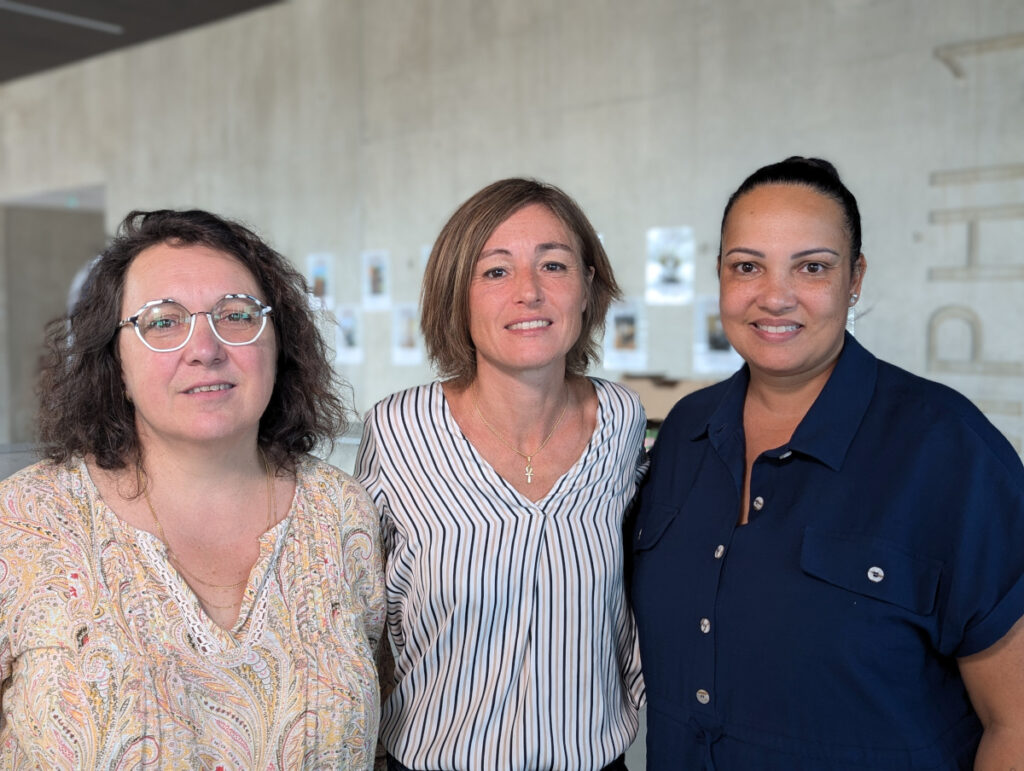
Océane Trevennec works at the Dipa. Together with Agnès Mignot, vice president in charge of streamlining research and monitoring national programs, they form the APA unit. This month, as part of the video series “ Rouages ,” whose new season is dedicated to careers in research, they explain their efforts to raise awareness and provide training on compliance with the Nagoya Protocol. Action!
“The Nagoya Protocol is an international agreement that France has ratified—that is, agreed to implement—for both research Professors s going abroad and those working in France, ” begins Agnès Mignot, vice president for research streamlining and monitoring of national programs. “The goal of this protocol is to preserve biodiversity and minimize biopiracy as much as possible.”
These clarifications are essential because these regulations require researchers and research support services to take certain steps before heading out into the field.“It is now essential to obtain the consent of the country that holds the resource on which we intend to work and to reach an agreement with that country on the sharing of benefits that may result from the use of that resource,” continues the vice president, who is also a researcher atthe Institute of Evolutionary Sciences.
The APA Unit
To support researchers in this process, the university has an APA unit dedicated to: access to genetic resources and the fair and equitable sharing of benefits arising from their use. The unit includes the vice president for research streamlining, as well as Océane Trevennec, an agronomist by training, and Joanna Boulon-Bertrand, who are affiliated with the Office of Innovation and Partnerships (DIPA) and the Office of Research and Doctoral Studies (DRED), respectively.
“To carry out our initiatives, we’ve established a network of people who serve as liaisons in each research unit and act as a point of contact for us, both to raise awareness among research teams and to assist them with administrative procedures,”explains Océane Trevennec. These liaisons include faculty members and researchers Professors, administrative staff, as well as unit directors and assistant unit directors.
The Missions
This APA unit has several responsibilities.“The first is to monitor legal developments at the international, European, and national levels, in coordination with the various ministries,” continues Océane Trevennec. “The second involves establishing a support process for research teams that includes awareness-raising, training, and the implementation of tools. The third is coordinating and liaising with APA units at other research organizations.”
To carry out these tasks, an inter-institutional committee meets three times a year. Training sessions have also been provided to designated liaisons in the research units and extended to all staff members who wish to learn more about the protocol.“We have also offered doctoral schools training for doctoral students— doctoral researchers —so that they are as well-informed as possible about these regulations in their research,” adds Océane Trevennec.
The Challenges
The APA unit takes on added importance when one considers the challenges that can arise in implementing these regulations. “Many countries have regulations that are not yet in effect or are not yet operational. This can sometimes make it difficult to obtain all the necessary approvals for research projects.”
In fact, the requirements of the Nagoya Protocol can sometimes clash with the reality on the ground.“A researcher setting out on a project cannot predict with 100% certainty the exact day they will go out to collect samples; they don’t know exactly how many samples they will bring back,” explains Agnès Mignot. “Research is also a matter of opportunity.” ” These difficulties remain surmountable given the protocol’s ethical goal, namely “to contribute to the preservation of biodiversity.”