[LUM#3] Learn How to Garden Without a Garden
Growing a vegetable garden in an apartment? Yes, it’s possible—even if you don’t have a green thumb. How can you find organic, locally grown vegetables when you live in the city? This is a real problem for Nicolas Nardone.“The agricultural system isn’t suited to the urban population,” he laments.
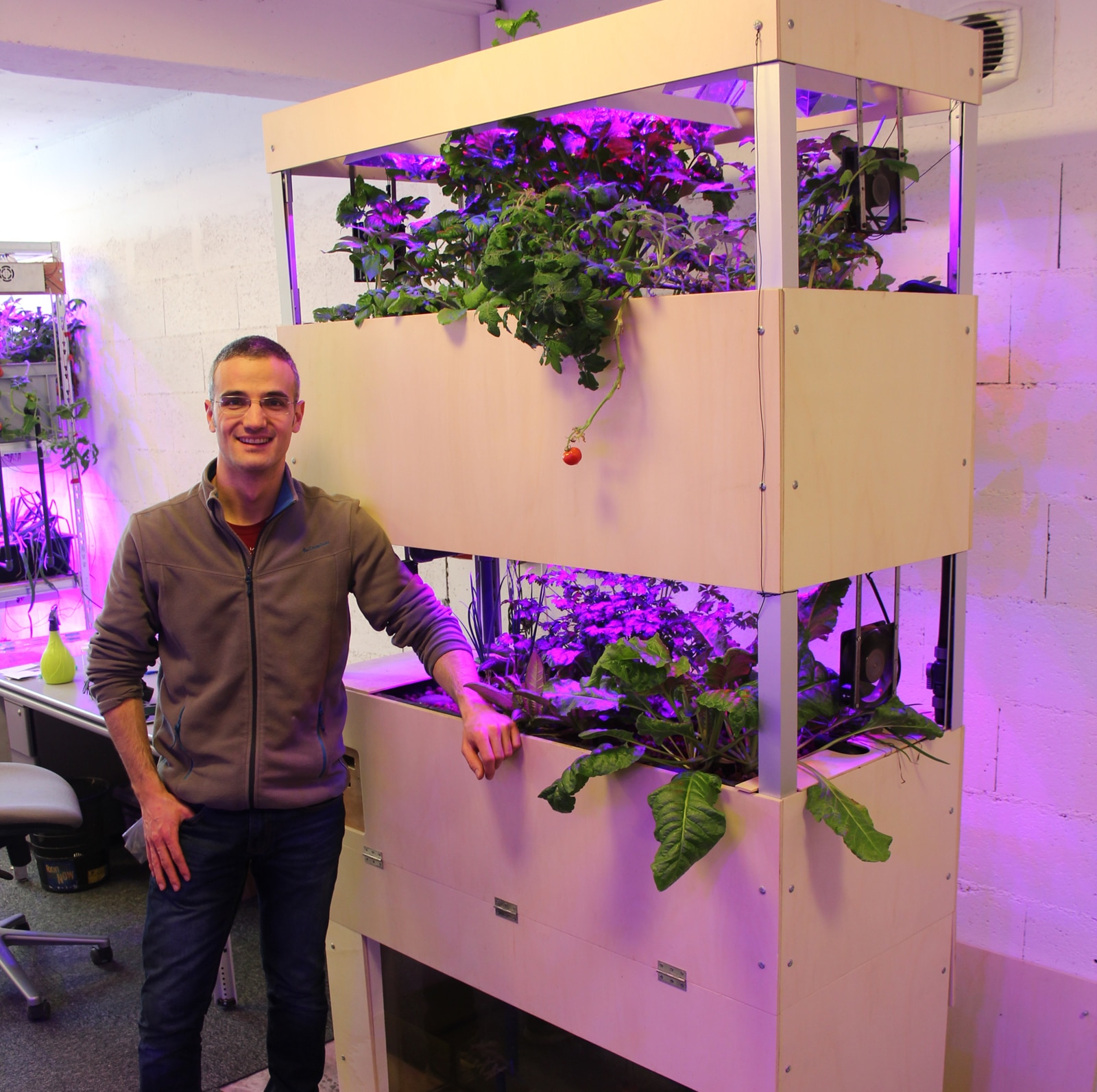
After 10 years in the IT industry, the former Polytech student wanted to develop“a new agricultural model in which anyone can be a producer.” That’s how Risebox was born.“Literally, it’s the box that grows”—a system that allows city dwellers to grow vegetables… in their apartments.
Box That Grows
From a distance, it looks like a stylish, decorative wooden shelf with a built-in aquarium. Up close, it’s a real ecosystem. “This indoor vertical garden is actually an aquaponic system, ” explains its designer. How does it work? The fish produce waste rich in ammonia. Bacteria convert this waste into nutrients, which are then used by the plants. Finally, the plants filter the water, which is returned to the fish. It’s a closed-loop system with nothing but benefits:“It uses very little water, the vegetables grow three times faster in less space, and best of all, they’re guaranteed organic.”
Vegetable Garden 2.0
Another advantage: even those who don’t have a green thumb can grow their own vegetables.“No need to water, weed, add fertilizer, or turn the soil,” explains Nicolas Nardonne. In fact, there’s not much to do at all, because the computer scientist and his business partner have made sure to equip the Risebox with sensors to make it completely self-sufficient.“The system automatically monitors parameters like light and pH. It can even switch to ‘autopilot’ mode to feed the fish and monitor the vegetables while you’re away.” This smart garden comes with a mobile app that lets you buy seeds and fish food directly, or share your experience with other urban gardeners.
Gift Basket
How much produce can the Risebox yield?“It’s the equivalent of a6-square-meter vegetable garden that would produce year-round as if it were the height of summer, which allows you to meet a significant portion of your vegetable needs,” replies Nicolas Nardonne.
Check out theUM podcasts, now available on your favorite platform (Spotify, Deezer, Apple Podcasts, Amazon Music, etc.).