STAPS: A Guaranteed Path to a Career!
With 700 first-year students enrolled for the 2017–2018 academic year, STAPS remains one of the most popular post-baccalaureate programs among students in Montpellier. In addition to the excellence of the education provided, the very high employment rate among its master’s students obviously plays a role.
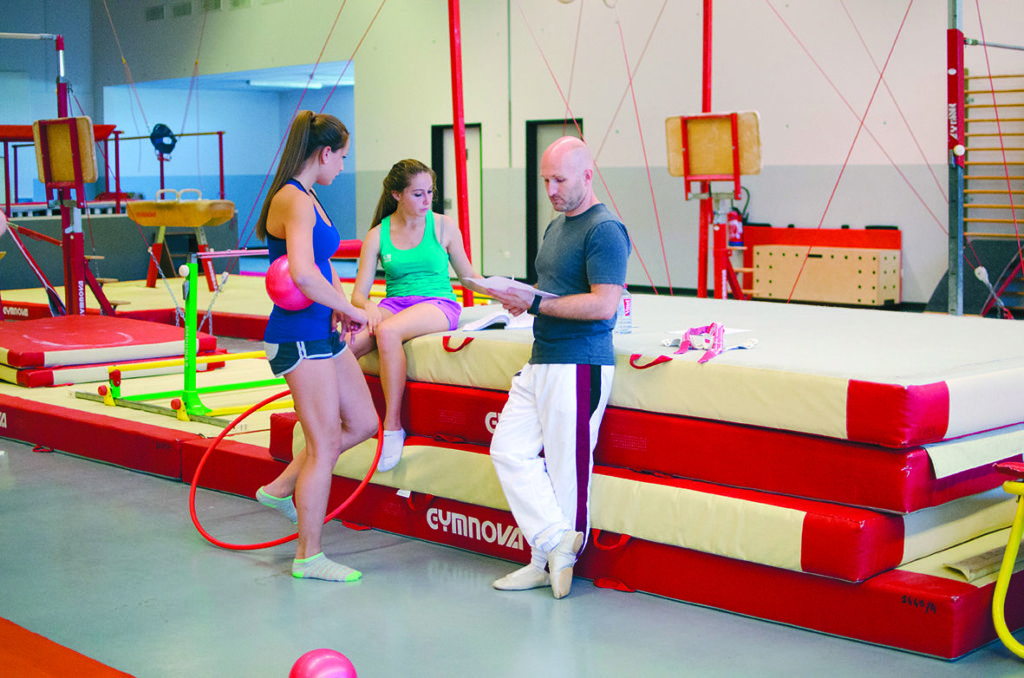
Photo © Miss Buffet Froid
The UFR STAPS (Sciences and Techniques of Physical and Sports Activities) in Montpellier was founded in 1976. At the time, the (single-sex) programs at what was known as the “UER d’EPS” were aimed exclusively at training physical education teachers. In 1980, the department moved into its own facilities on the Veyrassi campus in the northern part of the city. Despite the continuous growth in its enrollment, the department’s track record of successfully preparing students for their careers has remained consistently strong.
Professional Integration
It was in the 1980s that the STAPS academic units began to diversify their program offerings. A variety of programs—all still related to sports—such as “Adapted Physical Activity and Health,” “Sports Coaching,” “Sports Management,” “Education and Motor Skills,” and “Ergonomics” gradually emerged.
Today, no fewer than 11 master’s programs are offered at the UFR STAPS in Montpellier. This diverse range of career-oriented programs —one of the most diverse in France—clearly explains the exceptional employment rate among its master’s students: 93 percent. “We train students for virtually every career related to sports, which—in addition to being an essential component of well-being and quality of life—is and will remain an attractive sector in which people will want to invest. It’s such a vast sector that there will always be jobs to be found!” predicts Didier Delignières.
A Welcome Reform?
“Nationwide, the number of students enrolled in STAPS has doubled since 2007,” continues the dean ofthe STAPS department at the University of Montpellier. The president of the Conference of STAPS Directors and Deans attributes this situation specifically to the often distorted image that recent high school graduates have of the program: “Many enroll in STAPS thinking it’s the ‘easy’ program. But STAPS isn’t just about playing sports. While a third of the time is indeed devoted to physical activity, most of the time is spent acquiring theoretical knowledge while sitting at a desk!”
Because they do not have the appropriate profile for higher education, more than 60% of them now fail their first year atthe UFR STAPS Montpellier. This is an unacceptable situation for Didier Delignières, which he attributes largely to the random selection process that leaves it up to chance to determine which students truly belong in his lecture halls. “With the new university placement procedures, default or unjustified placements will quickly disappear!” says the dean of the UFR STAPS Montpellier.
Presented to the Council of Ministers on November 22, 2017, the “Student Guidance and Success” bill— currently being considered by Parliament—aims, among other things, to eliminate the random selection process in order to reduce the failure rate in the first year of university. While its critics denounce it as a disguised form of “selection based on academic records” set to take effect as early as the start of the next academic year, Didier Delignières is eagerly anticipating it and predicts—perhaps as early as 2019—a success rate of around 70% at the UFR STAPS in Montpellier.
The Faculty Through a Student's Eyes
 Tevaiana Chauvel, a sophomore in the bachelor’s program, was elected to the management council of the UFR STAPS Montpellier
“I’ve always been passionate about handball, so it was only natural that I chose this sport as my major when I enrolled atthe UFR STAPS in Montpellier.
I want to become a sports event organizer and start working in this field as soon as possible. So I plan to pursue a professional bachelor’s degree (in management and development of organizations, sports, and recreational services) next year so that I’ll be both a graduate and ready to work by the end of 2019.”
Key Figures
- 2,200 students
- 70, Professors , and teachers
- 113 external speakers
- 93% employment rate after completing a master's degree
The Professional Bachelor's Degree: An Extra Advantage for Quick Entry into the Workforce
Professional bachelor’s degree programs allow students to acquire career-oriented training in just three years and enter the workforce immediately. This is due in large part to the significant number of teaching hours provided by outside professionals and the time spent on internships: up to 600 hours, compared to a maximum of 160 hours for the third year of a traditional bachelor’s program.