[LUM#12] A treatment that allows for both HIV and breastfeeding
How can you breastfeed your child if you’re HIV-positive without risking transmit HIV? Philippe Van de Perre, who has been working on this thorny issue for over 30 years, has developed a protocol that drastically reduce the risk of transmission through breast milk.
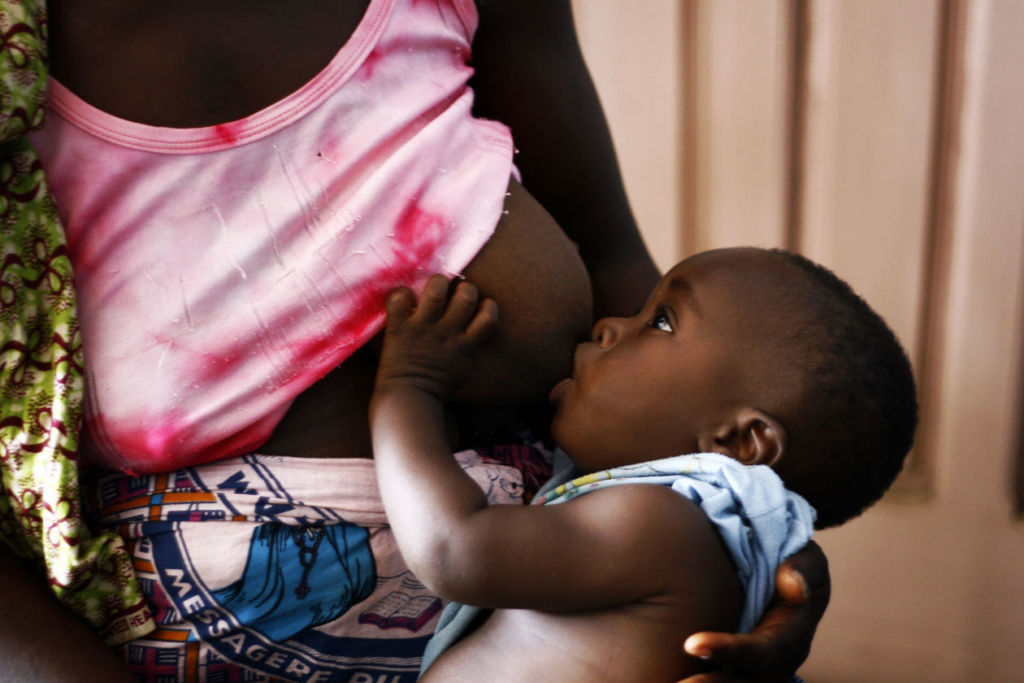
Every year, 160,000 newborns are infected with the AIDS virus, mainly in Africa. While that number is three times lower than it was 20 years ago, it is still 160,000 too many for Philippe Van de Perre. The virologist was the first to demonstrate, in 1991, that the virus can be transmitted from mother to child during breastfeeding. “At the time, we were monitoring 212 mothers and their babies in Rwanda, all of whom were HIV-negative at birth. Sixteen months later, 15 mothers had become HIV-positive, as had 8 children.” The only possible explanation: HIV had been transmitted to the infants through breast milk.
Contamination through breast milk
“In one-third of cases, HIV infection in infants results from transmission of the virus during childbirth, and in the other two-thirds, during breastfeeding,” explains Philippe Van de Perre. Without treatment, an infant breastfed by an HIV-positive mother has a 30% risk of contracting HIV. This is a major concern, given that without medical care, the mortality rate among infected children reaches 50% during their first year of life. Following these findings,the World Health Organization decided to recommend that women infected with HIV avoid breastfeeding when a safe alternative is available. “This recommendation is impossible to implement in most African countries for various reasons, whether due to cultural pressure, the cost of infant formula, or access to safe drinking water…,” explains the specialist.
So how can HIV-positive women breastfeed their babies without risking transmission? As a first step, researchers began giving mothers a treatment designed to eliminate viral particles from breast milk. “Thanks to this treatment, in most cases, we no longer detect the virus in the breast milk,” explains Philippe Van de Perre.“ But despite the mothers’ treatment, many children continued to contract HIV.”
While researchers have observed that many breastfeeding mothers do not take their medication consistently—which limits its effectiveness—that is not the only explanation. “We also discovered that, in addition to viral particles, breast milk contains cells infected with the virus—cells that are not eliminated by antiretroviral treatment and can transmit the infection to infants,” reveals Philippe Van de Perre.
No side effects
In light of this discovery, the virologist and his team are proposing a new treatment strategy: administering antiretroviral therapy directly to the baby, in addition to the treatment taken by the mother. “It’s a simple pediatric syrup given to the child; the treatment is very well tolerated, and we haven’t observed any side effects. And the results speak for themselves: with this new protocol, the infection rate among babies drops to less than 1%!”
Since December 2019, Philippe Van de Perre has been leading a program in Zambia and Burkina Faso—the only one of its kind in the world—aimed at optimizing the prevention strategy recommended bythe WHO. During routine vaccination visits for newborns aged 6 to 8 weeks, researchers perform an HIV screening test on all mothers and their babies. “If a mother is found to be HIV-positive and her baby is not infected, the mother is prescribed antiretroviral therapy, or her treatment is intensified if she is already on it. Treatment is also prescribed for the child until the end of breastfeeding.” This very early screening must be accompanied by an information campaign: “To be effective, treatment must be strictly followed; it is therefore crucial to inform the mother about the risk of transmission to her baby if she stops treatment.”
This ongoing study is being closely monitored by the WHO, which may soon issue new official recommendations to ensure that this protocol is implemented worldwide. “Between this so-called ‘catch-up’ protocol and the new vaccination strategy currently being developed ( see the box below), we can now envisage eliminating mother-to-child transmission of HIV.”
Toward a "Vaccination" Strategy
They are called neutralizing monoclonal antibodies. “These are human antibodies that are capable of preventing HIV replication ,” explains Philippe Van de Perre. A single injection of these antibodies could provide protection against potential infection for 4 to 6 months. “In regions of the world where HIV is widespread, particularly among young women, we aim to administer an injection of these antibodies to all newborns at birth, then at 4 months, 8 months, and 12 months if the child is still being breastfed.”
This program also applies to babies whose mothers are not infected with HIV at birth: “In fact, if she contracts the virus while breastfeeding, the newborn is at very high risk of exposure. By administering an injection regardless of the mother’s HIV status, we protect all children.” This strategy, known as passive immunoprophylaxis, is already in Phase 2 trials to verify its safety in children.
Check out theUM podcasts, now available on your favorite platform (Spotify, Deezer, Apple Podcasts, Amazon Music, etc.).