A cool thingamajig
The goal of the “Le Bidule” project is to highlight ANR-funded research in order to promote science in innovative ways, fostering a dynamic dialogue between science and society.
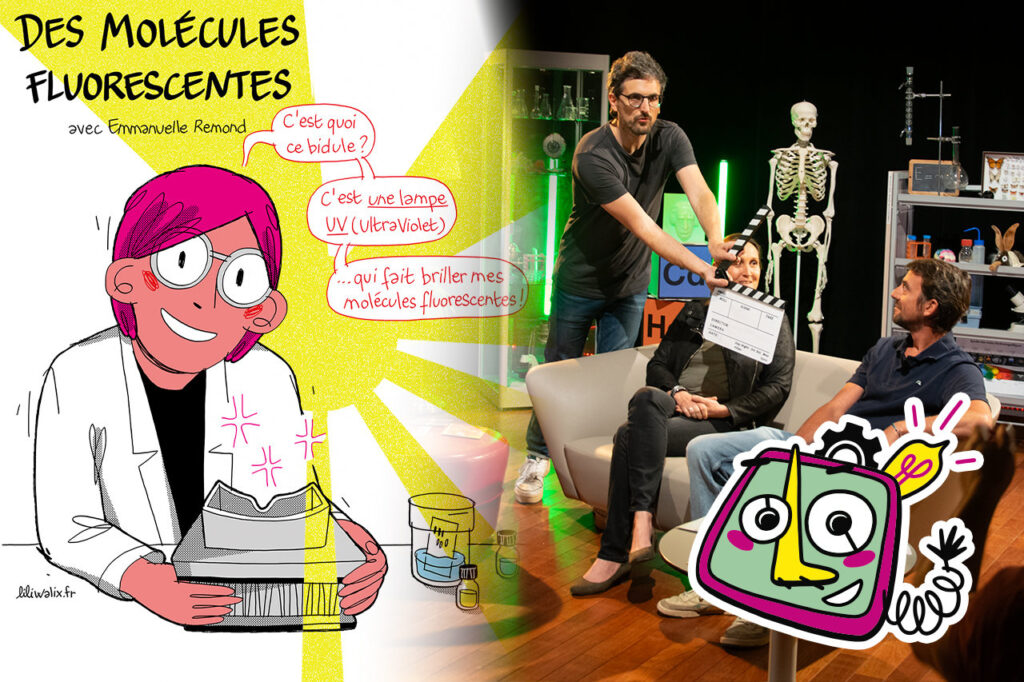
But what exactly is this “thingy”? Whether electronic, plastic, acoustic, or atomic, the “thingy” is a scientific object generally unknown to the general public. But could you guess what the researcher using it does? That’s the challenge posed by “Le Bidule,” a science outreach project launched at the University of Montpellier that“aims to highlight research funded by the National Agency for Research and Innovation ( Research ),” explains Julie Aubourg of the Science and Society Department at the University of Montpellier (UM), who has been leading the project since September 2023. For the first season of Le Bidule, 14 researchers who have received ANR funding will have their work shared with the general public.
How? First, with videos depicting a meeting between two scientists who know nothing about each other but must guess their counterpart’s field of research.“We give them an envelope containing a series of clues, a few keywords, and, of course, a photo of the thing in question,” explains Julie Aubourg. Each person then conducts their own investigation to try to determine the other’s research focus.
Make it easier to understand
“The first video was presented to the public during the Science Festival, and the audience also tried to figure out the researchers’ fields of study alongside the scientists themselves—they were eager to learn more,” notes Julie Aubourg, who took advantage of this event to showcase another approach chosen to highlight these projects: interactive illustrations that make research topics visually appealing and engaging. The goal: to make scientific projects easier to understand by making them accessible to everyone.
While these educational tools are designed for anyone interested in science, they are also aimed at high school students, and their teachers will be able to use them in class along with teaching guides and activity sheets.“All content will be available on the project’s website, where visitors can watch videos, view illustrations, explore interviews, and download related educational resources,” adds Julie Aubourg.
Following this first season, which focused on researchers who received ANR funding in 2018–2019, three more seasons will follow—in response to an ANR SAPS call for proposals in collaboration with partners INRAE, IRD, INSERM, and the Montpellier University Hospital—featuring more than forty researchers who will unveil their innovations to inspire others.
Social Media: @le.bidule.science – Instagram – TikTok– YouTube