[LUM#3] A battery that's full of zing
French researchers have developed an innovative prototype sodium-based battery. A revolution is on the horizon in the rapidly expanding world of batteries…
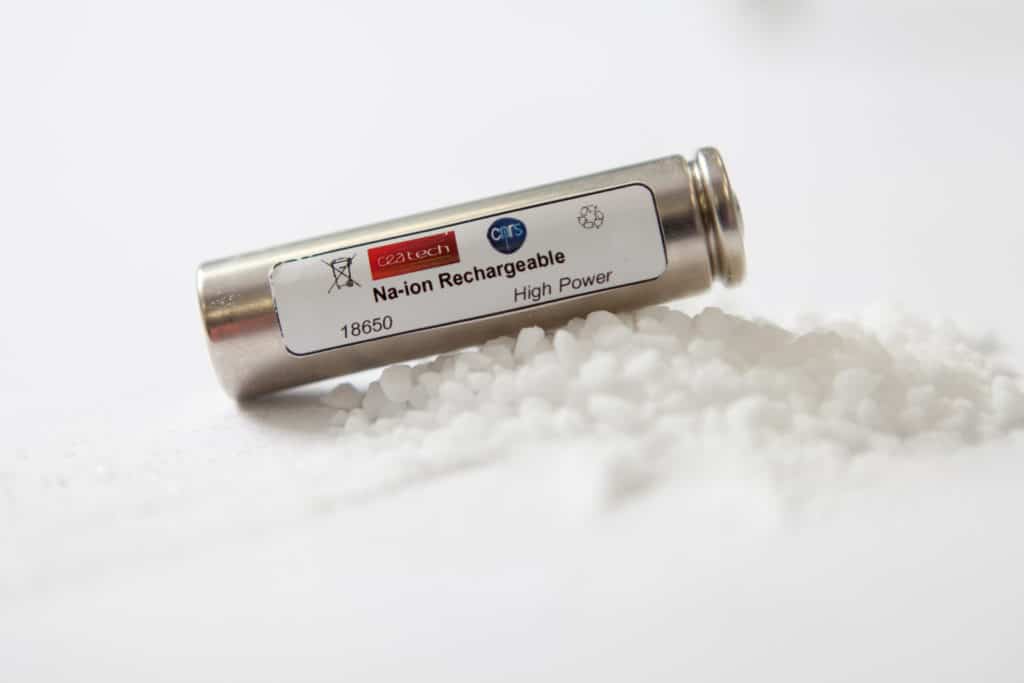
If your laptop boots up every morning smoothly and wirelessly, it’s thanks to this metal cylinder that’s 1.8 cm in diameter and 6.5 cm tall. These dimensions give it its nickname: 18650, a standard battery size. Except that this little cylinder is special—even revolutionary… Its secret?“It’s a battery that uses sodium ions,”explains Laure Monconduit, a researcher at the Charles Gerhardt Laboratory.
Currently, the batteries available on the market are made with lithium. The problem is that lithium, which is found in a few countries such as Colombia, Chile, and China, could become scarce. To avoid a potential shortage, a replacement had to be found: for several years now, this has been the focus of an open competition pitting scientists from around the world against one another.
“Sodium was the ideal candidate, ”notes Laure Monconduit. “This close cousin of lithium has equivalent chemical properties and is a thousand times more abundant on the Earth’s surface.” It is found, in particular, in the form of sodium chloride—also known as… salt. Much cheaper than lithium, it would make it possible to produce batteries at a lower cost.
Sodium vs. Lithium
After several months of intensive research, a group of French researchers has succeeded in developing a prototype sodium battery in the well-known 18650 industrial standard format.“With an energy density of 90 Wh/kg, its performance is still slightly lower than that of lithium batteries, but it is expected to improve,” the researcher notes.
Sodium batteries are already winning over manufacturers.“With their low production cost, they’re a very strong candidate for use in electric cars,” notes Laure Monconduit. In the future, they could also enable the storage of renewable energy. The commercial prospects are immense in a rapidly growing market that is expected to double in size in the coming years.
For more information:
- See also: Quitting Lithium
- Listen to the episode “A l’UM la science” (“Behind the Scenesof Science”), from the secrets of batteries to the geochemistry lab, with Marie-Liesse Doublet of the ICGM
The Energy of a Network
“French researchers are highly successful in the field of batteries; they file many patents, but unfortunately very few lead to industrial innovations,” notes Laure Monconduit. How can we help scientists turn their research into commercial success? By bringing research laboratories, public institutions, and industry together. This is the challenge taken up by the RS2E network, created in 2010.“This is the first time all these specialists have worked so closely together,” says Laure Monconduit. This successful synergy made it possible to produce the sodium-ion battery prototype, developed at the CEA, in less than six months.
The RS2E network brings together 17 CNRS/university research units, 14 industrial partners, and three public institutions (CEA, IFPEN, and INERIS).
Check out theUM podcasts, now available on your favorite platform (Spotify, Deezer, Apple Podcasts, Amazon Music, etc.).