A New Lease on Life for “The Thau Lagoon and Mount Saint-Clair”
The painting “The Thau Lagoon and Mount Saint-Clair,” on display at the Coastal Environment Marine Station in Sète, has undergone a restoration that has literally restored the original dimensions of this work by Montpellier-based painter Max Leenhardt. Marie Connan, a conservator and restorer of paintings who was part of the team of professionals that carried out this project, explains the steps involved in this delicate work.
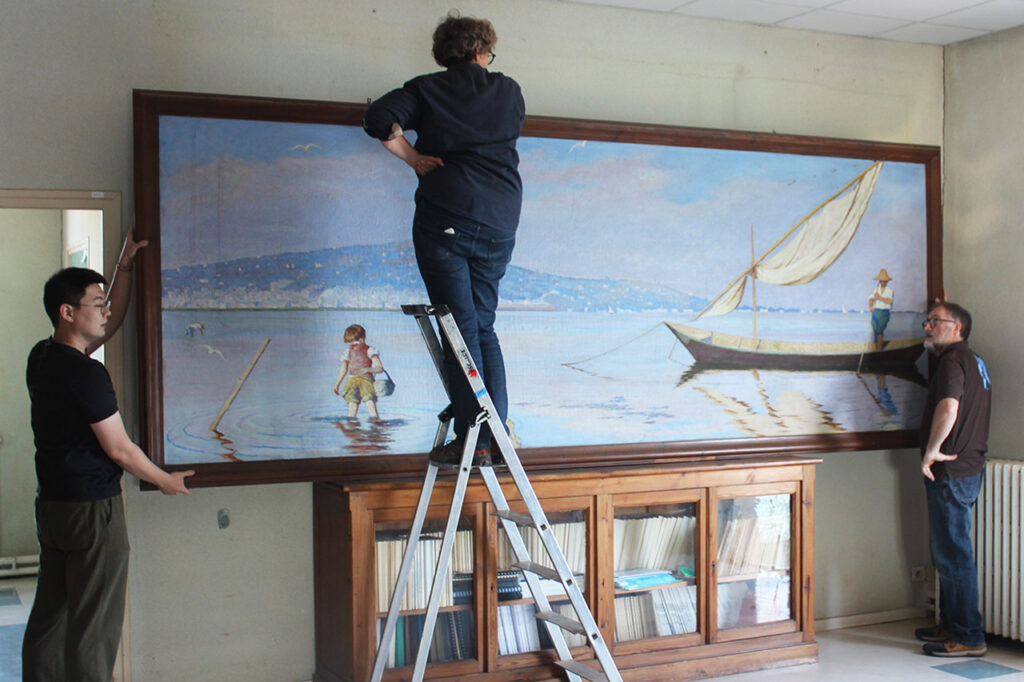
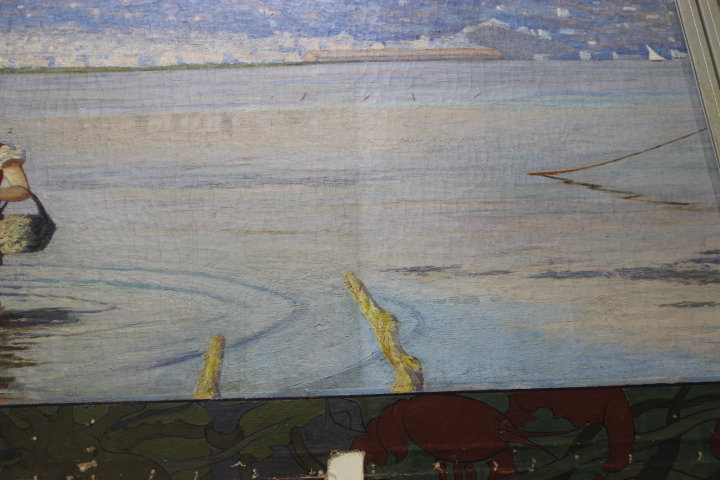
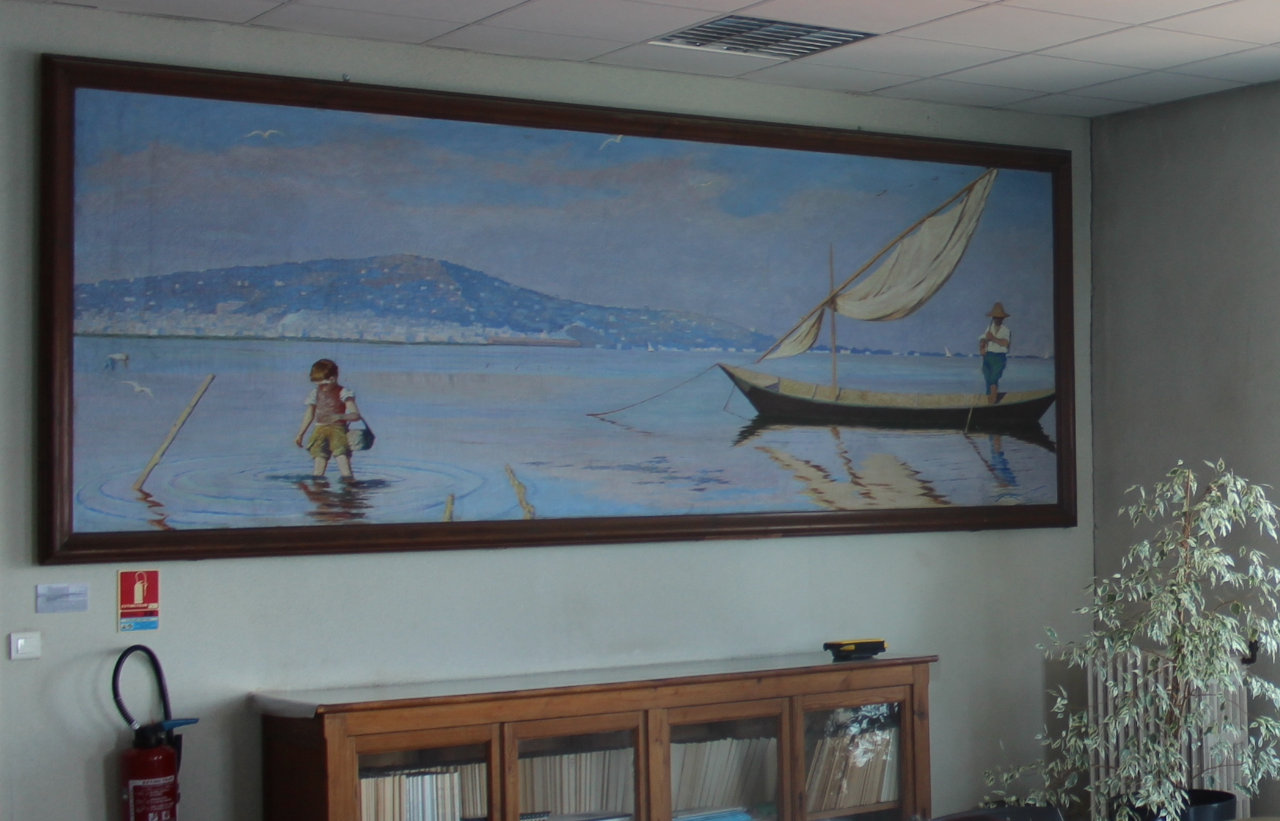
When you open the door to the large room on the top floor of the Coastal Environment Marine Station in Sète, the floor-to-ceiling window directly across from you offers a magnificent view of the Thau Lagoon. But if you turn your head to the left, another view of the lagoon unfolds before you, one that’s just as majestic. A small fishing boat, a child with his feet in the water, Mont Saint-Clair in the background bathed in soft light… You are looking at a work by the Montpellier painter Max Leenhardt, which, at 4.20 meters long and 1.65 meters high, spans the entire length of the room’s wall, offering a dual view of “The Thau Lagoon and Mont Saint-Clair.” This is also the title of the painting, created in 1900 at the request of Armand Sabathier, the founder of the seaside resort and a relative of the painter, who—according to research by Isabelle Laborie, who wrote her art history dissertation on Max Leenhardt—is said to have donated this canvas to the resort free of charge.
The painting has adorned the building’s walls for more than 120 years, under conservation conditions that have not always been optimal—conditions that have taken their toll on the work, which has faded with time. An unidentified incident even caused a hole in the painting, which has lost some of its splendor. “In 2024, the restoration of the work was scheduled in consultation with the station’s team, thanks to 23,000 euros in funding from theUM ,” explains Caroline Ducourau, director of the Department of Scientific Culture and Historical Heritage. Marie Connan, curator and restorer of paintings, will lead this delicate project alongside her colleagues Danièle Amoroso, Alexandra Deneux, Séverine Padiolleau, and Thierry Martel (who will handle the removal and reinstallation).
A Surprise Frieze
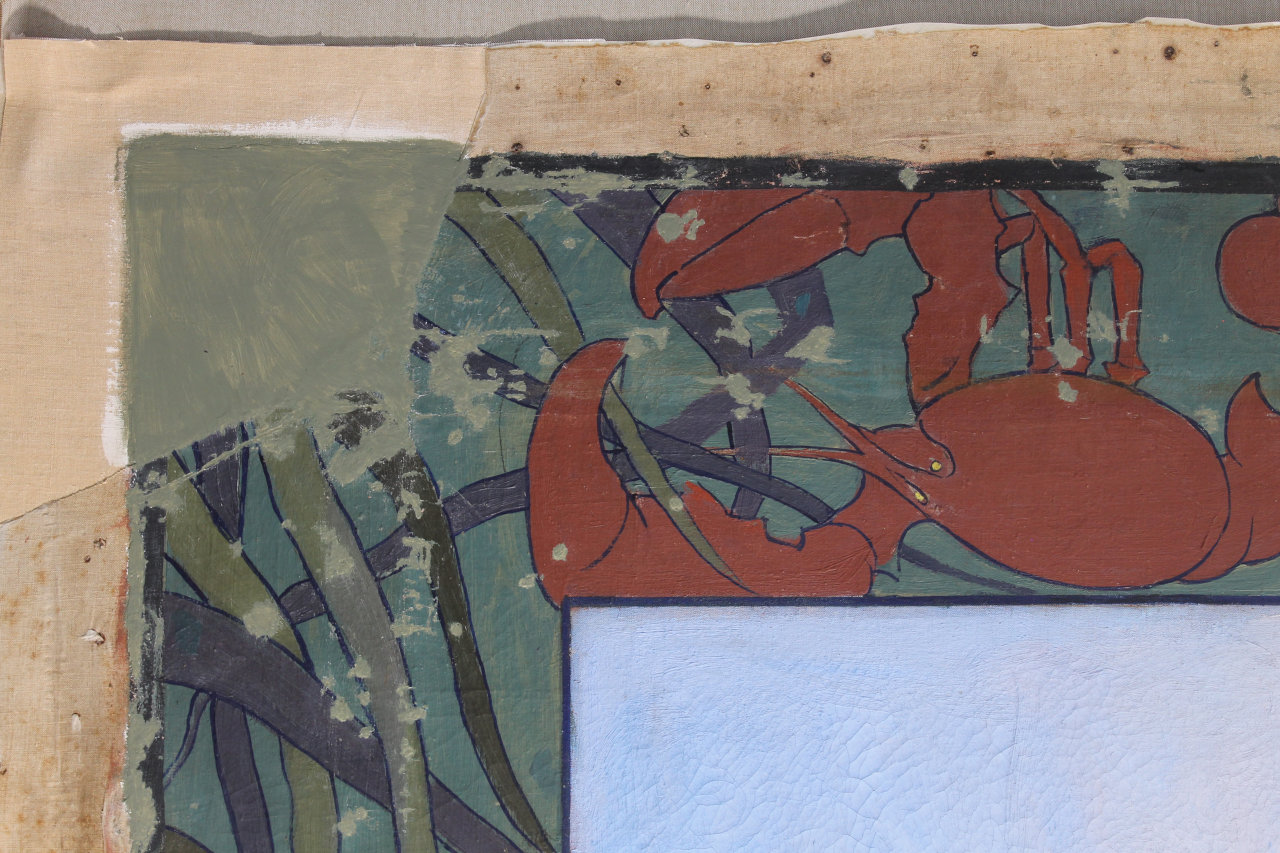
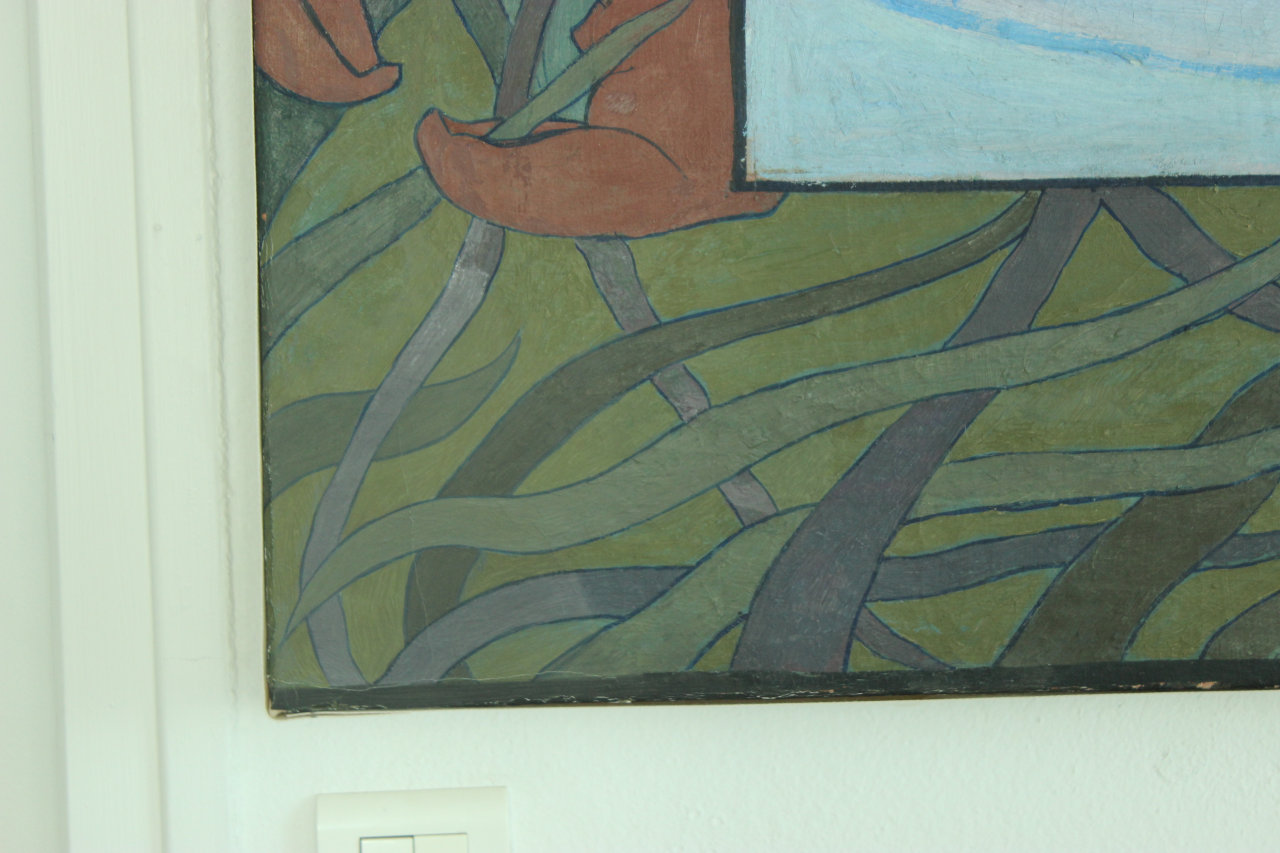
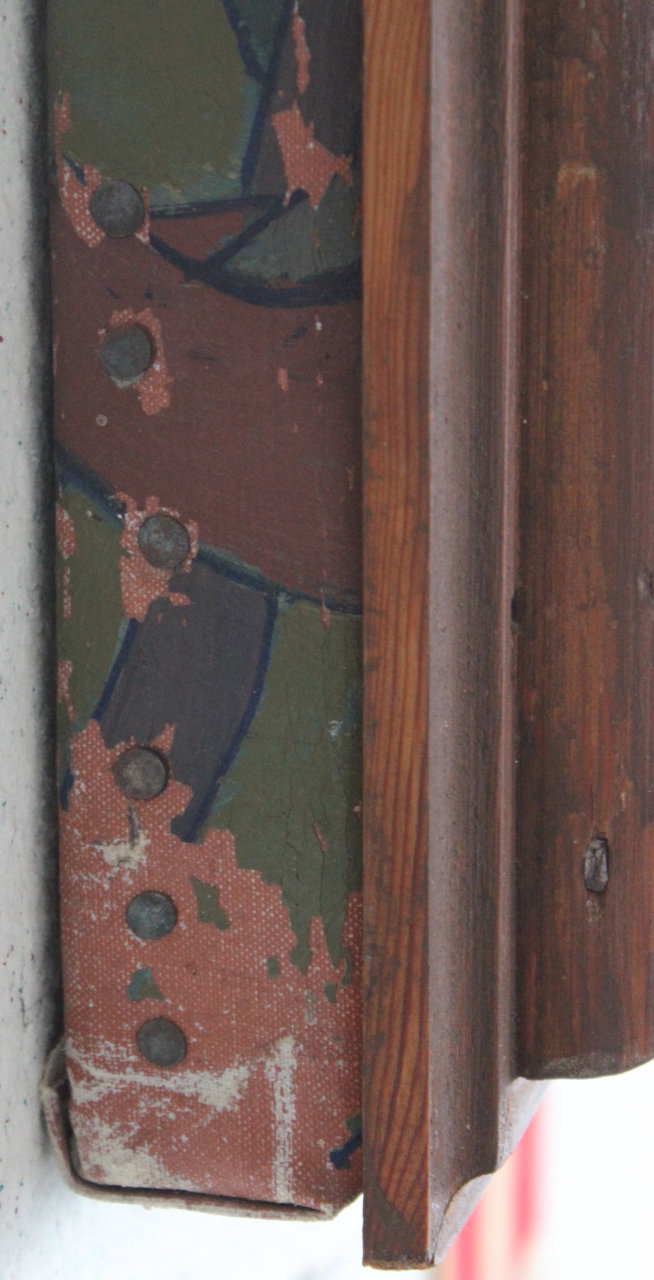
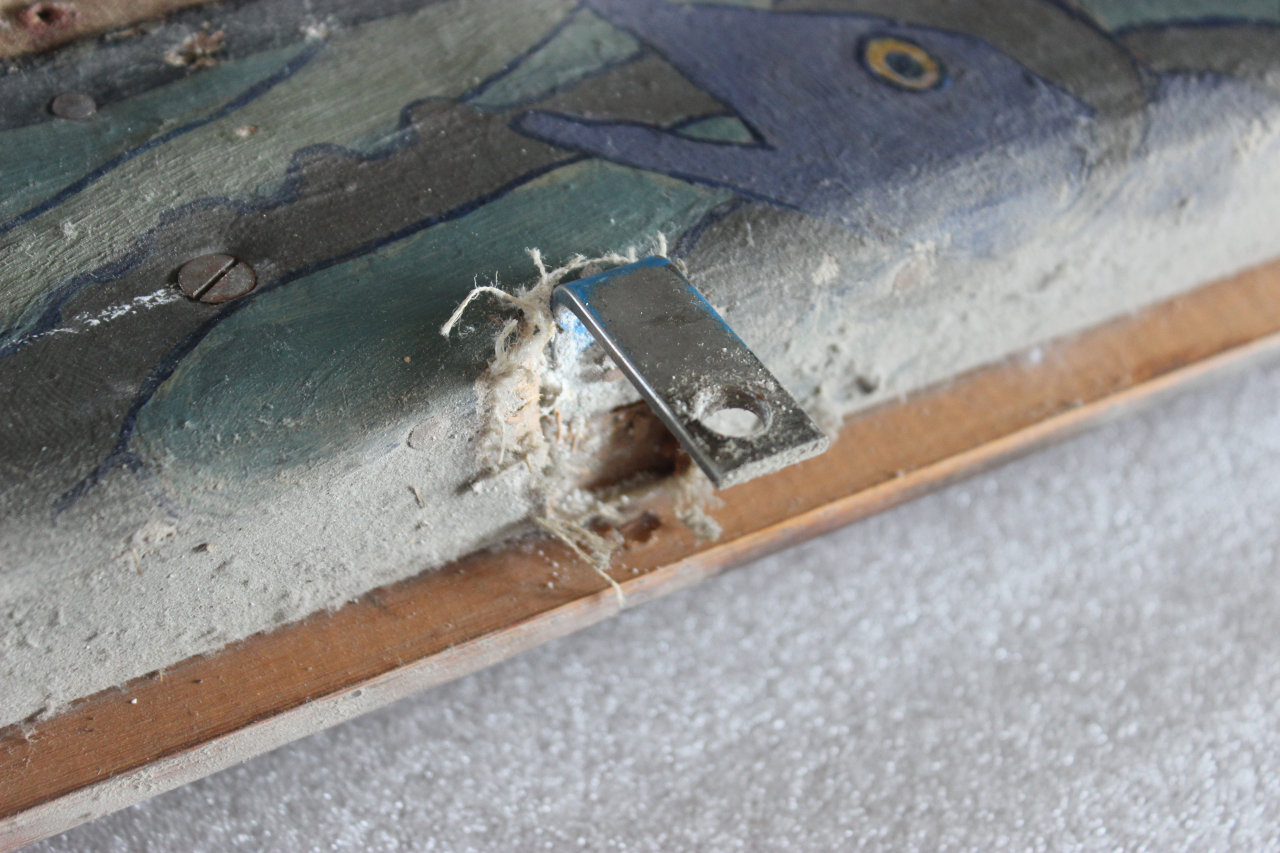
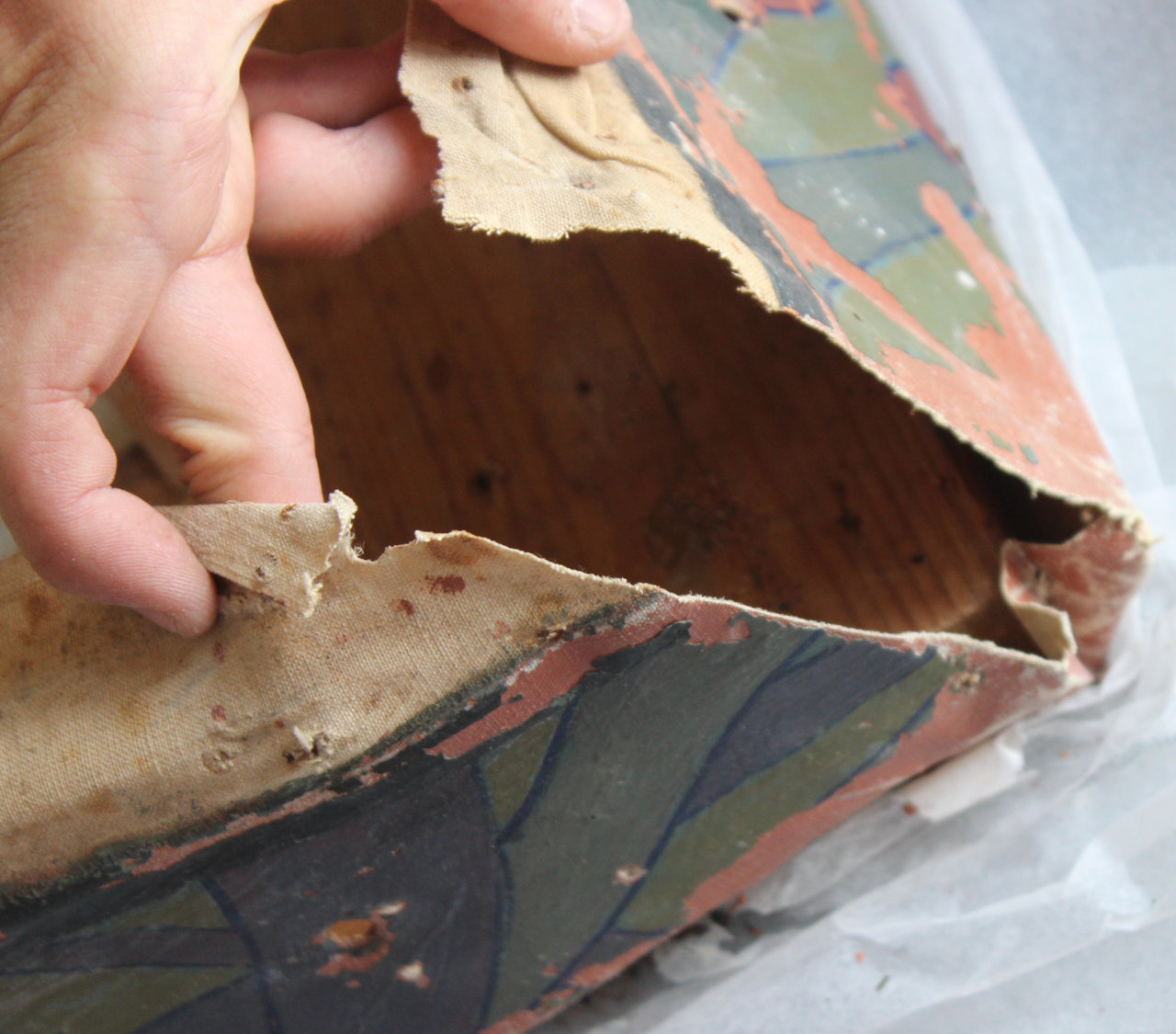
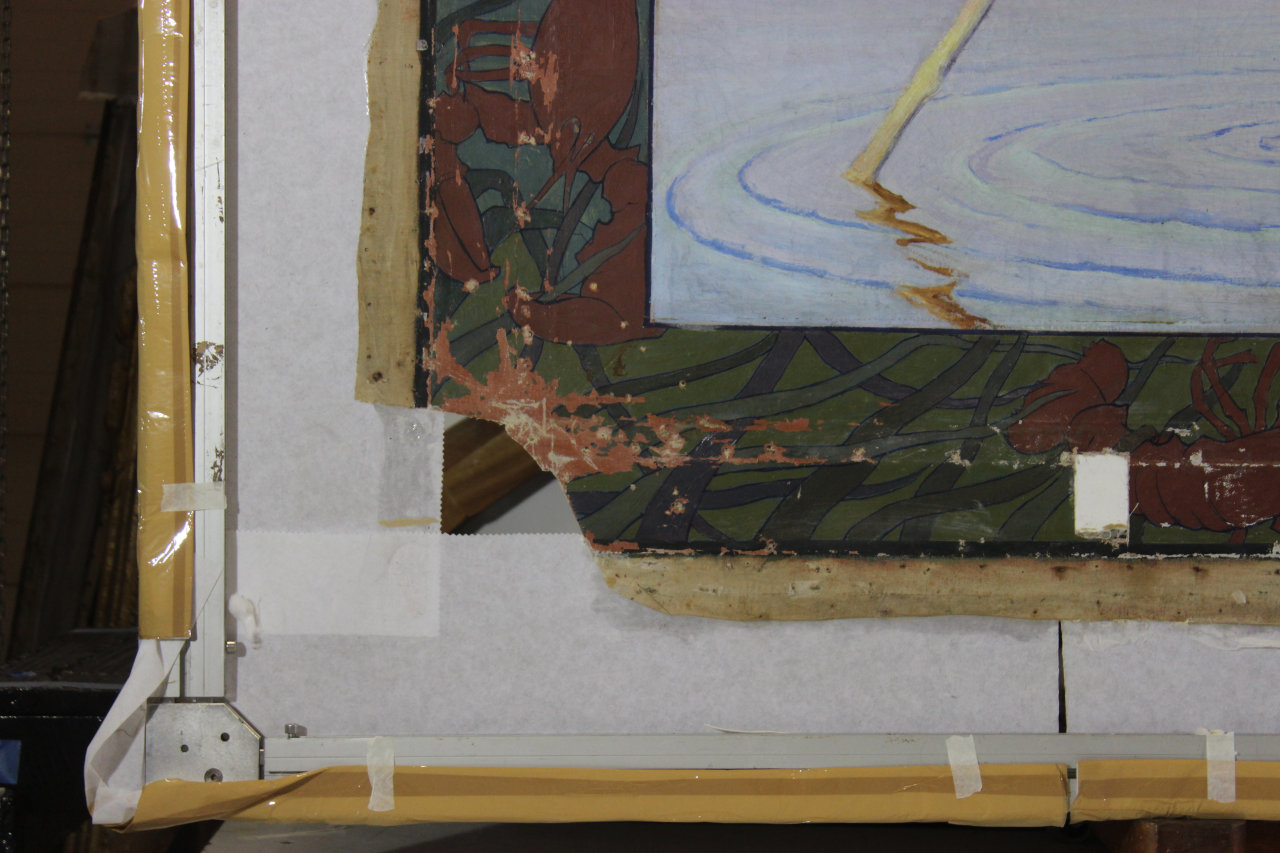
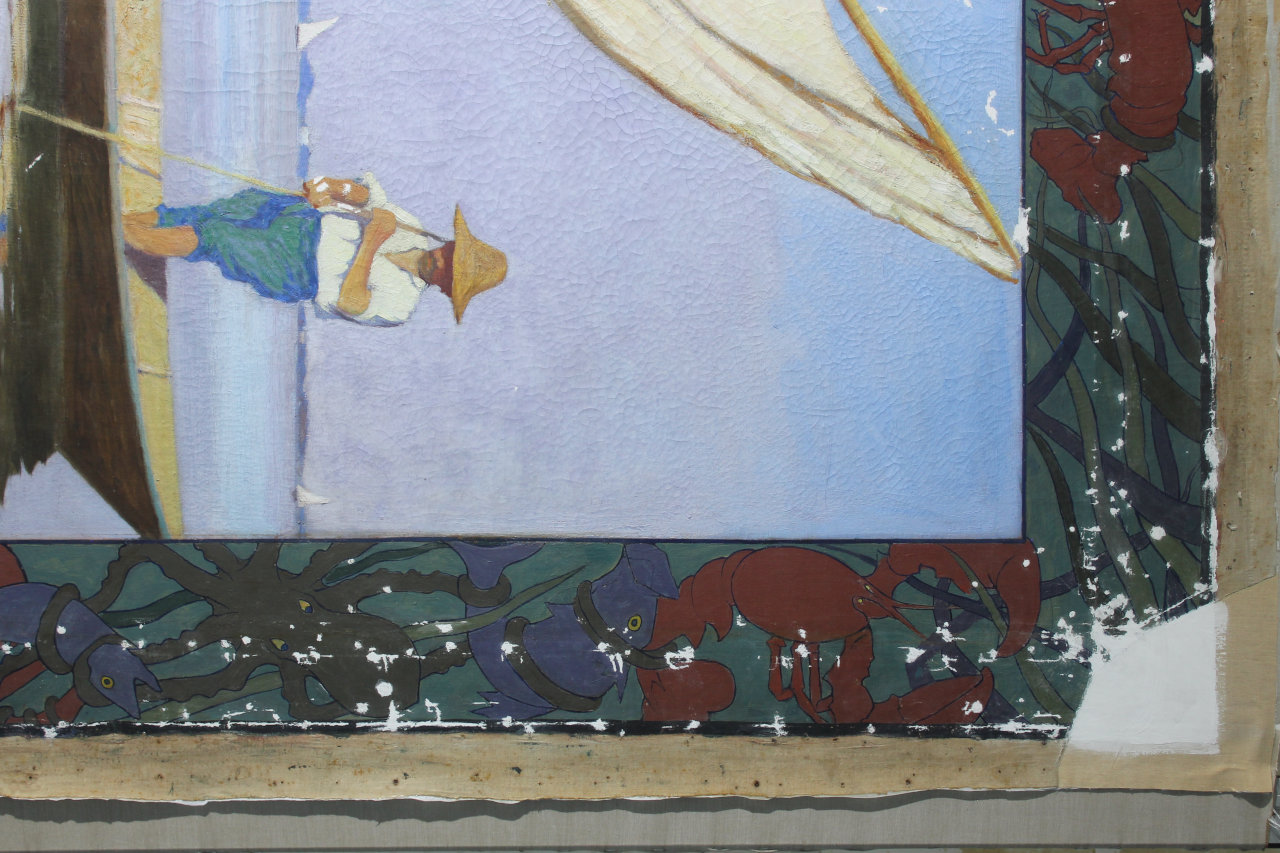
In July 2024, the restoration team took the painting down to assess the scope of the work. And there, to their surprise, hidden all around the canvas—folded behind a wooden stretcher—was a frieze depicting marine animals intertwined with seaweed. “To make it easier to fold the canvas onto the stretcher, the four corners had simply been cut off, ” recalls Marie Connan. She and her team then decided to restore the work to its original format by replacing the missing sections of canvas.
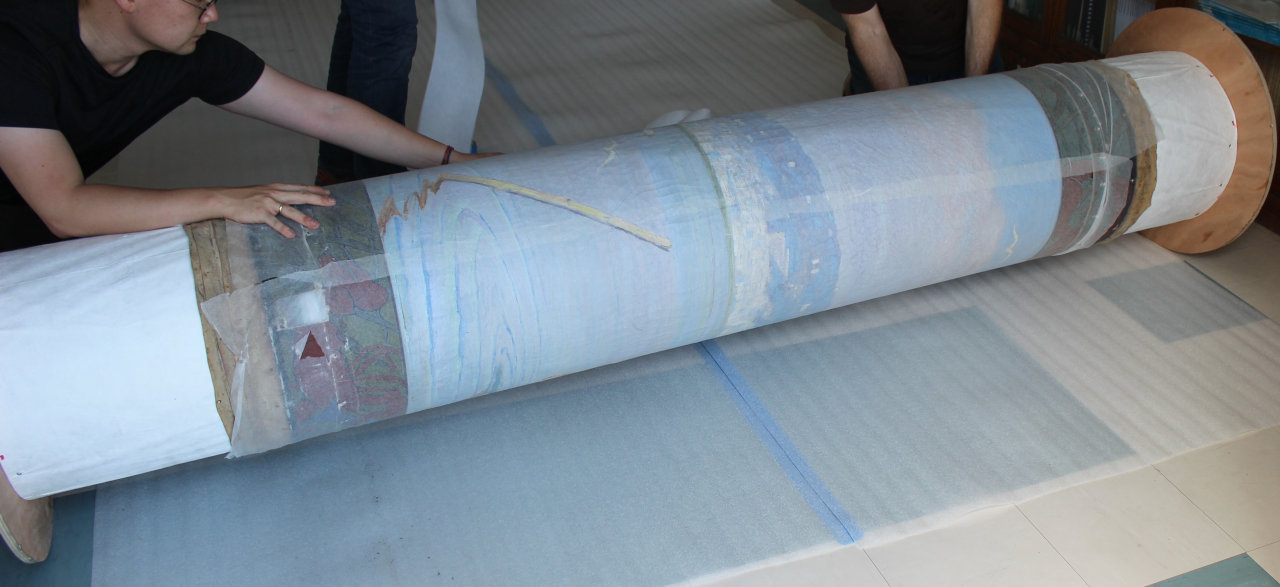
But to do so—and to carry out the entire conservation and restoration process—they had to transport the painting to the Amoroso Waldeis workshop in Villeneuve-lès-Avignon. “Given its size, it quickly became clear that moving it as is would be too complicated, so we removed the canvas from its wooden stretcher after applying a temporary surface protection and rolling it up.” And that’s where the work begins.
Paint “Lasagna”
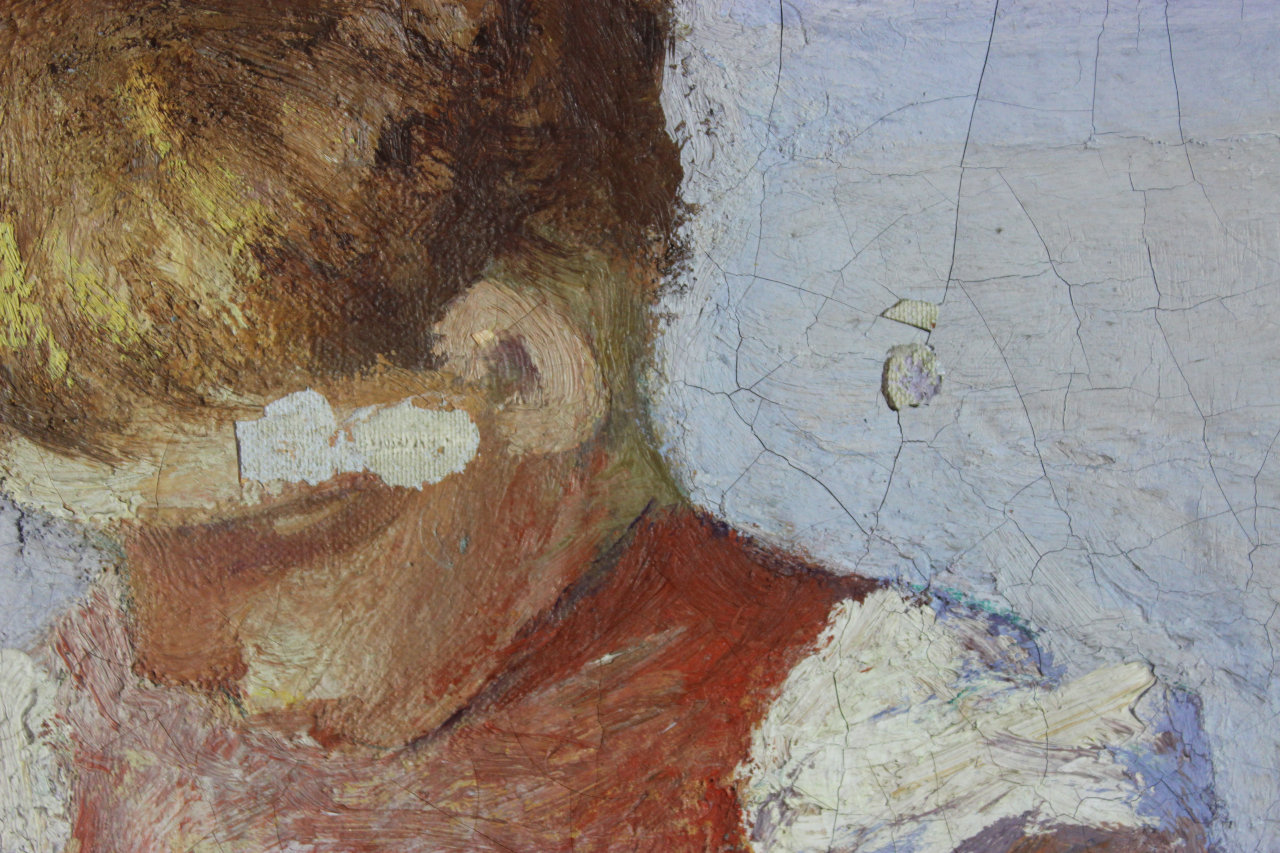
“It’s important to note that Max Leenhardt uses a particular technique: the paint is applied in thick, overlapping layers that turn the painting into a veritable ‘lasagna’ of paint, which increases the risk of losing material, as we’ve observed, for example, on the child’s head,” explains the restorer. And when viewed up close, the work reveals a network of cracks— “a natural aging process that cannot be prevented, just as we cannot prevent wrinkles from appearing on the skin over time, ” says Marie Connan.
Since they were unable to correct the wrinkles in the painting, the conservators set about “stretching and relaxing” the canvas to flatten the work and minimize the risk of losing more material, before filling in the areas where the paint had disappeared. “We also cleaned the surface to remove dust, drips, and runs, and to restore some of the colors’ original brilliance.” This task was made particularly challenging by the nature of the painting, which is done in oil and is unvarnished. “We have to achieve the same level of luster as the original canvas during the retouching phase, ” explains Marie Connan. And while the original luster was preserved, the colors and highlights were revitalized by this restoration. It’s a difference that immediately catches the eye of regular visitors to the seaside resort who have seen this artwork both before and after its restoration.
Semi-illusionistic restoration
Another striking difference is the famous frieze that frames the canvas, which the conservators and restorers have reconstructed. Since they did not know what was depicted in these blind spots, the experts had to allow for a small degree of interpretation to reconstruct the work as it likely appeared. “We opted for what is known as a semi-illusionistic restoration: up close, you can see the difference between the added sections and the original, but from a distance, you can’t tell.”
A large-scale, technically complex restoration project that will allow the painting to return to the walls of the marine station a year later, in July 2025, offering visitors that famous dual view of the Thau Lagoon. This event may foreshadow others, as Caroline Ducourau hopes: “There is a significant cultural heritage at the marine station, including certain paintings that also deserve to be restored.”