[LUM#13] Research in Fast Forward
How do we deal with a new disease? Identifying the infectious agent, understanding the disease, and finding an effective treatment… The emergence of COVID-19 posed a “real challenge” for Jacques Reynes*. The infectious disease specialist describes a “completely unprecedented” situation in which “everything happened at breakneck speed.” An interview with the head of the Department of Infectious and Tropical Diseases at Montpellier University Hospital.
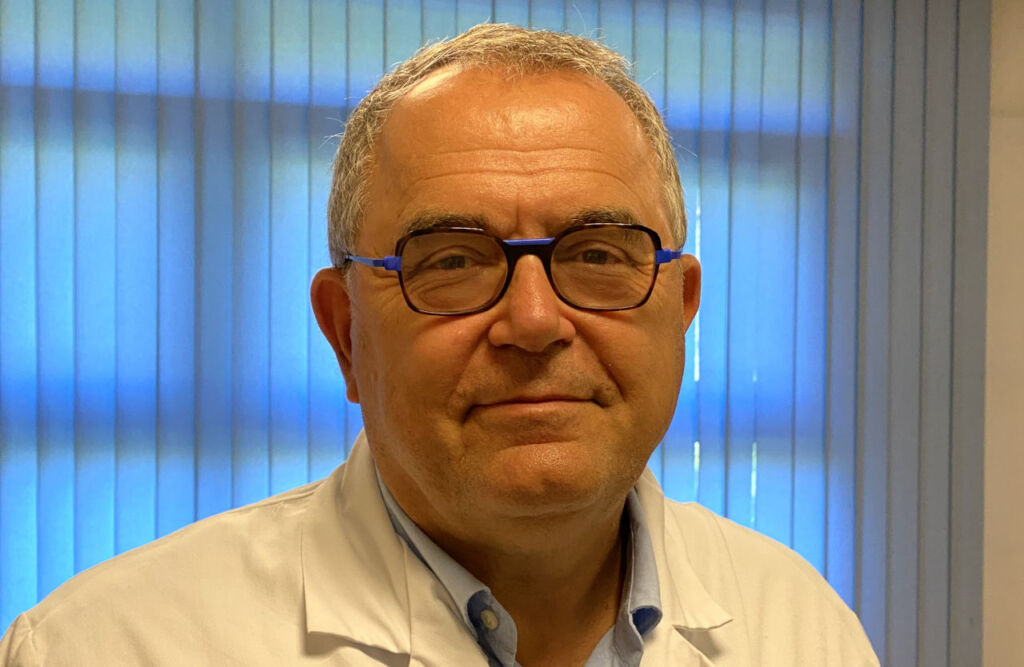
How do we develop a treatment when faced with a previously unknown infectious disease?
The first step is to identify the infectious agent. Once we know which family it belongs to, we can draw up a list of potential anti-infective drugs. To do this, we first look at molecules that have been used to treat related infections. For COVID-19, an infection caused by the SARS-CoV-2 virus, this was the third time we’d had to deal with a highly pathogenic coronavirus, so we had data from the SARS-CoV-1 and MERS-CoV outbreaks. This first step allows us to urgently search for a treatment, but COVID-19 is truly a new, complex disease with a highly variable clinical presentation, and we had few known drugs that were potentially effective.
What do we do in that case?
If there are no known products available, we move on to a repositioning strategy. This means considering a drug that is already used to treat another disease. Therapeutic molecules often have multiple cellular targets, so it’s possible that a molecule evaluated for a specific disease may also be effective for another. Repurposing a drug saves time: the molecule has already been evaluated for toxicity and tolerability. For COVID-19, there has been a surge in clinical trials involving repurposed drugs, such as hydroxychloroquine, which was initially used to treat malaria or certain inflammatory autoimmune diseases like lupus or rheumatoid arthritis; lopinavir/ritonavir, used to treat HIV infection; and remdesivir, a broad-spectrum antiviral that had already been tested against the Ebola virus. During the first wave of COVID-19, all patients were treated with repurposed drugs.
How do we identify promising repurposing candidates?
To be a promising candidate, a molecule must meet several criteria. First, it must exhibit in vitro activity against the virus—in this case, SARS-CoV-2—meaning it inhibits the virus. But it must also be effective at a concentration that is tolerable to the infected host. If it is effective against the virus only at a concentration that is toxic to humans, it is not a viable candidate. It must also have appropriate pharmacokinetics—that is, how the drug behaves in the body. For example, in the case of COVID-19, the virus is present in the lungs, so an antiviral must be found that reaches this organ in sufficient quantities to be effective.
And after the in vitro tests?
The molecule is then evaluated in an animal model. But choosing the right model isn’t always easy—the animal must be susceptible to the virus and develop the disease in a form that’s relatively similar to that seen in humans. Remdesivir and hydroxychloroquine, in particular, have been tested on rhesus macaques. Then clinical trials in humans are launched. There are some very promising drugs that work very well in vitro but turn out to be ineffective in clinical trials. This is the case, for example, with hydroxychloroquine, for which various trials have now shown minimal or no efficacy, even though it was considered a logical candidate for drug repurposing. And even once an effective candidate has been identified, the drug still needs to be produced quickly and at an acceptable cost. So far, six or seven antiviral drugs have been tested.
Is inhibiting the coronavirus the main goal?
It’s one of them, but it’s not the only one! With COVID-19, we’re not just dealing with a virological disease. So we’re looking for a specific drug to target the virus, but also for drugs that are effective against the complications of this infection. For example, we see severe lung damage linked to inflammation, which is a consequence of a cytokine storm. At this stage, patients are given corticosteroid therapy and/or cytokine inhibitors. Patients are also prone to developing vascular thrombosis with embolic events, warranting prevention or treatment with anticoagulants. Therefore, it’s not a single drug but a combination of medications that must be administered, with precise timing! For example, corticosteroid therapy should not be initiated at the onset of the disease, whereas antivirals are likely beneficial in the early phase when viral replication is intense. Not to mention non-pharmacological management: for example, with COVID-19, it has been found that it is better to position patients in the intensive care unit in the prone position—that is, on their stomachs.
Was the entire process of developing a treatment for COVID-19 business as usual?
It wasn’t the process itself that was unusual, but the rapid succession of steps—everything moved so much faster! There was a real shift in the timeline compared to other epidemics; it’s completely unprecedented. During the first month of the pandemic, we learned more about this disease every single day! Studies were set up in record time; what usually takes 3 to 6 months was accomplished in 15 days. This is the first time in my career that I’ve witnessed such a situation, and it’s a real challenge that requires a high degree of responsiveness!
Listen to the dedicated radio show
Check out theUM podcasts, now available on your favorite platform (Spotify, Deezer, Apple Podcasts, Amazon Music, etc.).
* UMR TransVIHMI (UM, IRD, INSERM U1175, Check Anta Diop University (Dakar, Senegal), Yaoundé 1 University (Cameroon))