“Living With It”: A New Perspective on Agricultural Health Management
Organized as part of the key CLAPAS initiative (Collaborative Local Research Actions on Plant Health and AgroSystems), the symposium “Living With: A Utopia for Animal and Plant Health Management in Agriculture? ” was held in Montpellier on March 19, 2026, focusing on a central issue: rethinking health management beyond the logic of eradication.
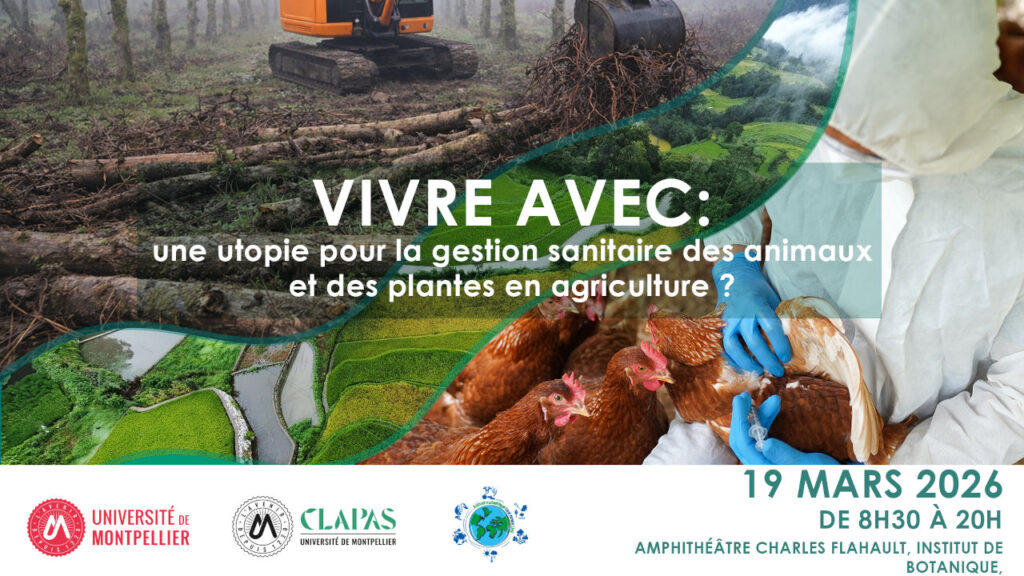
Structured around three thematic sessions and a roundtable discussion, the discussions highlighted approaches based on working in harmony with living organisms and alternative practices rather than on the elimination of pathogens.
Several real-world case studies were presented during the event. Research on rice fields in China demonstrated how the genetic diversity of traditional rice varieties helps maintain natural resistance to disease. Other presentations explored the trade-offs between productivity and sustainability, particularly in cocoa farming.
On the livestock farming front, discussions focused on so-called symbiotic approaches that promote habitat diversity and ecological balance to prevent animal diseases. This line of thinking builds on the One Health concept by broadening the definition of health to encompass all living things.
A roundtable discussion further explored these ideas surrounding the concept of “living with” pests in agriculture, emphasizing the need to manage the diversity of pests rather than seeking to eliminate them. The discussions highlighted, in particular, the obstacles posed by current public policies, as well as the importance of supporting agricultural stakeholders and strengthening ties between research, local governments, and society.
The day concluded with a lecture by Jacques Tassin on invasive plants. By examining the categories and perceptions associated with these species, he encouraged the audience to move beyond a simplistic understanding of biological invasions and to explore their root causes, which lie at the intersection of ecological dynamics and cultural representations.
In line with the objectives of the I-SITE Excellence Program, the event underscored the importance of these forums for dialogue in supporting the transition to more sustainable agricultural practices and collectively rethinking the health of living organisms.