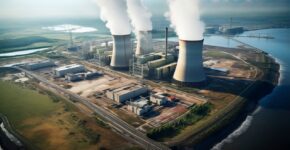
The Cost of Nuclear Electricity: The Details of the Mechanism Proposed by the Government for the New EPR2 Reactors
Published on: October 21 , 2026
A cornerstone of France's energy strategy to gradually replace its existing fleet…
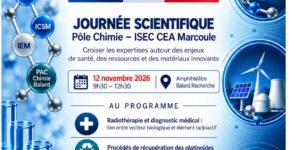
Chemistry, Innovation, and Sustainable Transitions
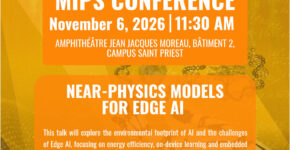
Physics-Inspired Models for Edge AI
Open Access Week: “Disseminating Scientific Knowledge: The Challenges of Open Access”

A “liminal space” between humans and AI: Will the boundary be less distinct than we might think?
Published on: October 14 , 2026
There is something strangely reassuring about the way we keep talking…


TERRA-MED: The “UM ” is a partner in a new European doctoral program on environmental challenges in the Mediterranean
Published on: October 13 , 2026
With a total budget of 8.1 million euros, TERRA-MED is a new doctoral program…

Introduction to Wikidata
Introduction to Wikipedia for the World of Research
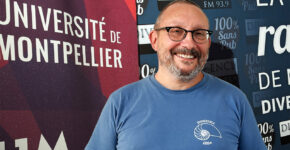
Science at theUM [S06-ep03]: Nuclear Waste at the Bottom of the Sea
Published on: October 9 , 2026
This week on *A l’UM * Science, Benoit Ildefonse, a researcher at the Geosciences Laboratory…
2027 Call for Research Proposals – Exposum Institute: Open Theme
Published on: October 8 , 2026
ExposUM is an initiative of the University of Montpellier and its partners[1] aimed at…

The AAP TALENTS – PTL CARLA and CHIMENE from the Chemistry Division
Published on: October 6 , 2026
As part of the I-SITE Program of Excellence (PEI) at the University of Montpellier (UM) and the…
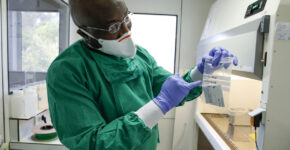
Diphtheria: What You Need to Know About a Disease We Thought We’d Left Behind
Published on: October 5 , 2026
More than twenty years after its last outbreak, Senegal is once again facing…
Alexandre Grothendieck
Contracts Related to Industrial Property
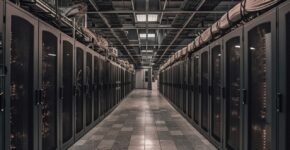
What is a data center? Why do these facilities spark so much debate?
Published on: September 29 , 2026
The growth of digital technology relies on data centers…