Alexandra Garancher: Understanding the Tumor’s Immune Microenvironment to Better Eliminate It
A specialist in brain tumors, Alexandra Garancher is continuing her research in immunotherapy at the Montpellier Cancer Research Institute (IRCM) thanks to funding from Muse.
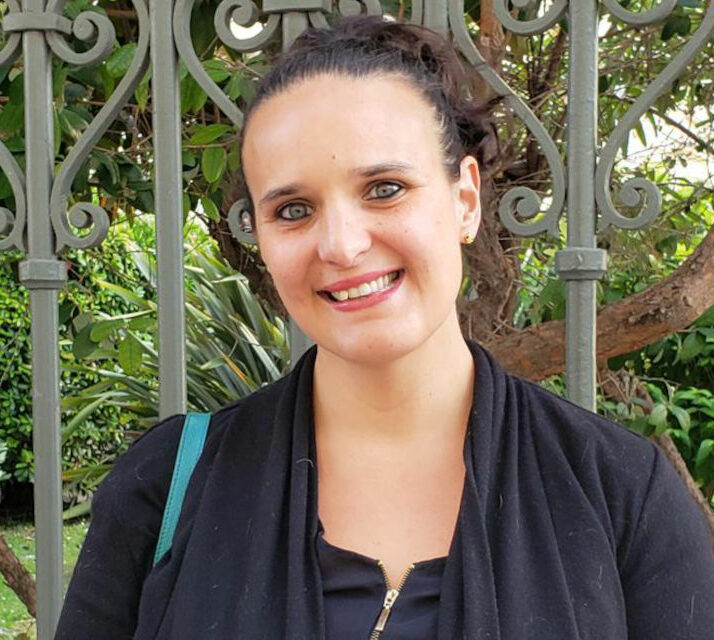
As is often the case in molecular biology, it all starts with petri dishes and mice. For cancer researcher Alexandra Garancher, it was a third-year internship on cell differentiation that sparked her interest in laboratory research. It was the start of a calling that shows no signs of waning 15 years later. The young neuro-oncology biologist is now a specialist in medulloblastoma (MB). This has nothing to do with the name of a villain from the latest Marvel movie: it is a malignant tumor that develops in the cerebellum of young children.
Starting with her second year of master’s studies at the Institut Curie, her research highlighted the links between the mechanisms that regulate cell differentiation and the development of medulloblastomas. She built on these findings in her doctoral dissertation, where she identified a key factor involved in oncogenesis and proposed an inhibitor capable of limiting tumor growth. This led to a publication in *Cancer Cell*, which served as the catalyst for her first collaboration with a laboratory in the United States. This opportunity across the Atlantic was just the beginning, as the young doctor went on to complete six years of postdoctoral research at the Sanford Burnham Prebys Medical Discovery Institute in San Diego, California.
Numerous search platforms
For Alexandra Garancher, the challenge is therefore to broaden her research beyond just the tumor cell to include the tumor’s entire immune environment. In other words, to understand how the immune system interacts with tumor cells and how it might contribute to the elimination of the tumor. This is a branch of cancer treatment research known as immunotherapy. More specifically, her research focuses on immune evasion mechanisms: since MB is capable of evading the immune system, how can it be made visible again to T cells? Her research led her to discover a cytokine capable of restoring a surface protein that had disappeared from the cancer cell (making it undetectable to T cells). This, in turn, restores antitumor immunity and the efficacy of certain therapeutic antibodies. Her work earned her a paper in *Nature Neuroscience* and a patent!
“Alongside this research, I really enjoyed being part of a broad collaboration with the medical community. Since my work involved transplanting patients’ cancer cells into mice, we were able to test the effectiveness of treatments in the lab. Oncologists, surgeons, and bioinformaticians—we then worked together to make decisions about patient treatment,” explains the researcher. She hopes to continue this American experience at the IRCM, where she has held a position since February 2021. Although her applications in France resulted in several job offers, it was the research environment in Montpellier that ultimately influenced her decision.“Coming to the IRCM also meant taking advantage of its close ties to the University Hospital, the Biocampus, and its many research platforms,” says Alexandra Garancher . “When I applied, the IRCM also invited me to spend a week here. I experienced a collaborative work environment that made me want to stay.”
"Often more aggressive and resilient"
When asked about her next steps, it becomes clear just how ambitious her goals are.“I’ve been working on MB for 10 years. The idea is to see if I can extend my findings to other tumors—particularly breast cancer metastases. I’d also like to continue delving deeper into my research on the immune microenvironment, specifically to understand the effect of therapies—such as radiation therapy, chemotherapy, and immunotherapy—on the progression of cancer.” Because while these therapies target tumors, they can also have negative effects on treatment. For example, radiation therapy kills immune cells, thereby reducing the body’s ability to defend itself. Unstoppable in her pursuit, the researcher mentions another area of research: improving the action of T cells on brain tumors to enable a stronger immune response.
She won’t be able to do all this on her own. At the IRCM, she plans to assemble her own research team to carry out these projects. And she’s already seeking additional funding sources, notably by applying for grants from ATIP-avenir and the ERC (European Research Council Research). The scale of the task does not seem to dampen her determination:“We still have everything to learn about the role of the tumor microenvironment in the progression of cancers, while the emergence of recurrent tumors and metastases—which are often more aggressive and resistant—can have consequences that are sometimes more dramatic than those of the primary tumor.”
News
TheUM s is strengthening its commitment to the AFM-Téléthon
Published on: July 22 , 2026
The University of Montpellier, the Montpellier University Hospital, the School of Medicine…