André Neveu: Lead Climber
This is a major award in the field of theoretical physics and mathematics, which was presented to André Neveu on August 10 by the ICTP (International Center for Theoretical Physics). The 2020 Dirac Medal honors the emeritus research director of the Charles Coulomb Laboratory—along with two other eminent physicists— “for their pioneering contributions to the creation and formulation of string theory.”
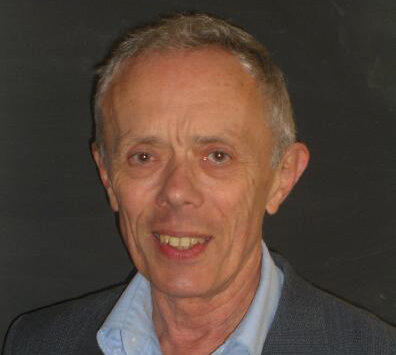
Theoretical physics? “A discipline that operates at the frontier between mathematics and physics, ”as André Neveu describes it. Its goal: to create mathematical models to describe and understand experimental results. “That’s exactly what Newton did when he devised the law of universal gravitation to understand the motions of the Moon and the planets observed by Kepler ,” the expert explains.
These models, whose“elegance, beauty, and simplicity” André Neveu praises, have been at the heart of his work for more than 50 years. First during his studies at the École Normale Supérieure, then at Princeton University from 1969 to 1971, and at the Institute for Advanced Study in Princeton—of which Einstein himself was a member—where he remained until 1977. Upon returning to France, the researcher worked for six years at the École Normale Supérieure in Paris, then for an equal number of years at CERN in Geneva, before joining the University of Montpellier in 1989.
Various modes of vibration of a string
If awarded in 2020, the Dirac Medal will recognize the work André Neveu has carried out since the beginning of his career: the formulation of string theory.“This model was devised to describe certain properties of elementary particles. It describes particles not as points, but as various excitations of a string, much like a piano string that has many harmonics,”explains the physicist.
A field of research that continues to fascinate him:“There are still so many things we don’t understand—some of which are even beyond our comprehension—and we still need to gain a better understanding of these objects and their properties.”And to advance this cutting-edge research, André Neveu emphasizes collaboration:“We need cross-fertilization! We need to be open and exchange ideas with colleagues from other countries who see things from a different perspective. This is essential for generating new ideas. We need to broaden our horizons to gain new perspectives.”
This is a philosophy that André Neveu himself put into practice, and one that has borne fruit: before receiving the Dirac Medal, the researcher had already been awarded numerous prizes for his contributions to theoretical physics, including the Paul Langevin Prize from the French Physical Society in 1973 and the Gentner-Kastler Prize in 1988.
News
TheUM s is strengthening its commitment to the AFM-Téléthon
Published on: July 22 , 2026
The University of Montpellier, the Montpellier University Hospital, the School of Medicine…