Jean-Yves Winum: A True Local Product with a Global Presence
Professor at the Max Mousseron Institute of Biomolecules at theUM, chemist Jean-Yves Winum designs and synthesizes enzyme inhibitors of carbonic anhydrases, a promising target for treatments against cancer and various pathogens. His career has been recognized with the Michel Delalande Prize from the National Academy of Pharmacy.
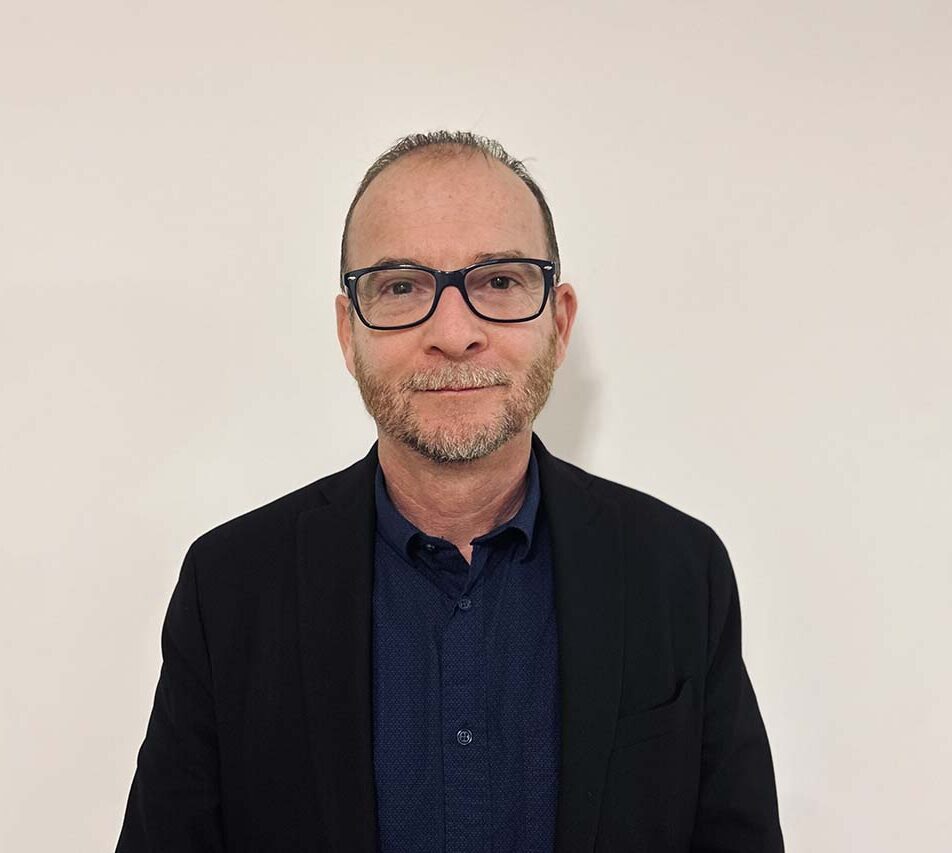
“I’m a true product of Montpellier,” jokes Jean-Yves Winum, whose accent certainly backs that up. The professor at the University of Montpellier completed his undergraduate studies and earned his Ph.D. in organic chemistry at that same institution. And it was there that he landed a position as an associate professor at age 27, right after returning from a postdoc at Georgetown University (Washington, D.C.), just over a year after defending his dissertation in 1998.
Don’t think, however, that his horizons end with this southern city. A renowned chemist in the scientific community specializing in the modulation of carbonic anhydrase enzymatic activity, theIBMM researcherhas established numerous international collaborations. His contribution to research on these enzymes as therapeutic targets for cancer treatments or against pathogens earned him this year’s Michel Delalande Prize from the National Academy of Pharmacy.
Targeting carbonic anhydrases
Found in bacteria, plants, and animals, carbonic anhydrases play a role in numerous biological processes.“When I began working on these enzymes, some people considered them too common to be the key to therapeutic treatments, because their multitude of functions raised concerns about too many side effects,” recalls the chemist, who did not share this view. Together with his European colleagues, he identified, among the fourteen existing forms of carbonic anhydrases (CA), CA9 and CA12—which are preferentially expressed in cancerous tumors and are therefore priority targets.
“Our initial research on these carbonic anhydrases aimed to inhibit their activity within hypoxic solid tumors,” explains Jean-Yves Winum. Indeed, within the tumor, these enzymes contribute to the acidification of the tumor microenvironment, which in turn promotes the spread of tumor cells and, consequently, metastasis.“The laboratory tests were conclusive: inhibiting these enzymes limited tumor expansion and the growth of breast tumors in vivo.” These results were published in 2011 in *Cancer Research* in collaboration with other European teams, notably the University of Florence.
A Promising Approach to an Antibacterial Agent
The researcher also worked on another, more unexpected therapeutic target: the carbonic anhydrases of Brucella, a bacterium that was then feared as a bioterrorism agent.“We were working with Stephan Köhler’s team (IRIM) on inhibiting carbonic anhydrases in these pathogens to neutralize them , ” he explains (“Carbonic Anhydrases of Brucella suis and Their Inhibitors: Toward Alternative Antibiotics? ”, 2017, in Journal of Enzyme Inhibition and Medicinal Chemistry).
Although interest in Brucella has waned, this research into antibacterial mechanisms of action remains strategically important at a time when antibiotic resistance has become a major concern for the World Health Organization (WHO).“Inhibiting carbon anhydrases in pathogens is a promising avenue for antibacterial treatment, even though we are still in the basic research phase. No treatments are currently in development,” the chemist notes.
The Chemist's Instinct
“I’m building strong collaborations. Relationships based on trust are the best way to move forward,” says Jean-Yves Winum, who emphasizes the need to be able to rely on a close-knit international scientific community. While his team in Montpellier works on the design and synthesis of inhibitors, the University of Florence conducts enzyme testing, and other teams—particularly in the United States—perform biological testing.“Some collaborations have led to strong friendships, such as with Claudiu Supuran from the University of Florence, with whom I’ve been working for over 20 years. We’ve co-authored more than 160 publications together.”
Molecular design has also evolved rapidly alongside improvements in X-ray crystallography: thanks to the synchrotron, researchers can observe enzyme-inhibitor interactions at the molecular level and refine their inhibitor molecules accordingly to make them as effective as possible.“We’re moving toward a new generation of molecules that are more active and more selective,” explains the researcher, who is convinced of the importance of a chemist’s intuition. Proof of this is his latest award:“the National Academy of Pharmacy’s lifetime achievement award for a chemist,” he says, clearly delighted.
Escape games and board games
Since 2016, he has been developing a specific type of inhibitor in Montpellier that incorporates boron atoms, a mineral found naturally in soil, water, and food.“Several therapeutic compounds contain boron, so I figured it was worth trying with carbonic anhydrase inhibitors. And indeed, we’ve shown that it works very well! ” Another promising line of research on anticancer agents, developed in collaboration with Sébastien Clément ofthe ICGM, involves combining inhibitors with a photosensitizer. When exposed to light, the photosensitizer produces singlet oxygen, which destroys cancer cells—an effect that complements the inhibitory action.
In addition to his research, this individual—whom some colleagues describe as hyperactive—holds several positions: associate dean of the Faculty of Sciences in charge of communications and scientific outreach, as well as associate editor-in-chief of the *Journal of Enzyme Inhibition and Medicinal Chemistry*. Since 2020, he has also been actively involved in gamifying education by developing escape games and board games as training tools (“Serious Games in Organic Chemistry: Learning While Having Fun in Undergraduate Studies!”). He has also co-authored six educational books. This work earned him the 2023 award from the Education and Training Division of the French Chemical Society.
News
Montpellier Global Days 2026: From AOCs to Sustainable Food Systems
Published on: June 17 , 2026
On June 23 and 24, the University of Montpellier and its partners in the Program of Excellence…