The formula for bronze developed by the chemists at theUM
On March 27, ten students from the Department of Chemistry surprised everyone by taking third place in the French Chemists’ Tournament. As the only university represented in a competition dominated by the grandes écoles, they carried on the tradition of the alchemists by transforming their iron will… into a bronze medal.
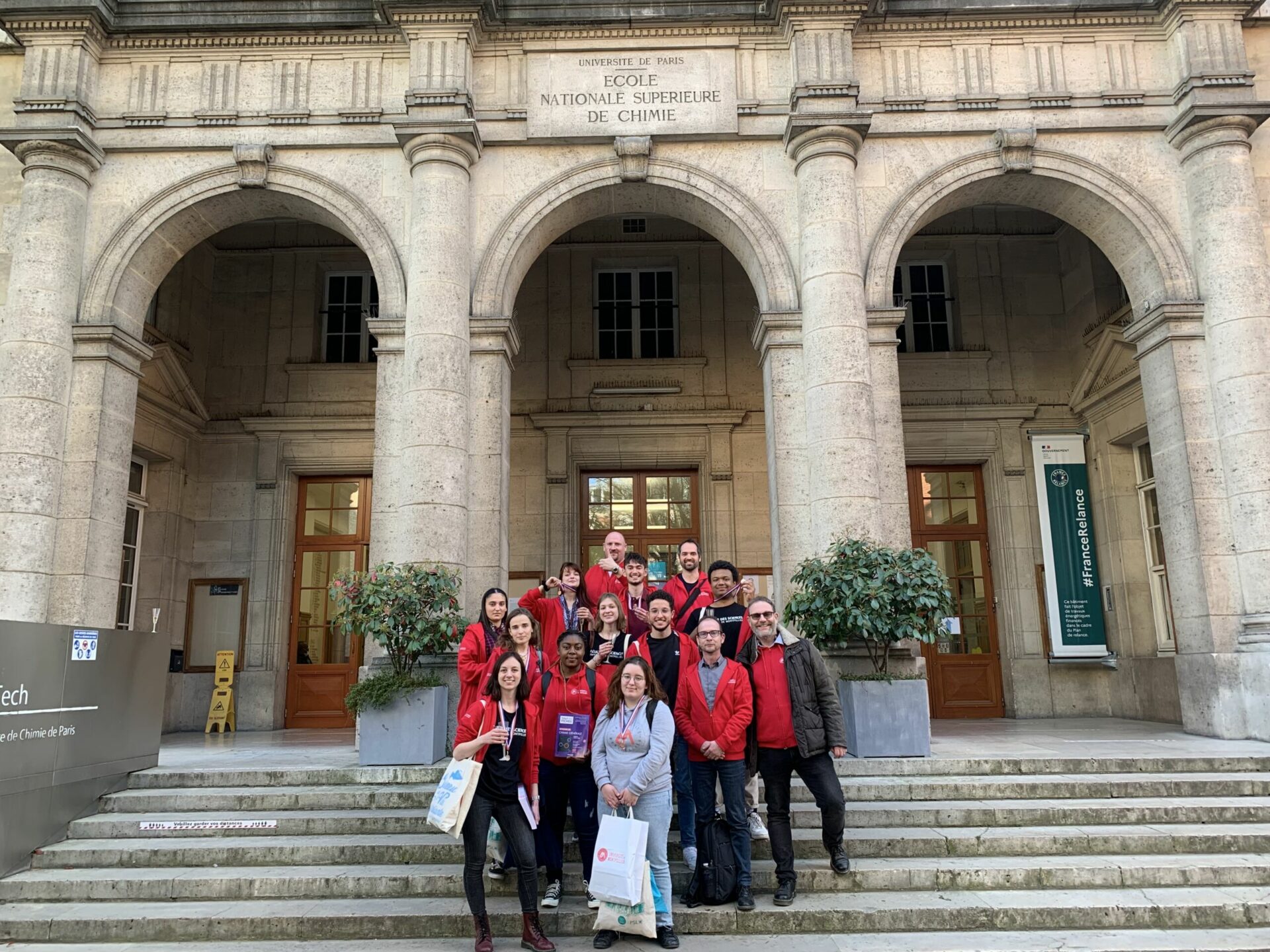
“This tournament is a somewhat exclusive club among the top universities, but this year we managed to make it onto the team,” explains Jean-Sébastien Filhol. For this “ Professor ” from the chemistry department of the Faculty of Sciences at Montpellier, the goal of participating in the competition was twofold: to introduce a bit of competition into the teaching process by presenting this challenge to the students and, above all,“to show them that they have no reason to feel inferior to students from engineering schools.” Surrounding him was a teaching team just as fired up as he was: Jean-Yves Winum, Claude Niebel, and Sébastien Clément. All that remained was to recruit students…
Eight required topics
A call for participants went out in January, and very quickly the dream team took shape. There are ten of them: Méritxell, Hugo, Bruna, Louise-Marie, Anthony, Omeima, Laura, Lilian, Maria, and Audrey. They’re all enrolled in master’s programs in chemistry, specializing in biomolecules, separative chemistry, or materials.“What motivated us was the idea of deepening our skills, conducting experiments, and networking, ”explains Bruna. “Teamwork and competition then became our driving forces.” And the small group hit the ground running. They had only three months to prepare for the eight required topics.
Cooking an egg without heat; presenting a blue, edible orange; capturing ultraviolet light on photographic film; creating a non-toxic green pigment; or developing a fragrance formula for water—these are just a few of the challenges that the young chemists from theUM have been working on. At lunchtime and in the evening, whenever their classes leave them a little free time, they work tirelessly on their projects and meet every Wednesday over pizza to present their results and practice their oral presentations. “In the end, I was on the computer all day, all the time,” Laura confides. “It wasn’t just a game,” Jean-Sébastien Filhol adds, “it was real professional preparation.”
The Art of Contradiction
On “D-Day,” they were ready to take on the six other teams from the country’s top schools: ENS Ulm, Lyon, and Paris Saclay, as well as the engineering schools Chimie Paris Tech, ESCPI, and École Polytechnique…“You have to admit that the others looked down on us a bit,” Jean-Yves Winum says with a laugh. The rules of the game are simple: the students compete in four public speaking contests centered on one of eight topics prepared in advance. While one team presents its findings and experiences during a 12-minute presentation, the other has the same amount of time to prepare its rebuttal, before switching roles for a rematch on a different topic.
“ It’s quite an art, ” says Bruna, winner of the “best rebuttal” award in this tournament. “While the other team is presenting, you have to do all the research on their topic, note their strengths and weaknesses, and put together a slideshow to suggest ways to improve.” ”“Rebuttal is a task in its own right,” adds Claude Niebel. “You have to take in everything the other side says, use your scientific knowledge to fill in the gaps, and know how to present yourself effectively without tearing down your opponent.” All of this, of course, in front of a professional jury made up of scientists and industry representatives.
A Different Perspective on Chemistry
A bio-sourced green chili pepper, a blue orange created by extracting natural polyphenols from wine, or an egg poached in vodka. The students’ solutions impressed the jury so much that they were awarded third place—a result their competitors likely did not expect. “They incorporated a dimension of sustainable development into the technical solutions they created and thus demonstrated that chemistry can help solve today’s challenges,” emphasizes Jean-Yves Winum. For Sébastien Clément,“beyond technical performance, the value of this competition also lies in presenting a more accessible, concrete image of chemistry to the public. This is essential at a time when science is increasingly being called into question.”
As for the students, they’ll move on to the next stage of their studies convinced that they’ve received a top-notch education, with a new skill under their belt: “In terms of oral communication, we’ve seen them make incredible progress, which is a real asset for their future careers,” notes Jean-Sébastien Filhol. “In terms of confidence, it’s an incredible boost! Some would never have dared to apply for positions typically reserved for engineers. After this victory, they no longer have any insecurities.” And that’s worth its weight in gold!