Yves Bergeron and Yves Mauffette, honorary doctors of theUM
The University of Montpellier honored Canada by awarding honorary doctorates to Quebec professors Yves Bergeron and Yves Mauffette on Friday, December 2. This was an opportunity for President Philippe Augé to highlight the valuable partnerships that unite theUM not only with the Université du Québec à Montréal (UQAM) and the Université du Québec à Abitibi-Témiscamingue (UQAT), but also with Laval University and the University of Sherbrooke.
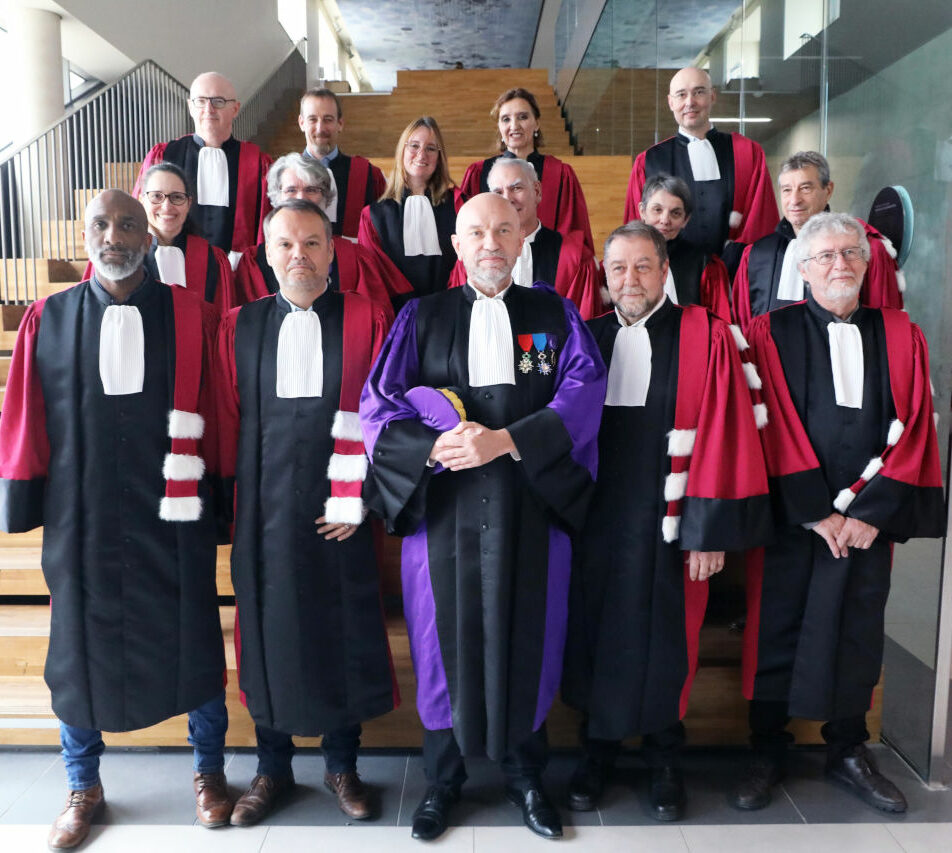
Following a warm, formal welcome from the president of theUM , and the dean of the Faculty of Sciences, Jean-Michel Marin, Ahmed Adam Ali, associate dean and sponsor of the two recipients, delivered their eulogies. It was a successful presentation by this paleoecologist—a specialist in global change, biodiversity dynamics, and forest ecology—that allowed the audience to get to know these two prestigious Professors better.
Yves Mauffette, Ecology and Education
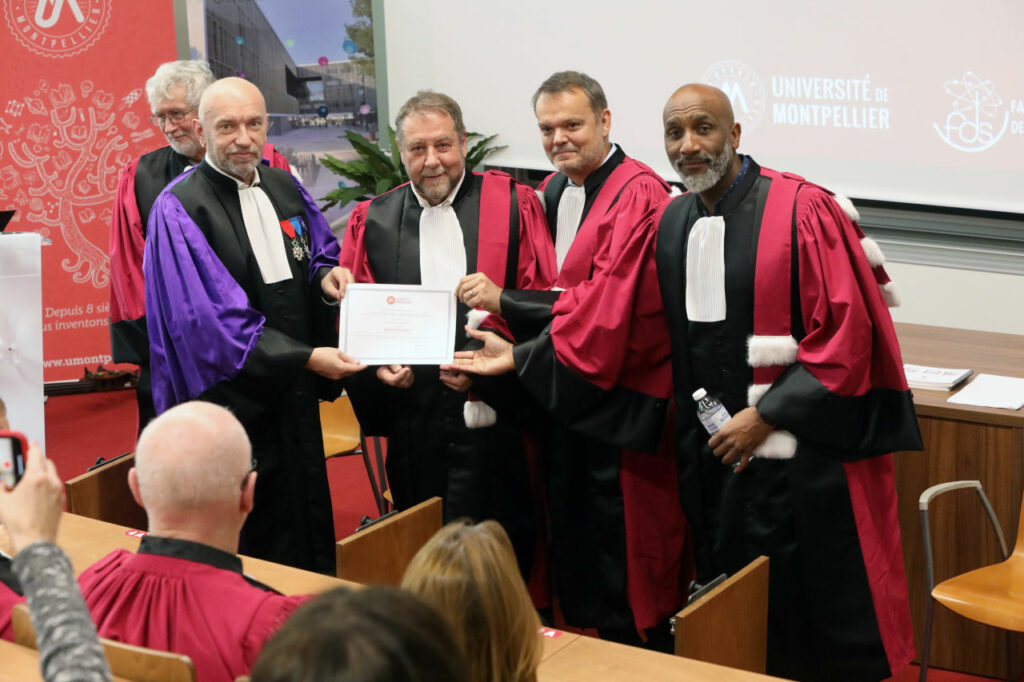
Yves Maufette is an associate professor at the Université du Québec à Montréal (UQAM). An ecologist specializing in plant-insect interactions, he is also a world-renowned “ Professor ” for his work on educational innovations in higher education. The Center for Support of Educational Innovations at theUM benefits significantly from his expertise. In fact, Yves Maufette chose to focus his lecture on this very topic:
“The role of a university professor primarily involves teaching and research. Our training is first and foremost that of a researcher, and we often teach based on our intuition. In academia, our responsibilities are divided into three areas: research, teaching, and community service. In theory, these three responsibilities should be divided equally. Research is the key activity, as it will largely determine the success of our academic careers—from promotion to international recognition. The second component of our responsibilities, teaching, is less highly valued. Choosing to invest in university pedagogy carries certain risks, as we’re stepping off the beaten path. Changing the content of one’s course is one thing, but modifying an academic program in a field—and shifting it toward a new pedagogical approach—is almost a reckless move. Isn’t preparing our students to better meet the needs of tomorrow a paramount issue? Research is advancing—so why not pedagogy?”
Yves Bergeron, the cold-climate forest expert
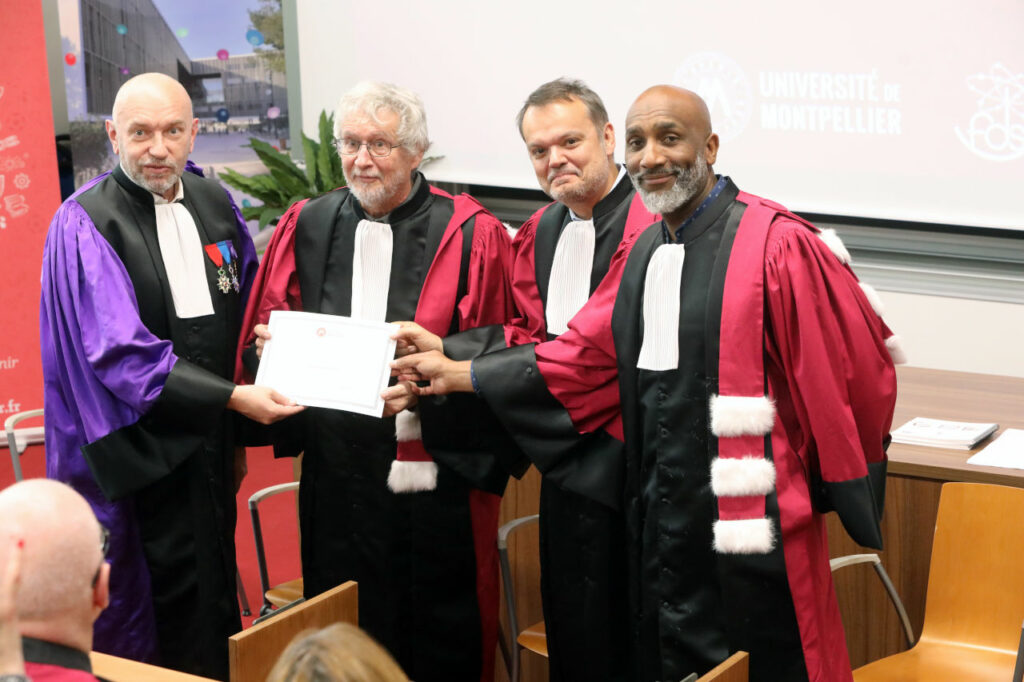
Yves Bergeron, a professor at the Université du Québec en Atibi-Témiscamingue (UQAT) and the Université du Québec à Montréal (UQAM), is a specialist in cold forests. Among other things, he is one of the driving forces behind the memorandum of understanding for the creation of the “Cold Forests” research project on the analysis of boreal ecosystems, in which theUM is also heavily involved.
“The Canadian boreal forest is one of the world’s last remaining natural forests—a forest that is under severe strain. Traditional forest management practices have significantly reduced the proportion of old-growth forests. Fire, a source of soil disturbance that increases soil fertility, has been largely eliminated. Forest managers must find ways to replicate the key characteristics of natural forests through practices that mimic natural disturbances and forest dynamics. In this critical area, France has a long history of forest management, and paleoecological approaches have been developed to reconstruct the past. Over the past twenty years, the University of Montpellier’s expertise in paleoecology has been applied in collaborative and joint supervision projects in the cold forests of Canada, France, and elsewhere around the world.”
Established by decree on June 26, 1918—and with origins that may date back to the 17th century—the title of Doctor Honoris Causa honors distinguished foreign figures who highlight and embody the university’s values through their contributions to the worlds of ideas, culture, the arts, and the sciences. Awarded during a formal ceremony, this academic title is the most distinguished and prestigious that can be conferred by a university.
News

TERRA-MED: The “UM ” is a partner in a new European doctoral program on environmental challenges in the Mediterranean
Published on: October 13 , 2026
With a total budget of 8.1 million euros, TERRA-MED is a new doctoral program…