Anatomy Museum
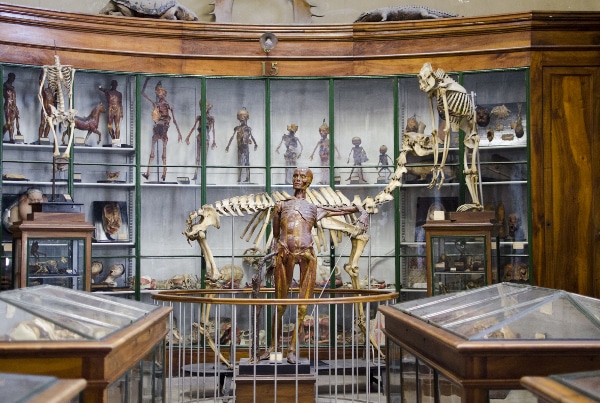
Located at the heart of Montpellier’s prestigious School of Medicine, the anatomy museum served as an unparalleled educational resource for generations of medical students long before today’s techniques for examining the human body existed. Today, it stands as a unique testament to the history of anatomy education.
Anatomy specimens, wax, plaster, and papier-mâché casts, and surgical instruments fill the period display cases that line the tour route—a total of more than 13,000 objects, making it one of the largest collections in France. A journey through time, exploring a discipline that has been taught in Montpellier since the late Middle Ages…
A museum enriched by its students
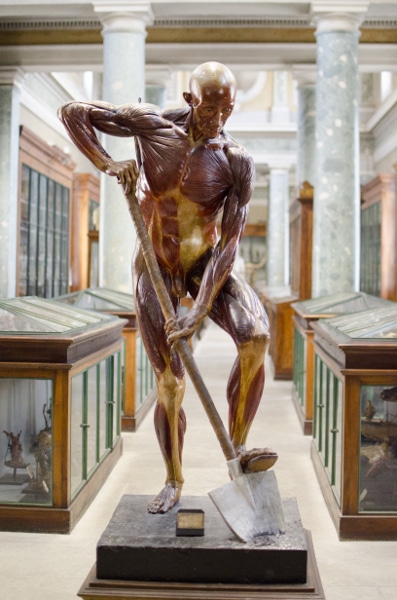
The anatomy museum was established at the same time as the opening of the medical school in Montpellier in 1795, and its collection grew thanks to its students. As early as 1798, the Montpellier School of Medicine adopted a new policy: “No student may be admitted to the final exams unless he has submitted a natural or artificial anatomical specimen to be deposited in the Museum.” In addition, renowned physicians and surgeons donated specimens from pathological cases observed in hospitals.
Opened in 1852 to display collections that had been gathered since 1795, the Anatomical Museum initially served an educational purpose: to make collections dedicated to the teaching of medicine and the natural sciences available to students at the Montpellier School of Medicine.
In 1851, the expansion of the collections made it necessary to build a new facility. The anatomy museum then moved into a gallery designed by architect Pierre-Charles Abric (1800–1871), directly across from the Jardin des Plantes, where it remains to this day.
Set in a majestic setting punctuated by colonnades, and under the watchful eyes of famous physicians and allegorical figures painted by the Montpellier artist Jean-Pierre Montseret (1813–1888), the museum presents a series of display cases offering a detailed description of the human body and its pathologies.
The conservatory also houses collections of wax casts—notably those by the Florentine Felice Fontana—as well as plaster and papier-mâché casts, surgical instruments, and orthopedic equipment. Other collections related to comparative anatomy, zoology, and archaeology round out this collection.
The collections of the Montpellier Anatomical Museum were designated as a historic monument in 2004.