This week on *A l’UM * science, Simon Galas and Myriam Richaud—both researchers at the Max Mousseron Institute of Biomolecules in the Nematodes and Tardigrades Laboratory, assisted by Morgan Pellerano, an engineer at the IBMM—give us a behind-the-scenes look at one of only two tardigrade breeding facilities in France. A in-depth report on an extraordinary creature. A program broadcast every Wednesday at 6 p.m. on Divergence-FM 93.9.
And this Easter, we invite you to revisit the miracle of the resurrection—but with a scientific twist. For many years, one organism has captured the community’s attention because its abilities seem almost supernatural. Dip it in liquid nitrogen? No problem! Boil it—no problem! UV-C light or cosmic radiation—fatal to ordinary mortals—barely fazes it and even makes it glow like a neon light; as for pressure, it easily withstands the kind found more than 180 km below the Earth’s surface. What a tough guy!
But it goes even further. Because while our mystery guest needs water to function, if there is none available, it can enter a state of suspended animation—to the point where its body looks like nothing more than an old potato chip—and wait for a drop of water to bring it back to life.
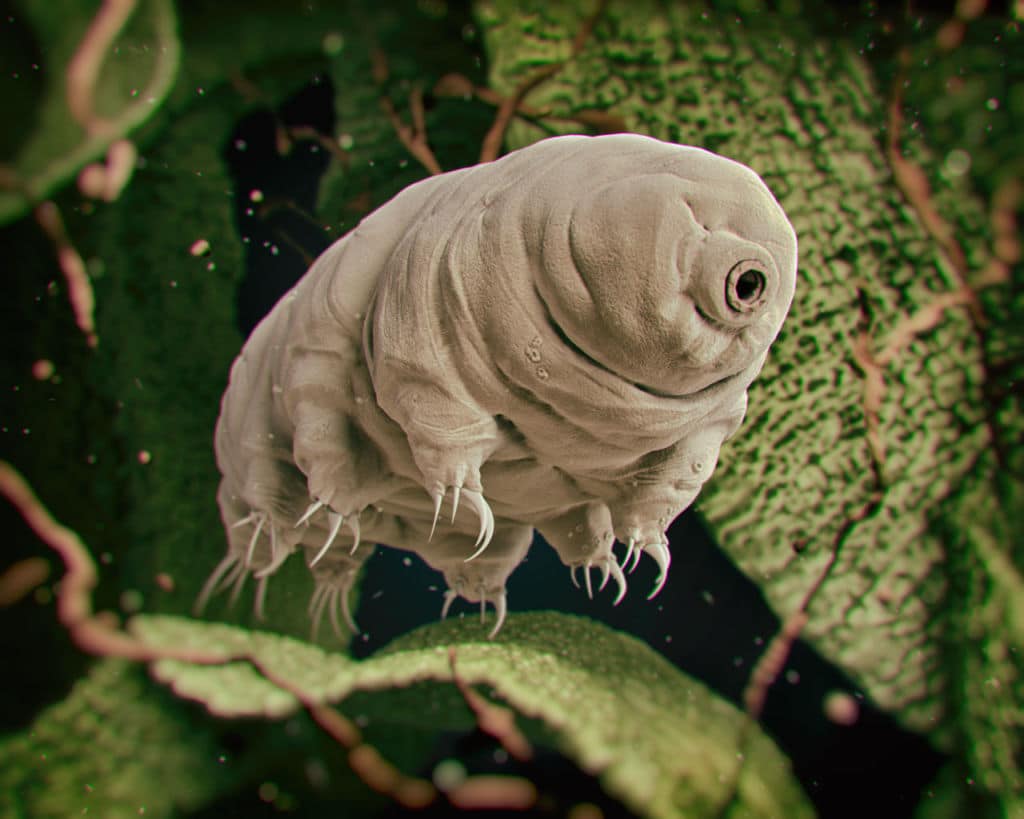
So what is this amazing organism that packs so many superpowers into one little body that it’s called an extremophile? It’s no April Fools’ joke—it’s a tardigrade. A metazoan no larger than a millimeter that has withstood everything for over 500 million years. They’re all around us as long as there’s a little water and greenery, and they go about their business with the adorable look of a miniature teddy bear. And we’re lucky that Montpellier is home to one of only two tardigrade breeding facilities in France. It’s at the Max Mousseron Institute of Biomolecules on the CNRS campus, and that’s where we’re taking you for an in-depth report with Simon Galas and Myriam Richaud—both researchers in the Nematodes and Tardigrades lab—assisted by Morgan Pellerano, an engineer… and a tardigrade breeder.
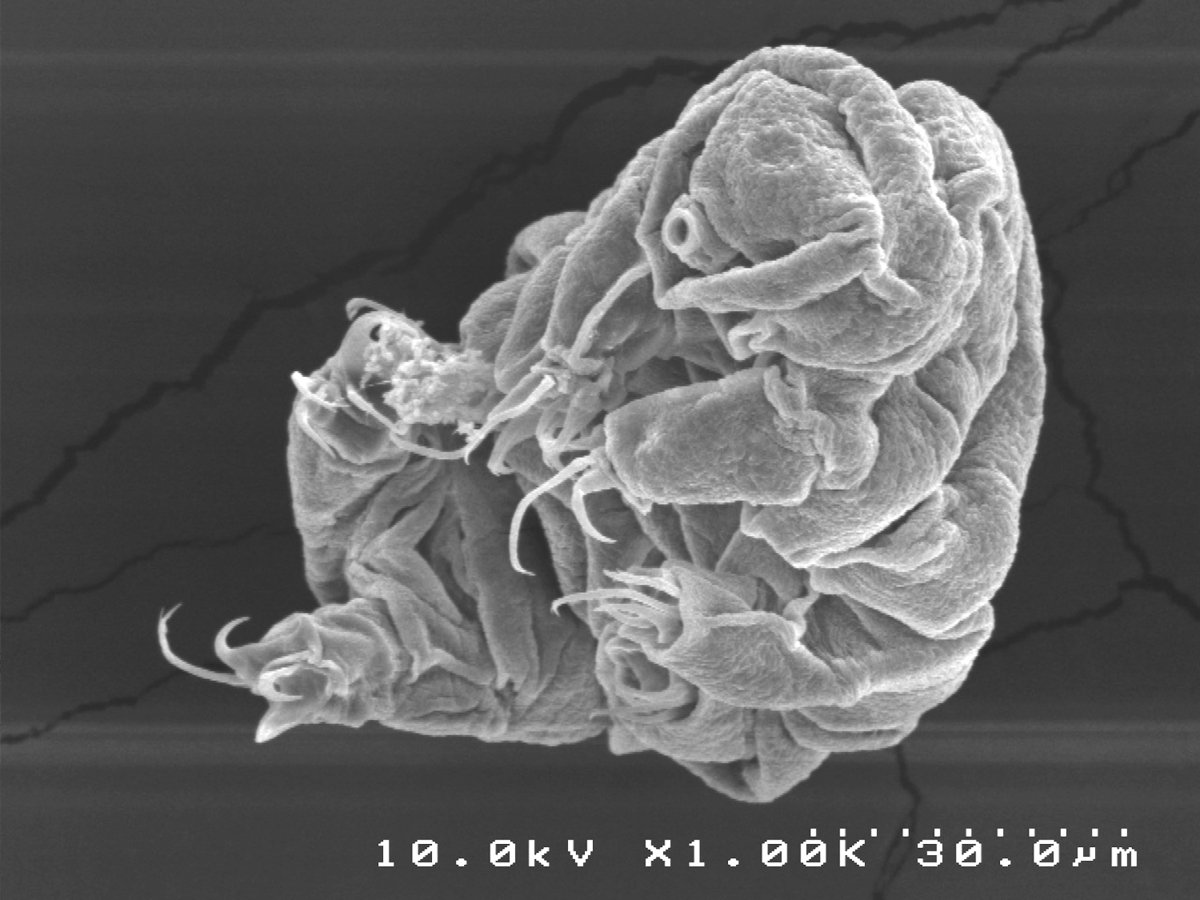
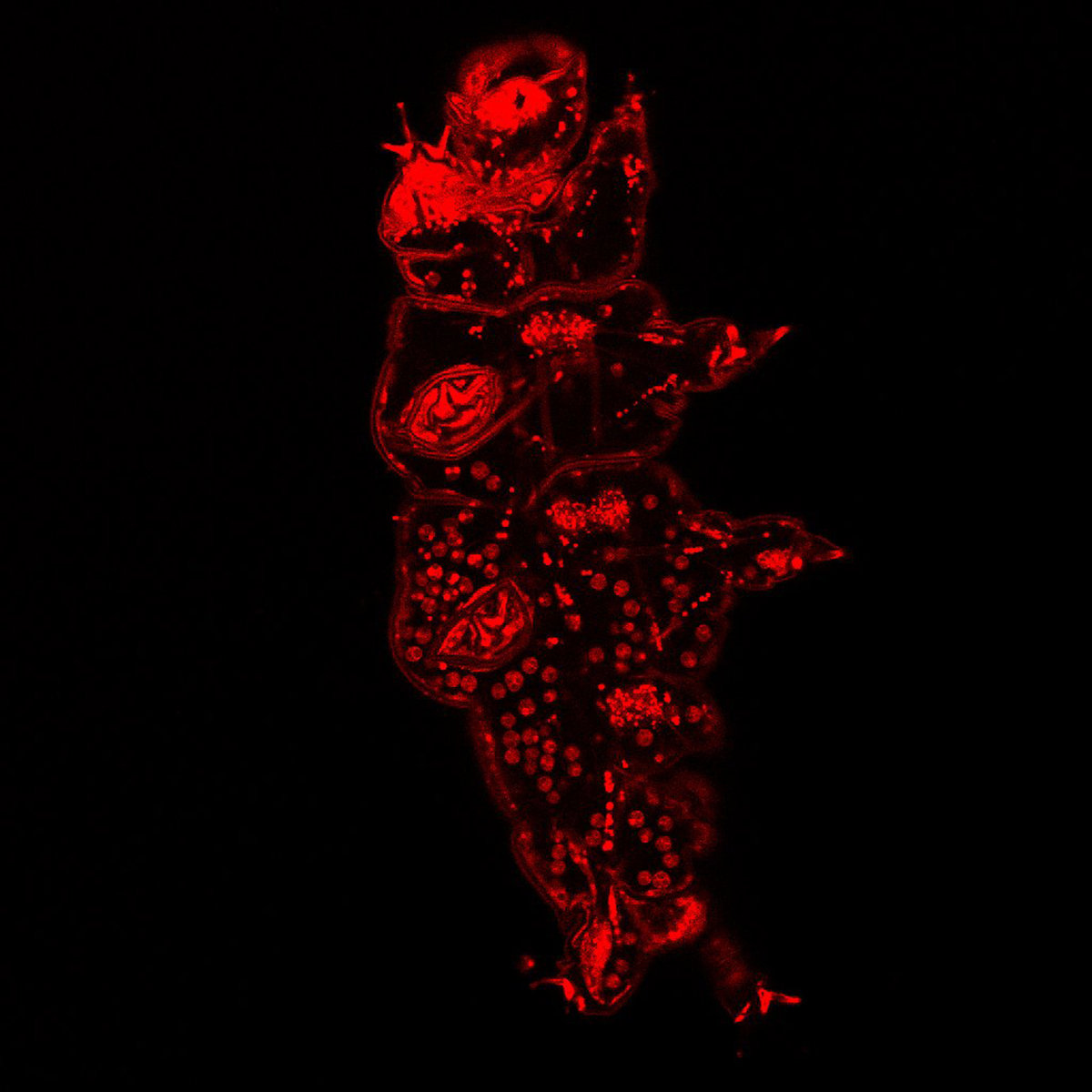
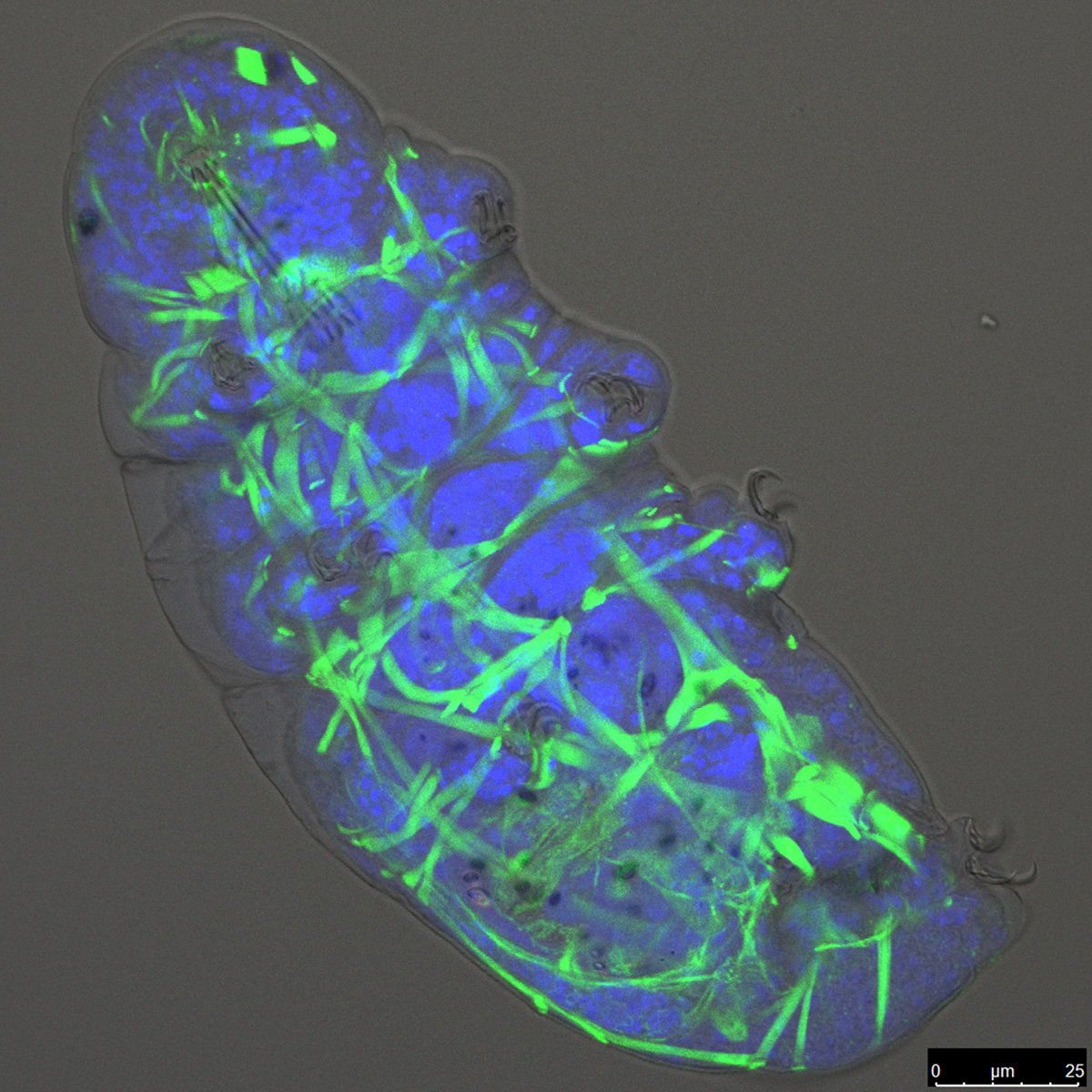
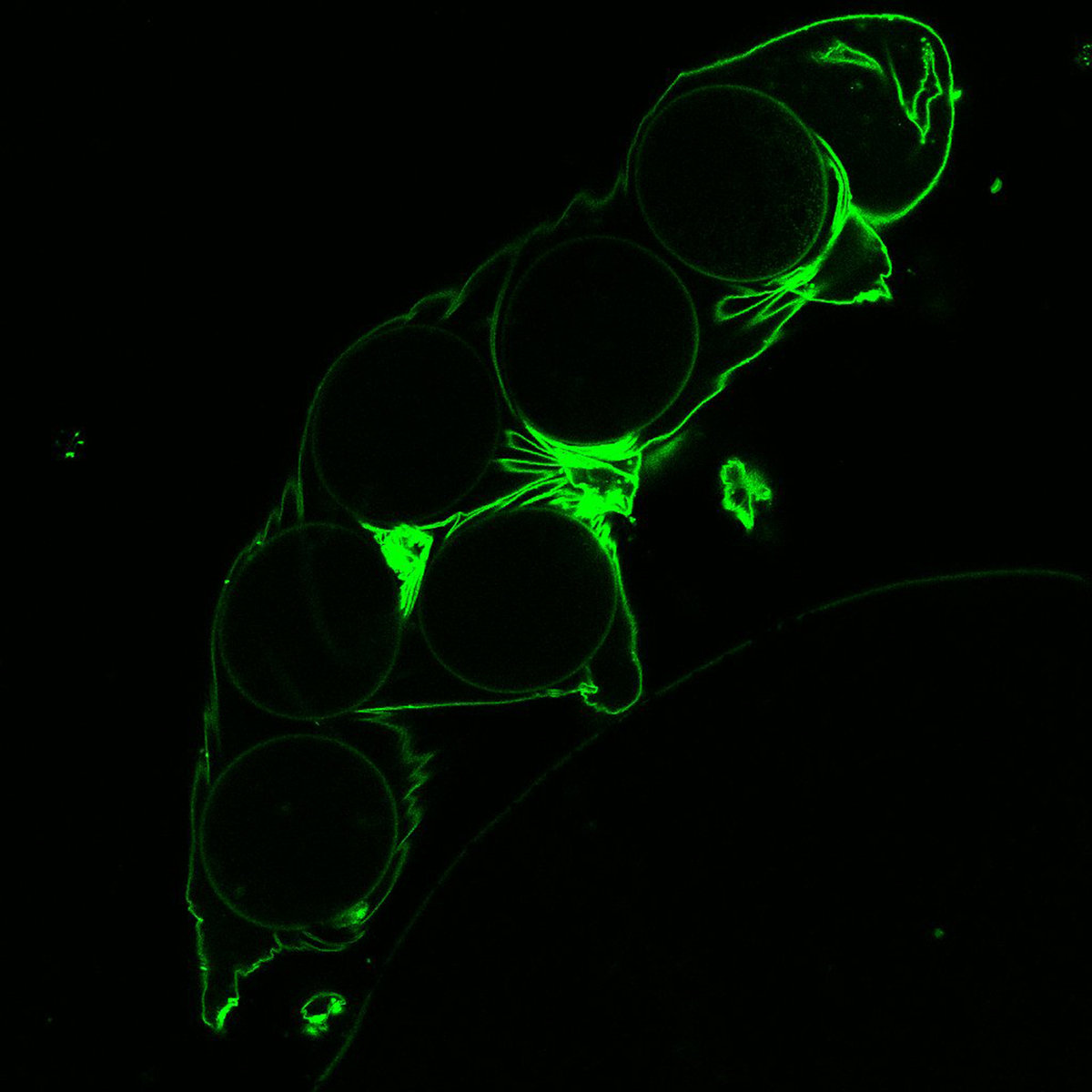
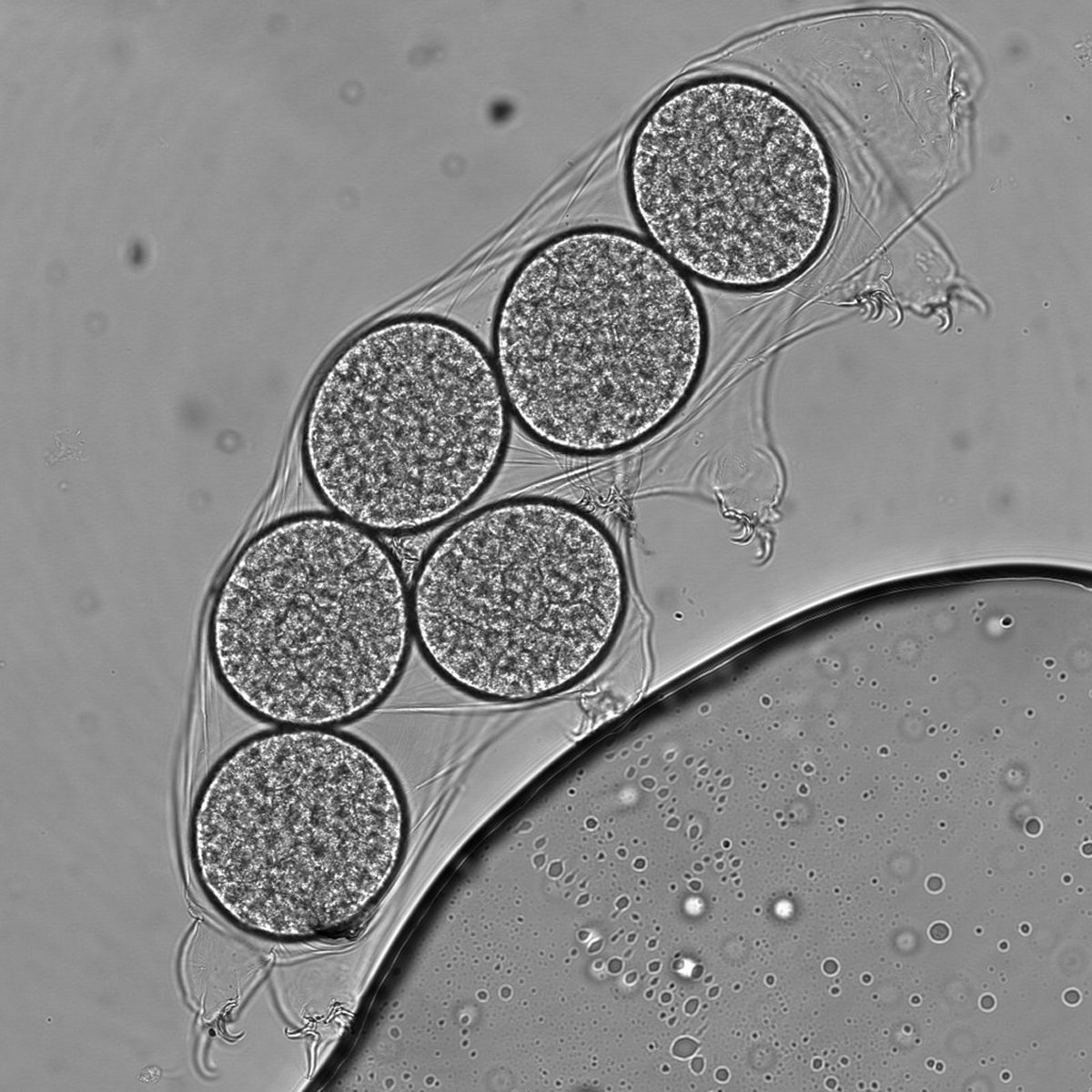
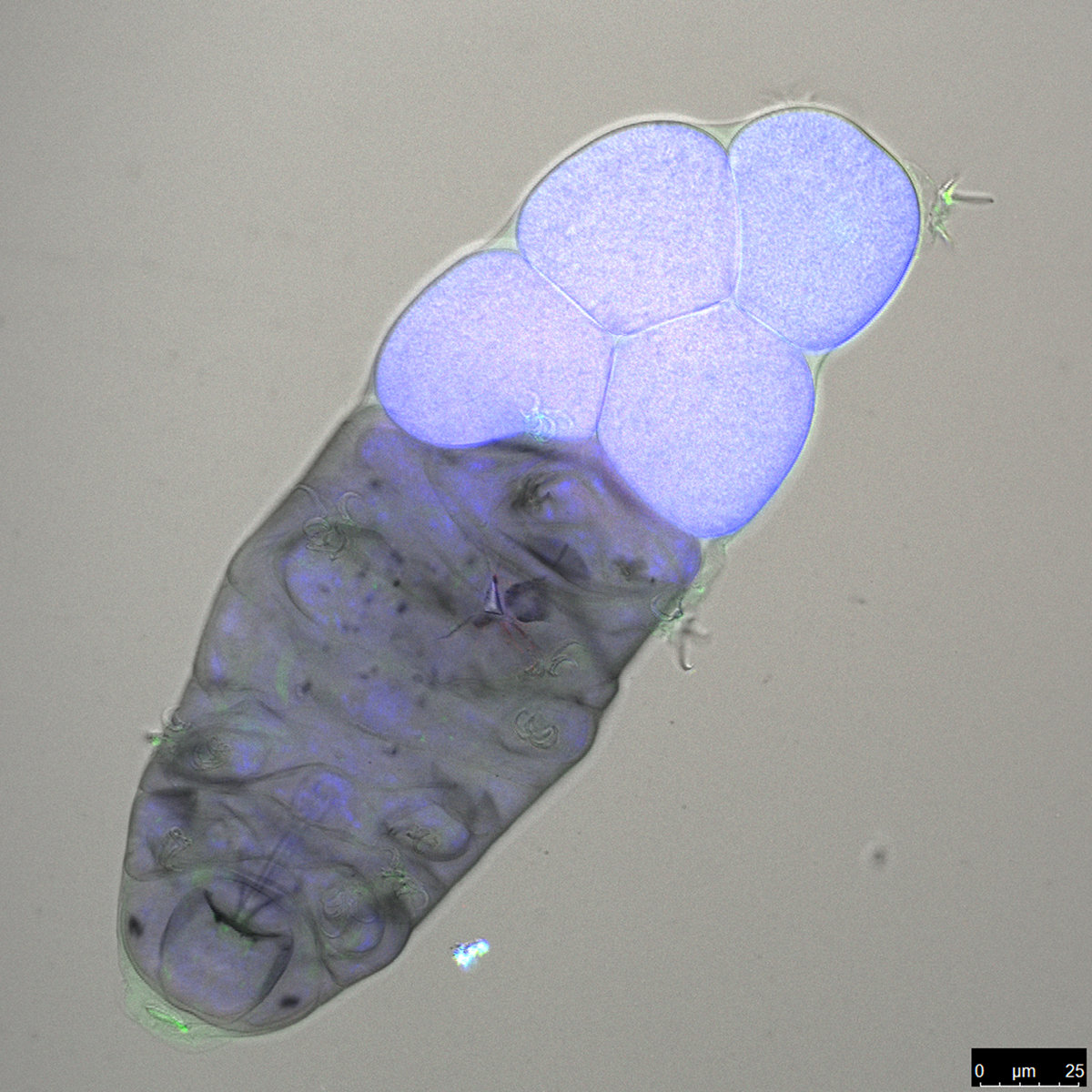
Adult tardigrade “Ramazzottius varierornatus” viewed under a scanning electron microscope. Tardigrades are animals about 1 mm long, with eight legs and, in some species, a pair of ocelli (light-sensitive organs). Present on Earth for nearly 500 million years and found in all environments, tardigrades possess the highest resilience on the planet. They survive dehydration, extreme pressures and temperatures, and radiation. The GigaTardi project explores the interior of tardigrades using various techniques to uncover their strategies for withstanding stress. UMR5247 Max Mousseron Institute of BiomoleculesAn adult tardigrade, “Hypsibius exemplaris,” viewed from the ventral side using laser-scanning confocal microscopy after treatment with a dye that stains its mitochondria (intracellular organelles responsible for respiration) red. Red spheres with internal patterns are visible. These storage cells move throughout the animal to deliver nutrients to other cells (muscle cells, neurons, the digestive tract, etc.). Tardigrades are animals about 1 mm long, with eight legs and, in some species like this one, a pair of ocelli (light-sensitive organs). “Hypsibius exemplaris” is transparent, which allows its internal structures to be visualized using dyes. Present on Earth for nearly 500 million years and living in all environments, tardigrades possess the highest resilience on the planet. In particular, they survive extreme pressures (up to 7.5 GPa) without damage to their internal structures. The GigaTardi project explores the interior of tardigrades using several techniques to uncover their stress resistance strategies. UMR5247 Max Mousseron Institute of BiomoleculesA “Hypsibius exemplaris” tardigrade, viewed from the ventral side using laser-scanning confocal microscopy after treatment with stains that color the muscles green and the DNA blue. Tardigrades are animals about 1 mm long, with eight legs and, in some species like this one, a pair of ocelli (light-sensitive organs). “Hypsibius exemplaris” is transparent, which allows its internal structures to be visualized using dyes. Tardigrades do indeed possess muscles, neurons, an intestine, and a microbiome. Having existed on Earth for nearly 500 million years and inhabiting all environments, tardigrades possess the highest resilience on the planet. In particular, they survive extreme pressures (up to 7.5 GPa) without damage to their internal structures. The GigaTardi project explores the interior of tardigrades using various techniques to uncover their stress-resistance strategies. UMR5247 Max Mousseron Institute of BiomoleculesThe tardigrade “Hypsibius exemplaris” viewed under a laser scanning confocal microscope (side view). Tardigrades are animals about 1 mm long, with eight legs and, in some species like this one, a pair of ocelli (light-sensitive organs). This species performs two actions simultaneously: laying eggs and molting (shedding its skin). In this image, captured using a special filter, six embryos can be seen that were laid and abandoned in the molted skin by the adult. Tardigrades, which have been on Earth for nearly 500 million years and live in all environments, possess the highest levels of resilience on the planet. They survive dehydration, extreme pressures and temperatures, and radiation. The GigaTardi project explores the interior of tardigrades using various techniques to uncover their stress-resistance strategies. UMR5247 Max Mousseron Institute of BiomoleculesMolting of the tardigrade “Hypsibius exemplaris” harboring embryos, viewed under a laser-scanning confocal microscope (side view). Tardigrades are animals about 1 mm long, with eight legs and, in some species such as this one, a pair of ocelli (light-sensitive organs). This species performs two processes simultaneously: laying eggs and molting (shedding its skin). In the image, six embryos have been laid and left behind in the molted exoskeleton (old skin) by the adult. We can also see the tips of the adult’s legs, topped with claws characteristic of the species. Present on Earth for nearly 500 million years and living in all environments, tardigrades possess the highest resistance capabilities on the planet. They survive dehydration, extreme pressures and temperatures, and radiation. The GigaTardi project explores the interior of tardigrades using several techniques to uncover their stress resistance strategies. UMR5247 Max Mousseron Institute of BiomoleculesThe tardigrade “Hypsibius exemplaris,” viewed from the ventral side, and its embryos as seen under a confocal laser microscope. Tardigrades are animals about 1 mm long, with eight legs and, in some species like this one, a pair of ocelli (light-sensitive organs). This species performs two actions simultaneously: laying eggs and molting (shedding its skin). In the image, four embryos that have already been laid are still sharing the same skin with the adult. In a few minutes, the adult will emerge from the molted skin and leave them behind. You can also see the adult’s ocelli as well as a few claws at the tips of its legs. Present on Earth for nearly 500 million years and living in all environments, tardigrades possess the highest resistance capabilities on the planet. They survive dehydration, extreme pressures and temperatures, and radiation. The GigaTardi project explores the interior of tardigrades using various techniques to uncover their strategies for resisting stress. UMR5247 Max Mousseron Institute of Biomolecules