UM atUM [S05-ep07]: The Vulnerability of Farms in the Haut-Languedoc
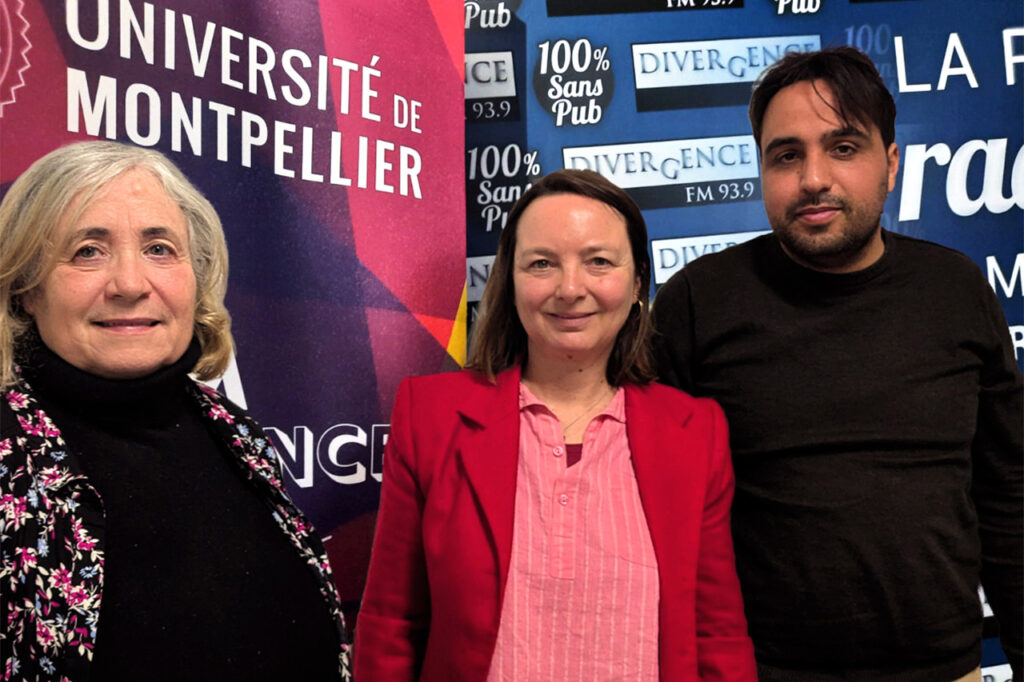
This week onUM atUM ," three economists: Abderaouf Zaatra (Ciheam), Mélanie Requier (CIHEAM), and Hélène Rey-Valette (Cee-m). They discuss a study conducted in the Haut-Languedoc region on the vulnerability of farms to climate change. Marianne Dupré-Gabirot, head of the science outreach department, introduces us to the new season of the Bar des sciences. A program broadcast every Wednesday on Divergence.
While winter has been a bit harsher than usual so far this year, the cold snap in January does nothing to alter Météo France’s alarming assessment: 2025—like 2022, 2023, and 2024 before it—is among the warmest years ever recorded in France since 1900.
Climate change—which, by the way, will be the subject of the upcoming issue of Lum magazine, coming out very soon—affects agriculture first and foremost, especially in our northern regions, which are even more affected than the rest of France. Just a few dozen kilometers from here, in the Haut-Languedoc—a highly rural region spanning 1,900km² that stretches from the Orb River in the north to Capestan in the south, and from the Lauragais plain in the west to the Béziers area in the east—the number of farms has plummeted by 60% in just over 20 years. This decline clearly calls into question our region’s resilience. And while climate change is not the sole cause, it will be the primary driver in the coming years if nothing is done.
So how can we tackle this? First, by accurately assessing one’s vulnerability and the factors contributing to it. That’s for farmers! Second, by making informed strategic choices. That’s for public authorities! To address this dual challenge, our guests conducted a study that combines these two approaches: assessing farm vulnerability and evaluating farmers’ perceptions of vulnerability factors. An article published in the journal Land on July 1, 2025.
Abderaouf Zaatra and Mélanie Requier are researchers at the International Centre for Advanced Agricultural Studies in Montpellier (CIHEAM); Hélène Rey-Valette is a researcher at the Montpellier Centre for Environmental Economics (CEE-M).
See also:
Abderaouf Zaatra’s dissertation, titled: “Vulnerability of Farms and Preferences for Adapting to Climate Change in the Haut-Languedoc Region and Its Vineyards.”
Our last-minute guest is Marianne Dupré-Gabirot, head of the science communication department atUM. She’ll be introducing the new season of the Science Bar. The next event will take place on January 29 at 7:30 p.m. at Brasserie Le Dôme, as always. The topic? Viral diseases: between panic and trivialization. It’s a timely topic!
AtUM , you’ve got the program—let’s get started!
Co-production: Divergence FM / University of Montpellier
Host: Lucie Lecherbonnier
Interview: Lucie Lecherbonnier / Aline Périault
Production: Alice Rollet
UM podcasts areUM available on your favorite platform (Spotify, Deezer, Apple Podcasts, Amazon Music, etc.).