Science at UM [S05-ep10]: Otter, are you there?
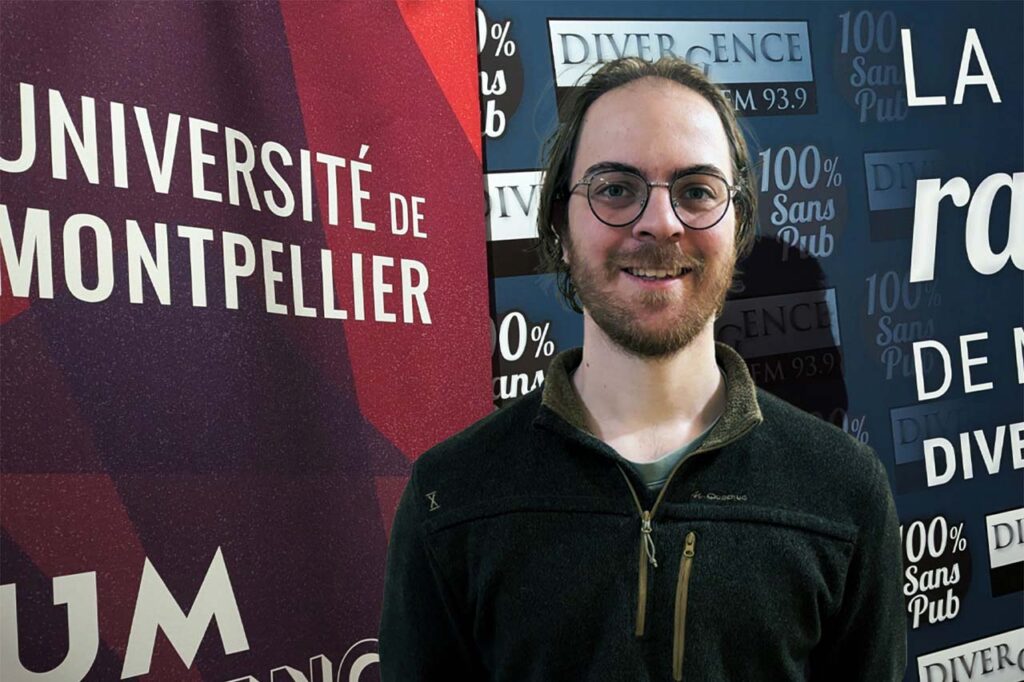
This week on "Science at UM," Simon Lacombe, a doctoral student at the Center for Functional and Evolutionary Ecology , talks to us about the return of the otter to the banks of the Lez. The report takes us to the Jardin des Plantes with its director, John Devos. A program broadcast every Wednesday on the radio Divergence.
The otter, a semi-aquatic carnivore and the symbol of the first European treaty on the protection of wildlife and natural habitats, is making a major comeback in France. Yet this most adorable of our rivers’ inhabitants has come a very, very long way, as the species had all but disappeared in the second half of the 20th century.
Hunted for its fur, persecuted by fishermen and fish farmers who saw it as a neighbor that was a bit too voracious, and affected by the degradation of its natural habitats, the otter gradually declined. It wasn’t until 1972 that hunting it was banned, and 1981 that the Bern Convention on the Conservation of European Wildlife and Natural Habitats changed its status from a pest to a protected species.
Between 2000 and 2004, it was the subject of an initial restoration plan that laid the groundwork for the key measures needed to facilitate its recovery. Then, between 2010 and 2015, a national action plan was launched to ensure the long-term conservation of the species, followed by a second plan that is currently underway and will run through 2028.
These efforts are paying off, as otters are now found in about 75% of the region, including along the banks of the Lez. So don’t expect to spot one during your Sunday stroll—the chances of that happening are slim. The animal is far too elusive, but perhaps as you stroll next Sunday, it will be watching you from its hiding spot—and just knowing that is enough to change the way we view the environment in which we live.
Since good news isn’t all that common, we wanted to learn a little more about it, so we’re joined today by Simon Lacombe, a doctoral student at the Center for Functional and Evolutionary Ecology. He was lucky enough to observe this fascinating animal settling along the banks of the Lez River. He’ll tell us all about its diet, its active periods, its interactions with other species, and the geographical origins of the individuals.
Read:
Check out:
In the second half of the program, I invite you to take a stroll through the Jardin des Plantes. Since December, the main gate—which had been closed for over 20 years—has reopened at the upper end of the garden. It’s a chance to rediscover this iconic spot, and that’s exactly what I did alongside John Devos, its director. Episode One.
At UM Science, you’ve got the program—let’s get started!
Co-production: Divergence FM / University of Montpellier
Host: Lucie Lecherbonnier
Interview: Lucie Lecherbonnier / Aline Périault
Report: Lucie Lecherbonnier
Director: Alice Rollet
Tune in to the show “A l’UM la science” on Divergence FM 93.9

UM podcasts are now available on your favorite platform (Spotify, Deezer, Apple Podcasts, Amazon Music, etc.).