Science at theUM [S05-ep15]: A Strategy for Studying Ticks
This week on *A l’UM : Science*, Olivier Duron from the Mivegec explains how sequencing can be used to diagnose tick-borne diseases. In the second half of the show, we return to the food technology platform at the Qualisud with Romain Domingo. The program airs every Wednesday on the radio station Divergence.
Humans, non-human animals, plants, and ecosystems. One planet. One health. That’s how to summarize in a few words the integrated One Health approach, which was at the heart of a major summit held in Lyon on April 7, 2026. As a flagship event of the French G7 presidency, it brought together heads of state and government, international organizations, scientists, local authorities, and representatives of civil society to strengthen the capacity of our health systems to address health and ecological crises.
In 2020, it was indeed one of these crises—the COVID-19 pandemic—that brutally reminded us all just how interdependent the health of ecosystems, animals, and humans is. Whether it’s the destruction of wild habitats that forces humans and non-human animals to come into closer contact, or global warming that encourages the proliferation of insect vectors we’d rather not cross paths with.
Among these charming little creatures, there is one that finds no favor in our eyes—perhaps because it literally feeds on us… the tick. While this arthropod isn’t exactly an attractive sight to begin with—with its burrowing head, eight legs, and blood-engorged body—the bacteria and parasites it carries can sometimes send a shiver down our spines. And that’s why this creature is under increased surveillance, particularly in our region, where new species are beginning to make their presence known—such as Hyalomma marginatum, nicknamed the “giant tick.”
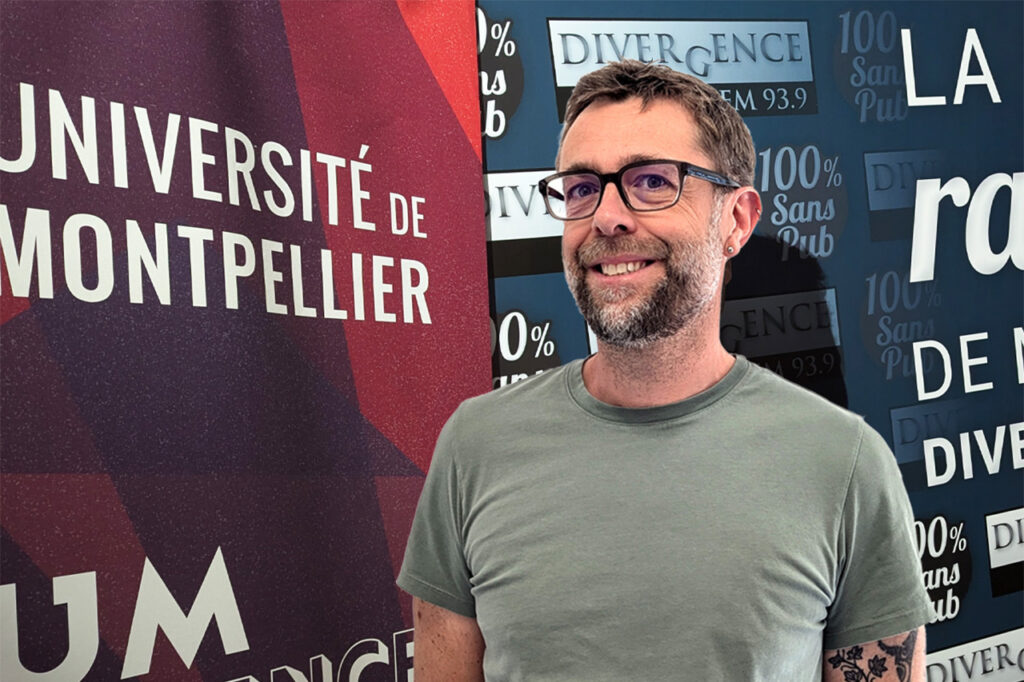
Olivier Duron, a researcher at the Infectious Diseases and Vectors, Ecology, Genetics, Evolution, and Control (Mivegec) laboratory, takes a close interest in ticks and their hosts and explains how he studies them using high-throughput sequencing. He is a co-author of a study published in the journal *One Health* titled “A Narrative Review Presenting the Main Applications of High-Throughput Sequencing in Vector Surveillance, Epidemiology, and Microbiological Diagnosis of Tick-Borne Diseases, within the Framework of a ‘One Health’ Approach.”
In the second half of the program, we return to CIRAD for a second report on the food technology platform at the Qualisud laboratory. We follow Romain Domingo, head of the laboratory for physical, rheological, and textural measurements of food, as he explains all the tests he conducts on bread—from the particle size distribution of the flour to the viscosity of the dough and the texture of your slices of bread.
At "UM : Science," here's the lineup—let's get started!
Co-production: Divergence FM / University of Montpellier
Host: Lucie Lecherbonnier
Interview: Lucie Lecherbonnier / Aline Périault
Reporting: Aline Périault
Director: Alice Rollet
Listen to the show “A l’UM la science” on Divergence FM 93.9
Check out theUM podcasts, now available on your favorite platform (Spotify, Deezer, Apple Podcasts, Amazon Music, etc.).