The Anatomy of the Automata: From the Body to the Machine
In partnership with Mamco In Geneva, theUM , and La Panacée have joined forces for a hybrid exhibition on view through February 28. More than ever, ambiguity surrounds the status of the human body, whose identity is being undermined by technological advances that are constantly pushing the boundaries of what is “humanly possible.”
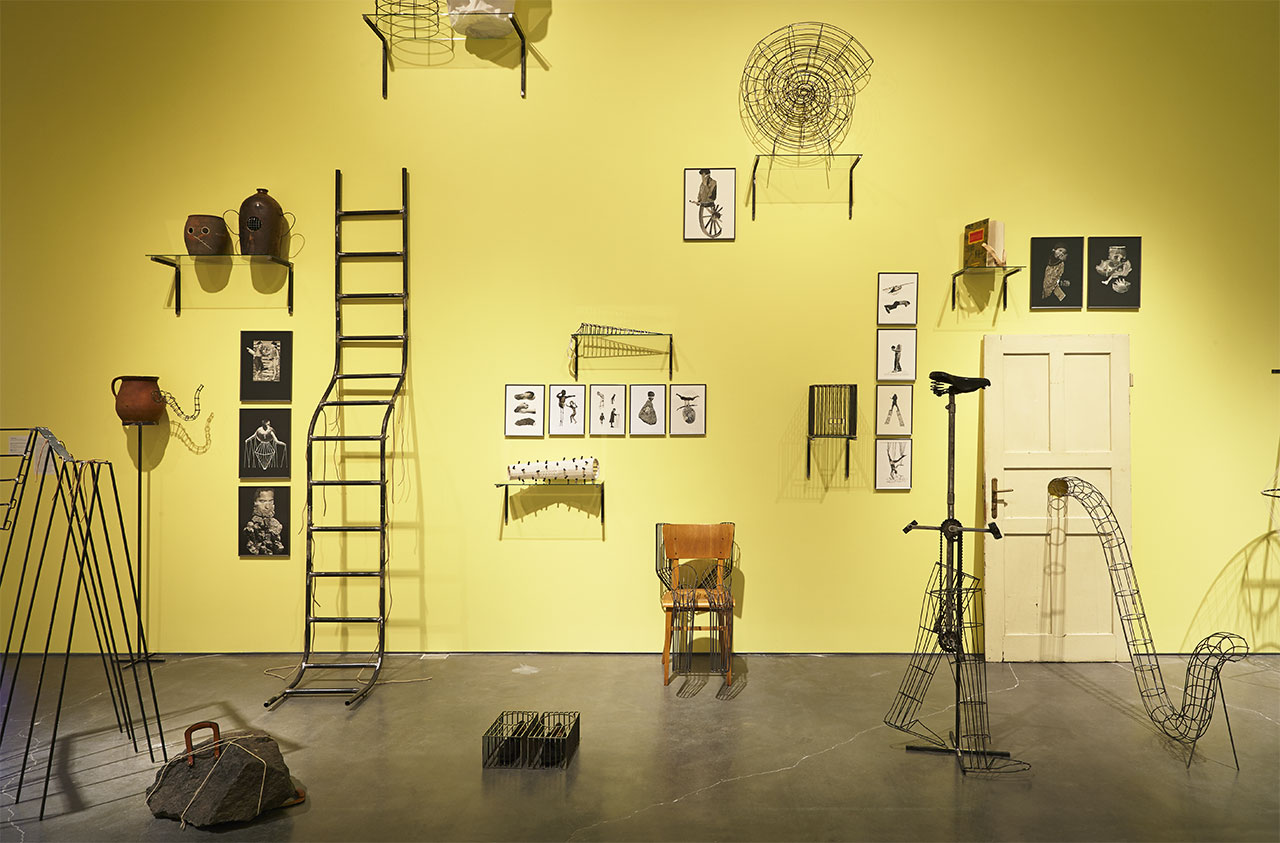 Whether it promises a bright future or a foregone nightmare, the question remains open—but it is by no means a new one. From the “mechanical man” conceptualized by René Descartes to the “augmented human” of the transhumanist movement, human beings have constantly questioned their unique nature in light of their relationship to the mechanics of objects.
Man and His Double
In the age of cyborgs and artificial intelligence, are we witnessing a shift from a strictly utilitarian relationship to a new form of otherness—or even a reversal of the balance of power? Is there not a risk that humanity’s uniqueness will be diluted until it becomes nothing more than a substitute, “the ultimate illusion of a natural identity,” as suggested by Christian Bernard, director of the Mamco in Geneva and curator of the exhibition?
Distinguishing between the human and the inanimate, between a conscious act and a programmed reflex, seems increasingly complicated in an age when organic beings and machines are merging.
Based on this observation of the blurring of a boundary that is more fluid than ever, the exhibition *Anatomy of the Automaton* explores this duality, which has fueled philosophical debates and controversies since the17th century. By juxtaposing contemporary artworks, anatomical specimens from theUM, archival collections, and robots from the LIRMM (Montpellier Laboratory of Computer Science, Robotics, and Microelectronics), the exhibition offers a concise overview of the history of the ambivalent relationship between humans and their mechanical doubles.
The ambition of this exhibition is to foster a dialogue between the arts, sciences, and cultural heritage. It will also feature “perspective tours” that bring visitors face-to-face with researchers from theUM, who will share their “scientific” perspective on the exhibition. Artists, for their part, will offer a unique take on the Anatomy Conservatory, a jewel of the university’s cultural heritage.
Workshops for young visitors and numerous educational activities will be part of the program for this exhibition, on view from November 21 through February 28.
- Exhibition & Resource Center: November 21 – February 28
- Wednesday through Saturday, 12:00 p.m. to 8:00 p.m.
- Sundays from 10 a.m. to 6 p.m.
- And on certain evenings for events / www.lapanacee.org
- Free admission
- La Panacée Café
- Wednesday through Saturday, 10 a.m. to 1 a.m.
- Sundays from 10 a.m. to 6 p.m.
- THE PANACEA
- Contemporary Culture Center
- 14 Rue de l’Ecole de Pharmacie – 34000 Montpellier
- Phone: +33(0)4 34 88 79 79 – www.lapanacee.org