Climate: When Young People Speak Out
He will attend “COP 22,” which will be held in Marrakesh in November. According to David Resillas, a representative of a student association at theUM , and a delegate for Youngo[1], it is now essential to ensure that the voice of the world’s youth is better heard in climate negotiations.
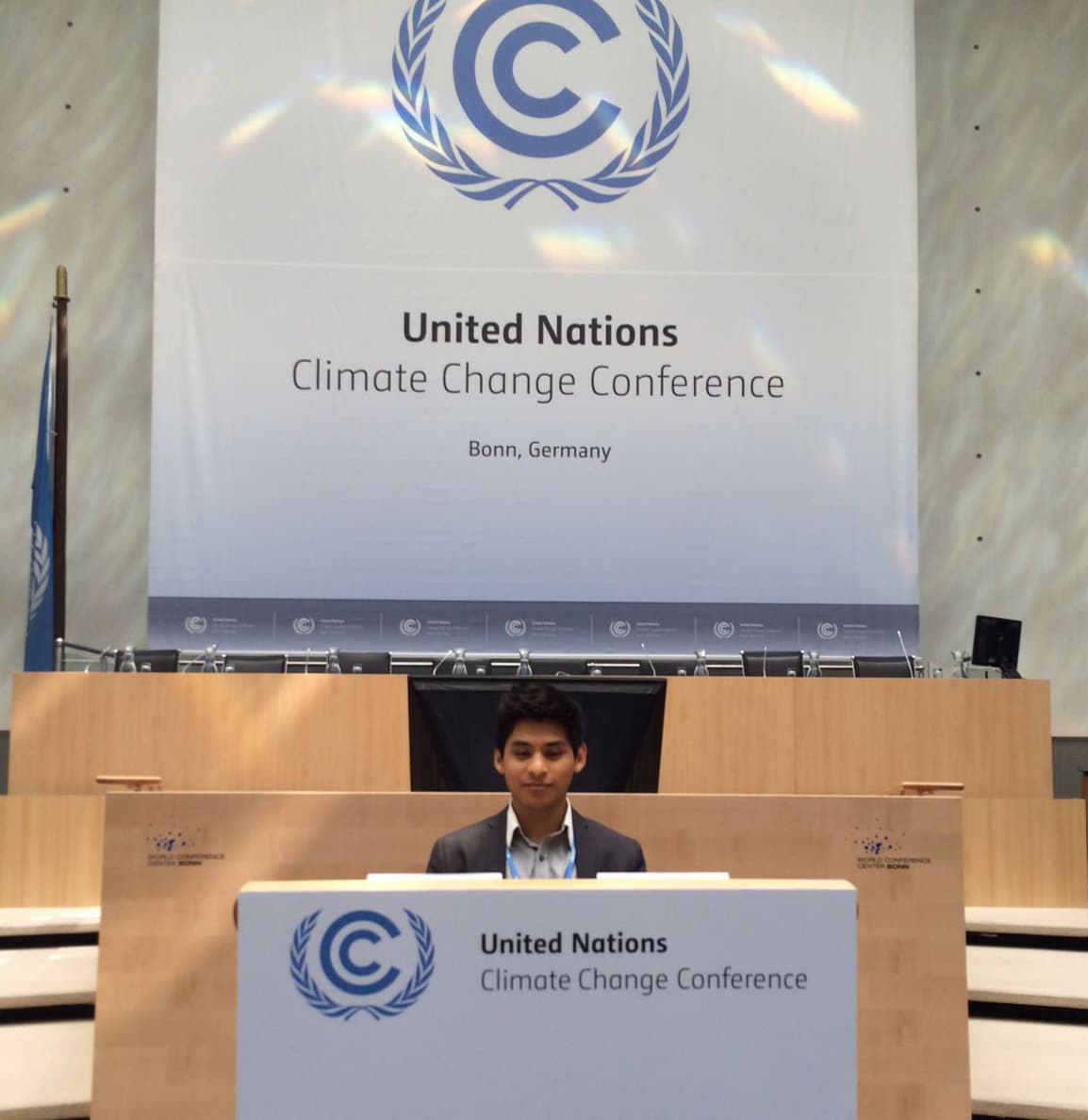 This is the next annual climate change conference: “COP22” will be held from November 7 to 18, 2016, in Marrakesh, under the auspices of the United Nations. But before this major event, there was an intermediate step: the pre-COP22, which took place through May 26 in Bonn, Germany. The main objective of this “intersessional meeting” was to begin implementing the Paris Agreement. Among the “climate negotiators” present in Bonn was David Resillas, 25, representing the Youngo movement.[1] and a member of the REFEDD Board of Directors[2]. This student at IAE Montpellier is also the co-founder of EDDA[3], a student organization at the University of Montpellier.
What were the key issues at the Bonn meeting?
Maintain the momentum from COP21, stay the course, and clarify the path forward. The Paris Climate Agreement was adopted by 195 countries, and the ratification process is underway: France has just ratified the Paris Agreement. In Bonn, alongside this process, the goal was to ensure that commitments are fulfilled, to establish a roadmap, and to discuss new issues that may have arisen. At this major forum, where various coalitions and lobbying groups made their voices heard, the organization Youngo came to represent youth associations from around the world, focusing on two main themes: education and intergenerational equity.
What is the message from the young people at Youngo?
My generation is going to bear the brunt of climate change. The effects of global warming are already here, and they will only intensify. If we don’t establish a framework for mitigation, adaptation, and raising awareness, it will be up to us to manage the crisis! This generation is therefore destined to be a victim; yet it still has no say in the matter. We have concrete and innovative proposals to offer, and we want our voices to be heard more clearly: people my age have fresh ideas to put forward. Today’s decision-makers are highly qualified, but their approach to action remains largely the same as it was 50 years ago. We need a paradigm shift: sustainable development is the key to overcoming the climate crisis. It’s a concept my generation is deeply committed to.
How do you hope to make an impact in the negotiations?
Young people are still largely underrepresented in these debates. But the Secretariat of the United Nations Framework Convention on Climate Change (UNFCCC) is fully aware that, in order to address these global challenges, young people have something valuable to contribute: their creativity, their energy, and their passion. The delegates from YOUNGO*, of which I am a member, are here to give voice to young people. We are not professionals but students with backgrounds in civic organizations. We therefore bring an independent and impartial perspective to the discussions: we are not bound by any professional constraints or economic interests. This is a strength—it gives our voices even greater weight.
What are your next concrete steps?
This will primarily involve expanding the UN National Youth Delegate Program—a program that is already in place but needs to be better structured. The primary mission of these young delegates will be to engage with young people in their own countries: to raise awareness among them, encourage them to become more actively involved, and take careful note of their expectations and the projects they propose. We will propose that these youth delegates be integrated into the negotiating teams and be able to influence the debates through voting rights. We must therefore convince the UN—but also the Member States—since participation in the youth delegate program remains highly uneven from country to country.
Key Points
- Young people between the ages of 15 and 24 account for about 18 percent of the current world population, making them the largest cohort of young people in history.
- The text adopted on December 12, 2015 (the Paris Agreement) aims to limit the rise in global temperature to below 2°C by the end of the century.
[1] Youngo brings together youth organizations from around the world under the United Nations Framework Convention on Climate Change (UNFCCC)—the UN body responsible for climate negotiations.
[2] REFEDD is a network of student associations that carry out sustainable development projects in areas such as food, biodiversity, climate, waste, and more. REFEDD is a nonprofit organization under the French Law of 1901.
[3] Students for Sustainable Development through Associations.