COVID-19: The University of Montpellier is taking action to help students in need
Continuing to study remotely without computer equipment, coping with financial difficulties after losing a job—some students are being put to the test during the health crisis we are currently facing. To maintain equal opportunities for all and to combat precarious living conditions, the University of Montpellier took steps as early as mid-March to pursue two priority objectives: bridging the digital divide and addressing the social emergency.
To this end, theUM Student Initiatives Solidarity and Development Fund (FSDIE social)—which, under normal circumstances, provides assistance to the most financially disadvantaged students—has been heavily utilized and supplemented by the Student Life and Campus Contribution.
"Social distancing, which is often talked about, should not lead to social isolation."
Philippe Augé, President of the University of Montpellier
Bridging the Digital Divide
No computer? The Occitanie Region is stepping up to help
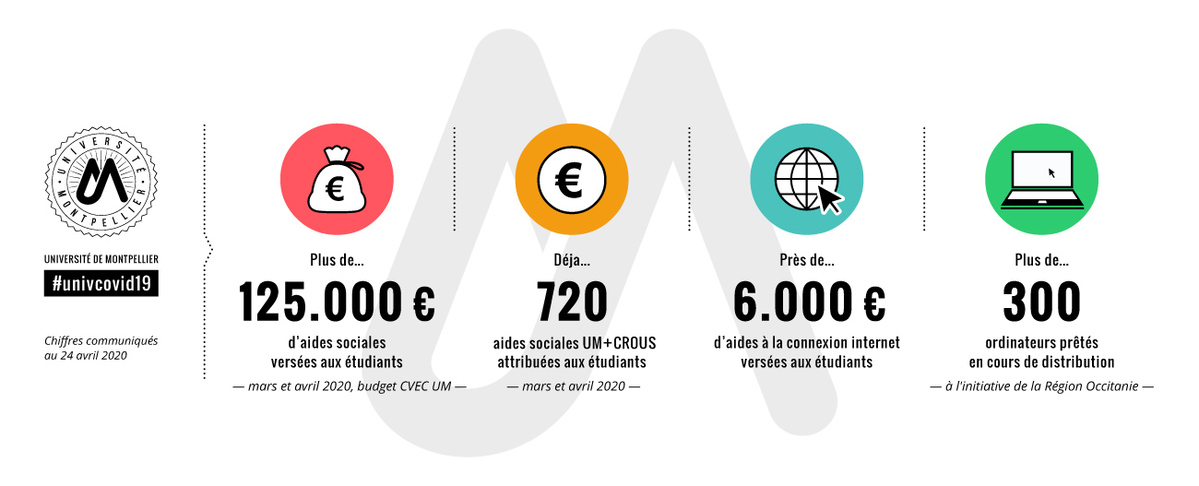
Not all students have their own computer. Usually, they can go to the Interuniversity Libraries, which are open for extended hours, to use one. But what can they do when these libraries are closed, and computers have become an indispensable tool? By making 1,500 laptops available to students at higher education institutions in its region, the Occitanie Region is helping to bridge the digital divide. Received on Wednesday, April 15, 2020, the allocation of laptops reserved for the University of Montpellier is being delivered, at the university’s expense, to students’ homes so they do not have to travel. A collaborative effort between staff from the Information Systems and Digital Technology Department—which provided technical support—the Logistics Department, and the Campus Life Department made it possible to make the first deliveries as early as the following day.
Poor signal or ran out of data? The University of Montpellier helps students access the Internet
Access to the digital services provided by the University is not always possible for students who, again due to a lack of financial resources, cannot sign up for an internet plan. This is also the case for those who are confined to an area with limited internet coverage. Therefore, the University of Montpellier is offering students in need exceptional financial assistance to help them sign up for an internet plan, upgrade their current subscription, or purchase a 4G dongle. So far, 57 students have benefited from this program.
Addressing the Social Crisis
Financial difficulties? Financial aid fromUM the CROUS to help meet students’ needs
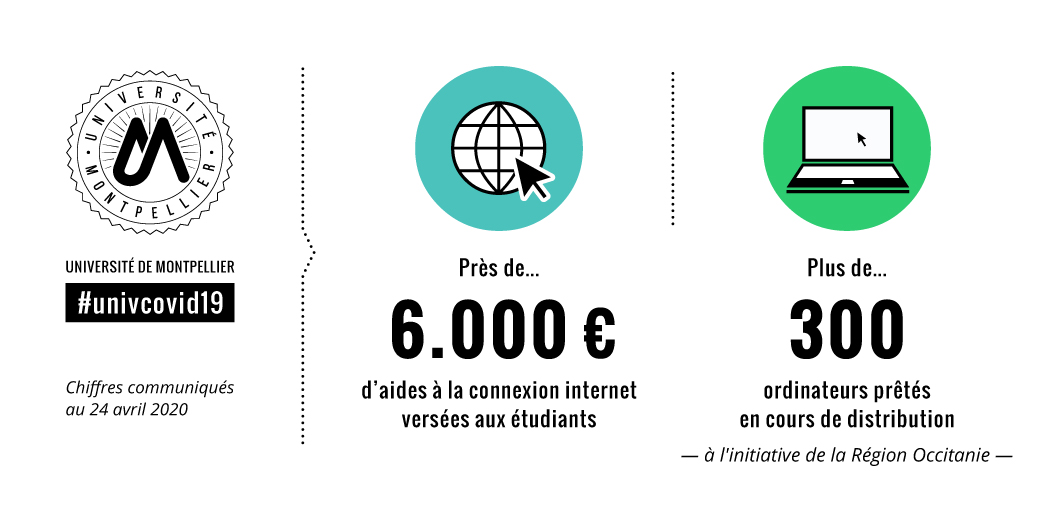
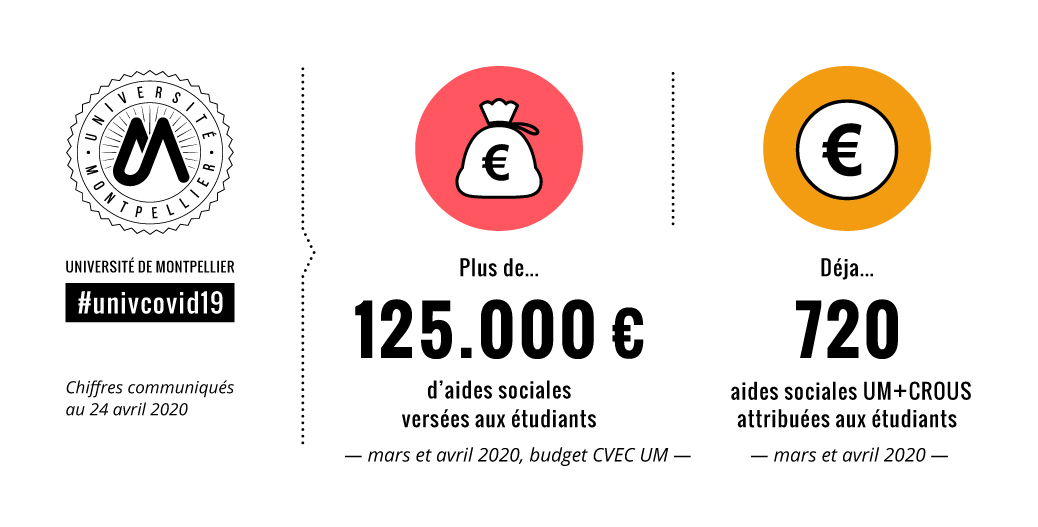
Whether or not they receive a scholarship, students facing financial difficulties can receive both assistance from the CROUS—known as ASAP (specific one-time grants)—and assistance from the University’s FSDIE social fund. This fair and tailored assistance, despite the urgency of the situation, is granted collectively by a dedicated committee. In addition, the frequency of FSDIE Social committee meetings has been increased, and a fast-track procedure—which remains rigorous—has been implemented to provide exceptional aid on an ongoing basis and within 24 hours to the most urgent requests, ensuring that no student is left without shelter or food.
Next goal: to improve efficiency, we will make certain forms of aid—such as support for students who have lost their paid internships or jobs—systematically available upon presentation of supporting documentation.
Learn more:
Please note: Financial aid granted under the FSDIE social program is reviewed, on an anonymous basis, by CROUS social workers. The university’s dedicated committee, chaired by the Vice President for Student Affairs and the Vice President for Social Responsibility, is composed primarily of student representatives.
The goal is to ensure that no student is left behind. In addition to financial aid, other initiatives have been or are being implemented: for example, to support students studying abroad, students with disabilities, or those experiencing stress, and to combat social isolation (see the dedicated article by clicking here). Under the leadership of the President, the Vice President for Social Responsibility, and the Student Vice President, all relevant central administrative departments and services, as well as the academic departments (UFRs), schools, and institutes, have come together to provide the best possible support to students, guided by the values of equity and solidarity.