[LUM#17] Biotechnologies made in Montpellier
Prevention, diagnosis, treatment. Three essential actions to improve patient care. A sector in perpetual evolution, where innovation plays a vital role. What role does academic research play in a world where biotech giants and Big Pharmas reign supreme? An essential role, as demonstrated by the companies presented here, who are rising to the challenge of creating new drugs. A challenge in a market where, for every 10,000 molecules screened, only one will make it through all the stages of testing and clinical trials to reach patients.
Sys2Diag: a revolution in diagnostics
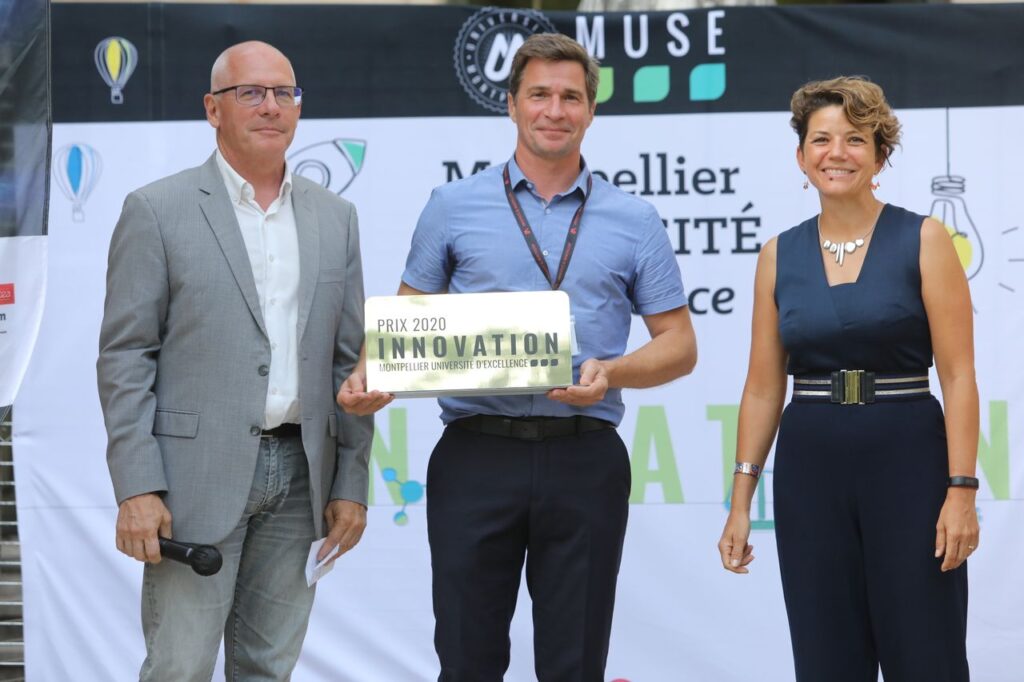
High-performance, low-cost, easy-to-use diagnostic tests: this is the credo of the Sys2diag laboratory. " A laboratory with a history of innovation in medical diagnostics in France and Europe", emphasizes its director, Franck Molina. A pioneer in innovation, but also a pioneer in the practice of public-private partnerships, the Modélisation et ingénierie des systèmes complexes biologiques pour le diagnostic laboratory is the fruit of an alliance between the CNRS and the Alcen group. " This configuration enables us to accelerate innovation by combining fundamental research with medical applications," emphasizes the winner of the CNRS 2020 Innovation Medal. And applications abound at Sys2Diag. One example is the company's rapid development of the EasyCov rapid saliva test for Covid-19, which is just the tip of the iceberg. Franck Molina has a wealth of diagnostic tests, each more revolutionary than the last. Starting with the first psychiatric blood test developed by Alcediag for bipolarity and depression, which can even help assess and anticipate the risk of suicide attempts in patients.
While this one requires a blood test, others are non-invasive. Their secret? Synthetic biology, which enables artificial cells to be designed and programmed like biomachines, so that they can perform unnatural tasks. The result: self-tests that can be carried out anywhere, without the need for a laboratory analysis. For example, Sys2Diag has teamed up with Skillcell to design the world's first urine insulin resistance test, called IDIR. "It's the first pre-diabetes test, which means you can identify a risk of diabetes even before it occurs.
Tests that can also be found... at the edge of stadiums, thanks to a salivary concussion test that can be used in real time during a match. " It can be used to objectivize the severity of concussion, so as to decide on the follow-up to be put in place, whether for professional players, amateurs or even children", explains Franck Molina, who was able to transform the test. The researcher is now working on an innovative test designed to objectivize... well-being. "We've identified the markers involved, but for the moment we can't talk about them. To live happily, let's live hidden.
Read also:
Ciloa: packages full of therapeutic promise
These tiny natural vesicles could well revolutionize medicine, yet just a few years ago nobody would have bet on them. " For a long time, exosomes were considered to be the dustbins of cells", recalls Robert Mamoun. He sees them quite differently. "In fact, an exosome is more like a postal parcel. Why such an analogy? "We can modify both the proteins on its surface and those inside, making it a parcel whose destination address and contents can be changed at the same time. In 2008, the Inserm virologist saw the therapeutic potential of exosomes. "Thanks to exosomes, we can, for example, mimic a virus that would have no pathogenic power - the basis of an ideal, completely natural vaccine.
To explore this potential, Robert Mamoun and virologist Bernadette Trentin founded Ciloa in 2011, which was incubated at the University of Montpellier for 8 years. And while Big Pharmas have now realized the value of exosomes, the Montpellier-based company remains "the oldest and most experienced exosome company in the world".
This research is not confined to vaccines, but can also be used to develop therapeutic antibodies or new drugs, particularly in cancerology. " We can place a homing device on the exosome, which then delivers an anti-cancer drug to the tumor, resulting in a better-targeted, more effective treatment with fewer side effects", explains Robert Mamoun. Another exosome target is diabetes. " Our technology enables us to deliver a protein that acts at the source of diabetes, preventing insulin resistance. With a patent to be filed in 2021, Ciloa is at the forefront of this research and hopes to start human clinical trials at the end of 2023.
Biodol: relieving chronic pain
It offers hope of relief for the 7 to 9% of the population who suffer from chronic neuropathic pain, i.e. "pain caused by nerve damage that has lasted for more than three months and persists even when the triggering cause has been treated", explains Jean Valmier. This "pain-disease" for which no drug is really effective... yet. The researcher at the Institut des Neurosciences de Montpellier (INM) has taken a major step towards understanding the mechanism responsible for this persistent pain. One of the keys to this breakthrough is FLT3, a receptor located on the neuron which is activated by a molecule called FL. "It's their meeting that triggers a chain reaction in the sensory system that causes chronic pain. If we inhibit this receptor, the pain disappears.
All that remained was to find that famous inhibitor to silence the pain... To achieve this, Jean Valmier founded Biodol Therapeutics with Fabien Granier and Didier Rognan in 2015. Thousands of molecules tested and 4 patents later, the company, which now has 6 employees, is the only one in the world working on these drug candidates. "We are quite confident because we have two chemical series that are giving very satisfactory results and at least one molecule that should before the end of 2022 be selected as a pre-clinical candidate, which means that studies in humans could begin in 2024."
A horizon that is getting closer for the nearly 4 million patients in France who suffer from pain every day. It's a huge public health issue," stresses Jean Valmier. For patients, of course, but also for doctors, who are desperate because there's not much they can do, and for the pharmaceutical industry, because a drug like this would be a blockbuster, as they say." A blockbuster from Montpellier, soon in cinemas.
Read also:
SeqOne Genomics: better-targeted treatments thanks to personalized medicine
The aim of personalized medicine is to understand the specific features of a disease in order to treat patients more effectively. Medicine that requires access to the "personalized blueprint" that is everyone's genome, and the ability to decipher and make sense of the thousands of mutations scattered across our DNA sequences. This is where startup SeqOne Genomics comes in, offering high-performance genomic data analysis solutions for personalized medicine. With the aim of providing better clinical care for patients suffering from cancer and rare and hereditary diseases. The company, founded in 2017 with the support of SATT AxLR, the University of Montpellier and Inserm, has already scooped a number of awards including the iLab prize and the Hélène Starck prize - which rewards young researchers supported by the ARC Foundation - and can boast a strong position in the French market. It's a winning model for SeqOne Genomics, which has just reached a new milestone in early 2022 by raising 20 million euros to accelerate the deployment of genomic medicine. A success that the company intends to build on by investing in a new area of development: "the market for biopharmaceutical companies developing new therapies", confides Jean-Marc Holder, Head of Strategy and Innovation at SeqOne Genomics. The promise of better-targeted treatments thanks to a better understanding of disease mechanisms - that's what personalized medicine is all about.
Read also:
Listen to the A LUM la science podcast about the work of the Montpellier Functional Genomics Institute, where researchers are developing opioid analgesics without addictive side effects.
UM podcasts are now available on your favorite platforms (Spotify, Deezer, Apple podcasts, Amazon Music...).