[LUM#1] Let the Music Play
It can improve athletes' performance. Music has hidden benefits, which researchers at the center EuroMov are also using for therapeutic purposes…
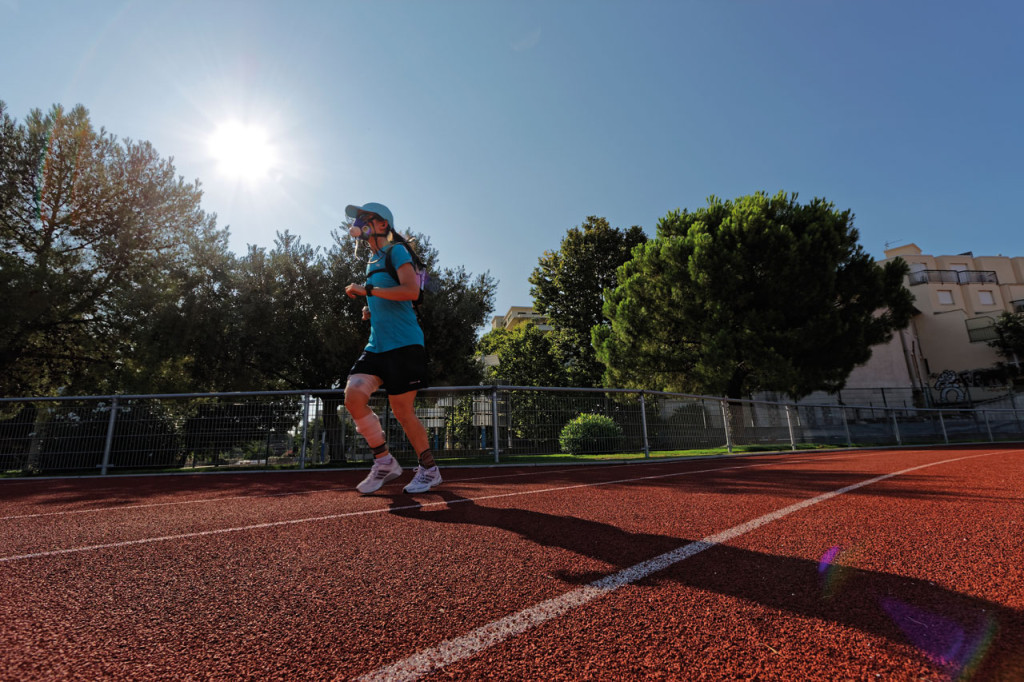
Take two marathon runners of exactly the same ability. Put them side by side at the starting line—one listening to music, the other not. Some 42.195 kilometers later, the first will cross the finish line 3 minutes before his opponent. Why?
Run Faster and Walk Better
“Music has a motivating effect and helps you forget the pain, but that’s not the only explanation. Athletes synchronize their stride with the musical tempo, which stabilizes their running and reduces oxygen consumption by 4 to 5 percent,” explains Benoît Bardy, founder of the EuroMov center and coordinator of the BeatHealth project. The goal of this international project, launched in 2013, is to study the benefits of rhythmic stimulation for improving gait and mobility.
What could be the connection between music and running?“The brain structures involved in movement and in the mechanisms of perception are the same,” replies Simone Dalla-Bella, the project’s scientific director. The BeatHealth project is studying these same stabilizing effects of music in a different context—a therapeutic one. The goal is to help patients with Parkinson’s disease move around. Forty patients volunteered for the experiment and are delighted with the improvements they’ve seen.“We hope this will reduce the number of falls; the results are promising,” say Benoît Bardy and Simone Dalla-Bella enthusiastically.
A Matter of Tempo
Is simply listening to music enough to improve athletic performance or walking in people with Parkinson’s disease?“It’s not that simple,” the researchers say. That’s because, to achieve these results, the music’s “bpm” (beats per minute)—its tempo—must be matched to the runner’s pace.“When a runner encounters an uphill slope, they slow down and their rhythm is no longer synchronized with the music; the music then has the opposite effect and disrupts their stride. Similarly, if a person with Parkinson’s has to navigate around an obstacle, they change their walking rhythm, and the music can throw them off balance.”
The solution? A smart app that adapts the rhythm to movement to enhance motor performance. “We want to offer a smartphone app for athletes and a tablet version better suited for older adults.” The researchers hope to bring this product to market by the end of the BeatHealth project, scheduled for late 2016.“The app won’t be just for runners; it will also allow other athletes, such as cyclists or swimmers, to stabilize their form and improve their performance,” explains Benoît Bardy. The app will have a compelling selling point: scientifically proven effectiveness.
Check out theUM podcasts, now available on your favorite platform (Spotify, Deezer, Apple Podcasts, Amazon Music, etc.).