EPE: “To firmly establish theUM , and its partners within a shared strategy”
With 26 votes in favor, 4 against, and 5 abstentions, the University of Montpellier’s Board of Trustees adopted the bylaws of the experimental public institution that will take over from the current “ UM ” starting in January 2022. The continuation of the I-Site MUSE initiative, the integration ofENSCM, an agreement withthe Institut d’Agro, collegiums, research clusters, and the Strategic and Structural Investments Committee—Philippe Augé, president of theUM, discusses the challenges and expected changes.
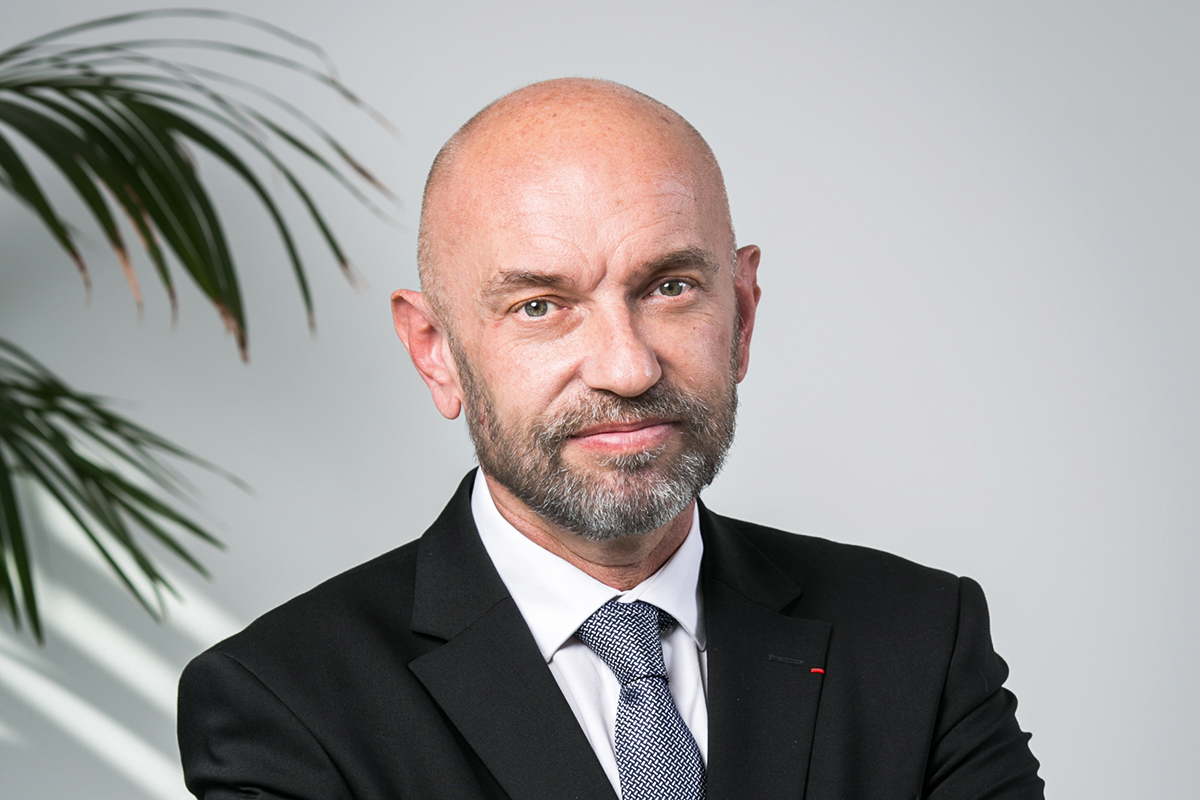
On June 14, the University of Montpellier’s Board of Trustees voted to adopt the bylaws of the public experimental institution (EPE). What is the national context for this change in status?
This change in status is made possible by the ordinance of December 12, 2018, regarding the experimentation with new forms of collaboration, consolidation, or merger among higher education and research institutions. For the past two years, together with all our partners in the I-Site MUSE project, we have been working on a plan to create an integrated university as permitted by the ordinance. A roadmap, outlining the transition to EPE status, was adopted by the Board of Directors on July 11, 2019, and the recent vote thus formalizes this change.
In a few months, an international jury will visit Montpellier to evaluate the I-Site MUSE. How can the evolution of our bylaws be an asset to its long-term sustainability?
Obtaining the I-Site designation was one of the cornerstones of this evolution. Over the past five years, it has enabled us to carry out numerous projects in various fields (research, education, innovation, student life, and international initiatives) for our entire community, thanks to a budget of 84 million euros. We aim to secure its long-term future by ensuring that this Experimental Public Institution (EPE) project meets the expectations of the international jury tasked with evaluating it at the end of the year. Among these expectations is the ambition to transition from a project centered on the “UM ” and its 15 partners to a university that fully integrates these 15 partners into its strategy and governance.
Why is the new institution described as “experimental”?
This status is provided for in the December 2018 ordinance, which sets forth organizational arrangements allowing schools, organizations, and healthcare facilities to join together within a university before their decision to combine their resources is definitively confirmed, no later than 2028.
Will the University of Montpellier keep the same name?
Yes, absolutely. The project is organized under this name. Today, the University of Montpellier is well known. The university’s identity is established, and we need to capitalize on this “brand,” which is recognized as such in all international rankings.
Let’s go into a little more detail. This change in status notably allows for the integration of the École nationale supérieure de chimie de Montpellier as a constituent institution. What does this mean in practice?
On June 10, the ENSCM Board of Directors voted to integrate the school into the future EPE. In practice, this integration offers the school new opportunities, both in terms of education and scientific research. It will retain its legal status and its decision-making and consultative bodies. The director of the constituent institution will be a permanent guest at the University’s various councils and committees. Similarly, the president of the “UM ” will participate in the School’s Board of Directors and will provide input on the appointment of the director, management dialogue, and the contract of objectives and commitments. This integration is a testament, in particular, to the mutual trust that has been firmly established over the past few years. It will therefore be a new component of the University but with a special status since, as I said, it will retain its legal personality. It should be added that while retaining its operational resources (staff, budgets, etc.), it develops its strategy in line with theUM and demonstrates strong commitments to integration, such as the signing of diplomas.
An agreement was also signed with the National Institute of Higher Education for Agriculture, Food, and the Environment (Institut Agro). What does it entail?
An initial agreement with Montpellier SupAgro had already been signed in 2019, incorporating the elements requested by the I-Site review panel, particularly regarding the endorsement of publications and the signing of diplomas for students enrolled at Montpellier SupAgro. It should be noted that Montpellier SupAgro is no longer a public institution, as it was when the Montpellier I-Site project was submitted. It has become an internal school of Institut Agro and, as a result, can no longer be part of theUM as a constituent institution.
With regard to the University’s governance, does this statutory change alter the method of election and the role of the University president?
The conditions for electing the University president remain unchanged. The president’s responsibilities have been expanded to align with the new organizational structure, particularly in the context of relations with the constituent institutions.
Three new statutory vice-presidencies are being created. Which ones, and what will their roles be?
Indeed, three new statutory vice-presidencies are being established: International Affairs; Partnerships and Innovation; and Social Responsibility and Campus Life. The goal here is to raise the profile of these areas, which are key strategic priorities found at most universities with an international reach.
Will the composition of the board of directors change?
In order to better integrate our partners, the composition of the board of directors will indeed change.
Members of our community will make up the vast majority (24 members instead of 28), ex officio members and external figures will number 12, instead of 8, including four business representatives as well as representatives from the Region and the City of Montpellier and partners such as CIRAD,INSERM,IRD, andINRAE, in addition to the CNRS and Montpellier University Hospital, which previously served on the board.
A new international advisory committee is being created—what is its purpose?
This international advisory committee will be established to analyze theUM ’s transformation and development process and to provide guidance on international matters. It will be composed of scientific leaders representing theUM ’s main international partners and representatives from the socioeconomic sector who are already members of the MUSE Foundation. This type of committee already exists at many universities abroad.
Regarding research, the nine scientific departments are being replaced by five research clusters—is that correct?
Yes, each research unit will now be primarily affiliated with one cluster and, possibly, secondarily with another. These five clusters will have different missions: increasing our international visibility; coordinating responses to calls for proposals; strengthening the link between education and research… Each cluster will be organized around a cluster council and a strategic steering committee.
A Strategic and Structural Investments Committee (Comiss) has been established. What is its purpose?
Comiss is composed of representatives from the various partners now united within the university foundation. Its mission will be to define and coordinate common objectives related to the implementation of initiatives stemming from the Future Investment Programs (PIA). It will also serve as a forum for making collective decisions with our partners regarding scientific and real estate investments, as well as recruitment policies on campus.
With regard to education, eight collegiums are being created, along with a graduate school. What will their roles be?
The collegiums in no way call into question the prerogatives of the UFRs, Schools, and Institutes, as these components are well-known and are the foundation of our reputation. They bring together the deans of the UFRs, schools, and institutes from the constituent institution and Montpellier SupAgro. Their mission will be to facilitate synergies among the structures and to enhance the visibility and clarity of the overall educational offerings of the “UM ” and its partners. They will also be responsible for initiating the implementation of educational initiatives within the institution; a single discipline can be approached from different angles within each entity. Take the environment, for example: it encompasses biological, economic, technical, and regulatory aspects, and an exchange among all stakeholders in this field can be highly productive.
The graduate school, for its part, will help structure the transition between the master’s and doctoral levels, particularly with a view to strengthening our strengths by promoting interdisciplinarity, especially for research-oriented programs.
Will the UFRs, Schools, and Institutes be affected by these changes?
The new structures were designed to create spaces for dialogue with all of our partners—without creating a layered decision-making process—by providing cross-component added value and thereby contributing to the institution’s cohesion.
These changes, as I mentioned earlier, in no way undermine the prerogatives of the UFRs, Schools, and Institutes, which remain the cornerstones of the University.
What changes can staff and students at the “UM ” expect? Will tuition fees increase?
In accordance with our principles and values—which include public service, inclusion, and equity—this change in status will not disrupt the lives of our staff. Similarly, students will not be affected in terms of their choice of studies, enrollment in a program, tuition fees, or the awarding of national degrees; however, they will, of course, be offered the new opportunities developed as part of the PIA programs.
It is clear that the stakes for the University are high. Was this statutory change therefore essential for the future of theUM ?
The challenge—beyond what might appear to some as mere institutional mechanics—is indeed significant and is not limited to ensuring the long-term viability of the I-Site MUSE. The goal is to firmly anchor theUM and its partners in a shared strategy—at the campus level and under a common banner—in order, in particular, to secure the resources needed to support our ambitions: to ensure that theUM ranks among the best national universities and to strengthen its appeal and proven reputation in international rankings. The EPE is also a means for us to come together to amplify our societal impact, from the local level all the way to the international stage. We believe in this ambition and strive for it so that the boundless intelligence and tremendous creativity of all our communities—staff and students alike—can be fully realized.