Galileo, Copernicus, Cleansky, IRIS²: To Conquer Space, Industry Players Are Working Together
The space race is entering a new dimension. The space sector is entering an era marked by intensifying rivalries between nations and an unprecedented level of industrial and technological interdependence. The solution: multilateral “coopetition”—a blend of cooperation and competition. Examples include the Galileo, Copernicus, Cleansky, and IRIS² projects.
Audrey Rouyre, Montpellier Business School; European Academy of Management (EURAM) and Anne-Sophie Fernandez, University of Montpellier; European Academy of Management (EURAM)
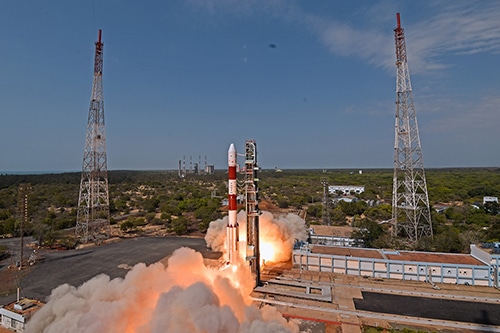
Nearly $137 billion—that is the record amount of global space spending in 2025, as announced at the 14th edition of the Space Perspectives conference. This event brings together all institutional, industrial, and academic stakeholders in the sector.
A colossal windfall that is whetting the appetite of all economic players. But controlling the entire space value chain is now beyond the reach of any single country or company.
Even the most powerful players are forced to collaborate, including with their competitors. This is the case with the French company Thales Alenia Space and the German company OHB System, which are collaborating to develop two radar instruments for the European Space Agency’s (ESA) Harmony mission (monitoring changes in the Earth’s shape). More recently, Dassault Aviation and OHB System have joined forces to propose a multipurpose spaceplane, the VORTEX-S, to the ESA.
To examine these coopetition strategies, between 2017 and 2026 we studied the stakeholders involved in flagship European programs such as Galileo—a satellite positioning system, or the European GPS—Copernicus—a satellite observation system—the Cleansky network—sustainable and climate-neutral aviation—and IRIS²—a satellite telecommunications system.
A Plunge into the Starry Sky.
New Strategic Standard
These strategies of collaboration among competitors are called coopetition. They are based on a paradoxical logic: players competing for the same markets simultaneously agree to cooperate in certain areas of their business.
For a long time, coopetition was viewed as a relationship between two competing entities. In the space sector, the reality is one of multilateral coopetition among nations, agencies, large corporations, small and medium-sized enterprises, and startups—all of which are competitors.


This is the case with Copernicus, a European Union Earth observation program managed by the European Commission in partnership with the European Space Agency (ESA), the European Organization for the Exploitation of Meteorological Satellites (EUMETSAT), and other stakeholders. Copernicus provides very high-quality satellite imagery free of charge, enabling small and medium-sized enterprises (SMEs) and startups to create their own services (crop monitoring, methane leak detection, forest monitoring, etc.) without having to fund either satellites or infrastructure.
At the same time, the new flagship European satellite constellation program, IRIS², brings together three European operators: France’s Eutelsat, the Société européenne des Satellites (SES), and Spain’s Hispasat, which leads the SpaceRISE consortium.
The European Space Agency’s Crucial Role
In another study, we show that knowledge management can be so complex that a third party—such as the European Space Agency (ESA)—will need to step in to centralize knowledge flows within programs.
The European Space Agency wears two hats: that of project owner (providing funding, setting specifications, and acting as arbitrator) and that of prime contractor (technically overseeing satellite development alongside industry partners). This dual role gives it a unique ability to coordinate efforts.
In the Galileo program (the European GPS program), the competing companies involved refused to share certain critical knowledge directly with one another. The ESA therefore took on a coordinating role. Each company submitted its knowledge to the European Space Agency, which then filtered, aggregated, and redistributed the relevant information to each partner.
Even the smallest companies can then use spatial data to create business value. This is certainly the case for the French startup Kermap, which specializes in geospatial analysis.
Benefits of Space Co-opetition
Our various studies have highlighted the benefits of multilateral coopetition.
Critical Mass
Multilateral coopetition addresses technological challenges that are beyond the reach of any single actor while achieving a critical mass of financial, technological, and human resources. The Galileo project illustrates this dynamic; the satellite constellation could not have been developed without pooling the expertise of all European space industry players.
Knowledge Sharing
"Collaborative" innovation projects involving several competitors rely precisely on the sharing of diverse and complementary knowledge —without which the project cannot succeed.
Risk Sharing
In technology-intensive, long-term projects such as Galileo, coopetition reduces each company’s individual exposure to technological and financial risks. This mechanism aligns with the logic of risk-sharing, which has been identified as one of the historical drivers of coopetition.
Management: The Key to Success
Successfully developing such innovations as a group is no walk in the park. Coopetition is prone to tensions. As the number of partners increases, power dynamics become more complicated: coalitions form, covert cheating may even emerge, and opportunistic behavior intensifies. The misappropriation of knowledge is one example; an imbalance in value sharing is another. These issues already exist between two competitors. They are therefore amplified in multilateral coopetition.
Thus, the success of space programs depends on effective management of these multilateral coopetition strategies. How can this be achieved?
While the academic literature has extensively explored the management of bilateral coopetition, the findings cannot be directly applied to the management of multilateral coopetition.
Managing these tensions requires a specific management approach. In our study, we showed that coopetition requires the establishment of temporary joint project teams. These teams facilitate knowledge sharing and ensure the compatibility of technological developments, while preserving each partner’s competitiveness.
Contracts aren't everything
More broadly, our findings all point to a hybrid management approach; it combines formal mechanisms—contracts, governance rules, and intellectual property management—with informal mechanisms, such as trust, interpersonal relationships, and shared norms. It is precisely this combination that maintains the balance between cooperation and competition.
The Cleansky network is a good example. It is a 5-billion-euro program aimed at finding technological solutions to significantly reduce CO₂ and nitrogen oxide emissions, as well as aircraft noise.
Eleven competitors—including Airbus, Safran, and Dassault—are working together and have come together around a single table: the Network Management Office. Everything is laid out there: technological priorities, budgets, and intellectual property rules. Each contract specifies who contributes what and who receives what.
In the field, contracts aren't everything. Project managers talk to each other every day. They know each other. They trust each other. Over time, routines take shape. Everyone knows what they can say; everyone knows what they should keep to themselves.
A community of enthusiasts
The role of individuals is essential. Program participants are the ones who, on a day-to-day basis, make coopetition possible by navigating between organizational loyalties and collective imperatives, and by effectively managing the tensions inherent in these projects. https://www.youtube.com/embed/CGe5zVTbzQk?wmode=transparent&start=0
This aspect is particularly pronounced in the space sector. It is a community of enthusiasts, where the key players—engineers, project managers, and experts—often know one another, have sometimes collaborated before, and, despite their industrial or national differences, share a common ambition: to advance and promote the European space sector.
Effectively managing multilateral coopetition is therefore key to the success of current space programs. The nations and industries that succeed in this will be the ones able to secure their leadership in space. The stakes go far beyond industrial performance. In a sector where space data now fuels agriculture, defense, and the fight against climate change, mastering coopetition is tantamount to securing one’s sovereignty.
That is precisely the goal of major European programs such as Galileo for navigation, Copernicus for Earth observation, IRIS² for secure communications, and Cleansky for the aviation of the future.
Audrey Rouyre, Assistant Professor of Strategic Management, Montpellier Business School, Montpellier Business School; European Academy of Management (EURAM) and Anne-Sophie Fernandez, University Professor, University of Montpellier; European Academy of Management (EURAM)
This article is republished from The Conversation under a Creative Commons license. Readthe original article.