Educational Innovations: Four Classrooms, Four Atmospheres
In 2020, 16 projects were selected as part of the Muse #Take Off 4 program—a call for proposals with a budget of more than 1 million euros to support innovative educational resources. Eighteen months later, where do these projects stand? We head to the school of chemistry and the schools of dentistry, medicine, and law, where small revolutions are taking shape.
You’re on the beach in Agde; lifeguards have just rescued a young man from drowning. As they bring him back to the beach, you’re getting ready to administer first aid: you’re a young doctor. You’ve been trained for this moment. Yet the cries of his loved ones, the stares of vacationers gathering around you, the sound of a helicopter approaching… Medical school didn’t prepare you for this kind of stress! Here’s a phrase that young doctors will soon no longer be able to say.
Imaginason: Collective Immersion
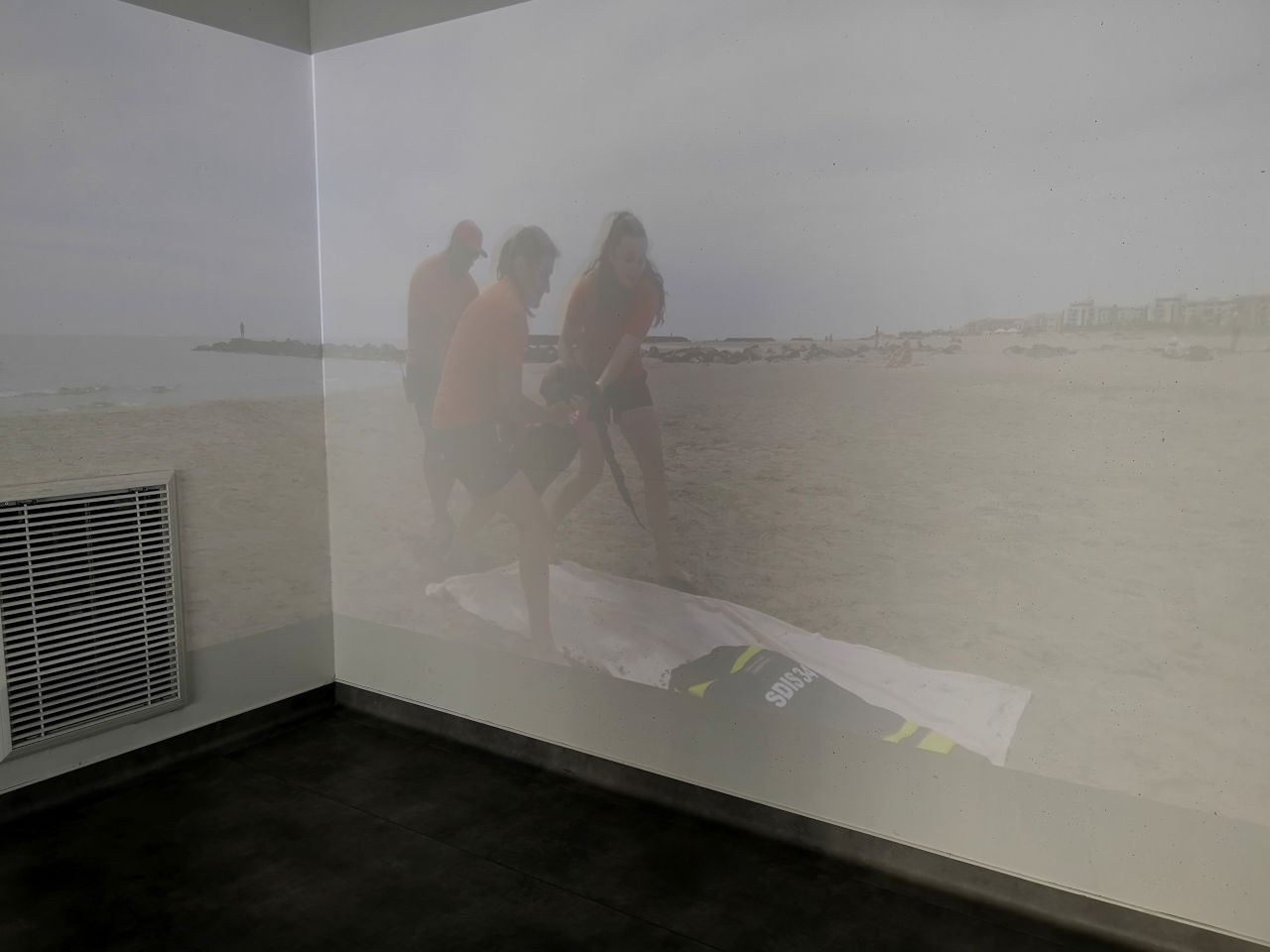 The scenario we have just described is precisely one of the situations for which students will now be able to prepare thanks to Imaginason, the Faculty of Medicine’s new educational tool designed for group immersion learning. In practice: a video clip—for example, the drowning incident on Agde Beach—is projected onto the walls of a room where students will have to provide appropriate care to a robot patient. The immersion through sound and imagery places future doctors in an environment that closely resembles the real-life situations they will one day face.
“Creating a stressful environment for students and having them act out a contextualized scenario capable of evoking emotion not only helps them better prepare for the real-world conditions of their profession but also helps them internalize their reflexes more deeply,” explains Blaise Debien, an emergency medicine physician and educational director of the Emergency Care Training Center at Montpellier University Hospital.
Numodonto: the hub
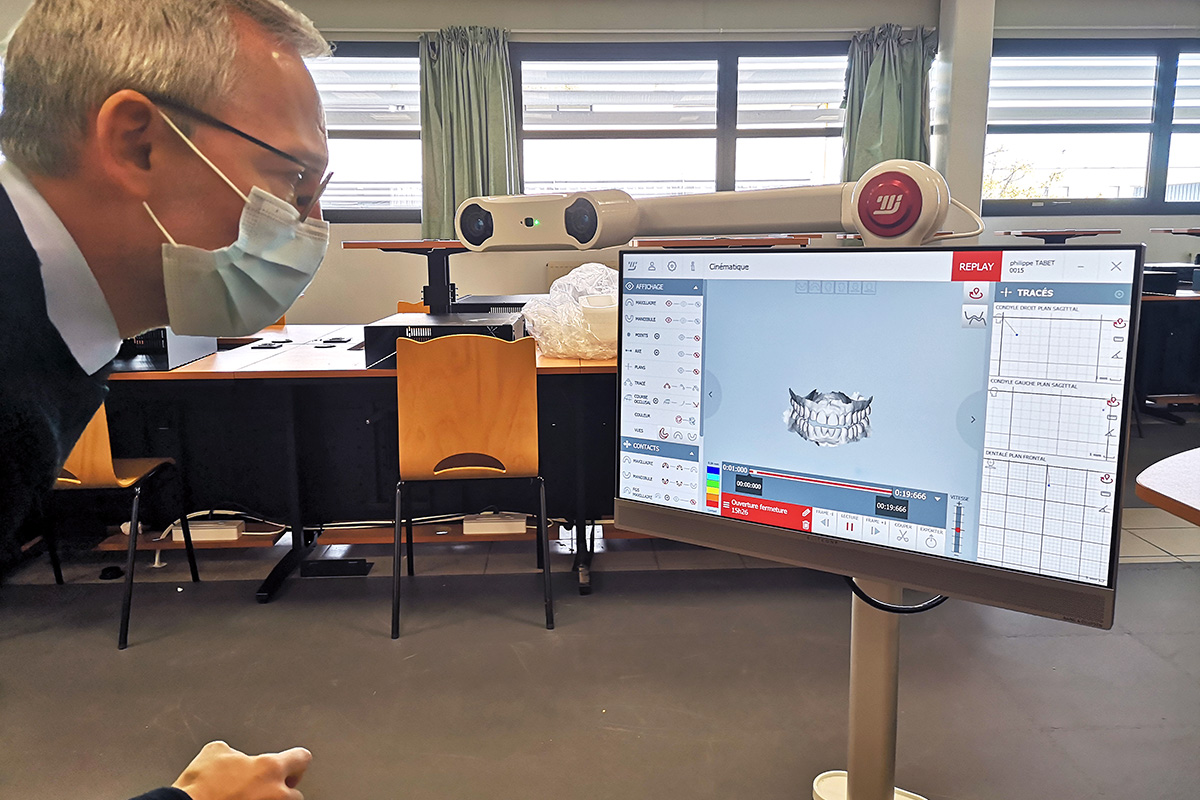
Let’s now turn to the School of Dentistry, which began its digital transition 10 years ago, with the integration of haptic simulation and 3D glasses for teaching anatomy, to name a few examples.“Now, digital tools allow us to create fully customized instructional sequences and working models that enable us to replicate any clinical situation. These models are produced on-site using 3D printing by François Bertrand, a dental technician,” explains Jean-Cédric Durand, associate dean of the faculty.
Computer-Aided Design and Manufacturing (CAD/CAM) is deeply embedded within this university and hospital complex, as evidenced, among other things, by the hiring of Professor Michel Fages and the creation of thefirst medical unit dedicated to this technology in 2015. The Faculty is taking it a step further by now offering a hub center that is unique in Europe. Equipped with various scanners and several specialized software programs, this hub will allow students to work on fully digital models in areas as diverse as dental morphology, prosthetics, aesthetics, dentofacial orthopedics, implantology, and more.
“With this equipment, sessions will be conducted more quickly and efficiently than with the current physical materials. The exercises will more closely reflect real-world conditions,” explains Michel Fages. “Digital technology also helps reduce the cost of supplies for students, lowering the price of the dental kit. ” Named after François Duret, the inventor of dental CAD/CAM, the hub center will welcome its first students early next year.“This is the culmination of a commitment and a constant desire to be attractive to the younger generation of teachers and to bring them together,” concludes the associate dean as he closes the door.
Justitia: The Courtroom
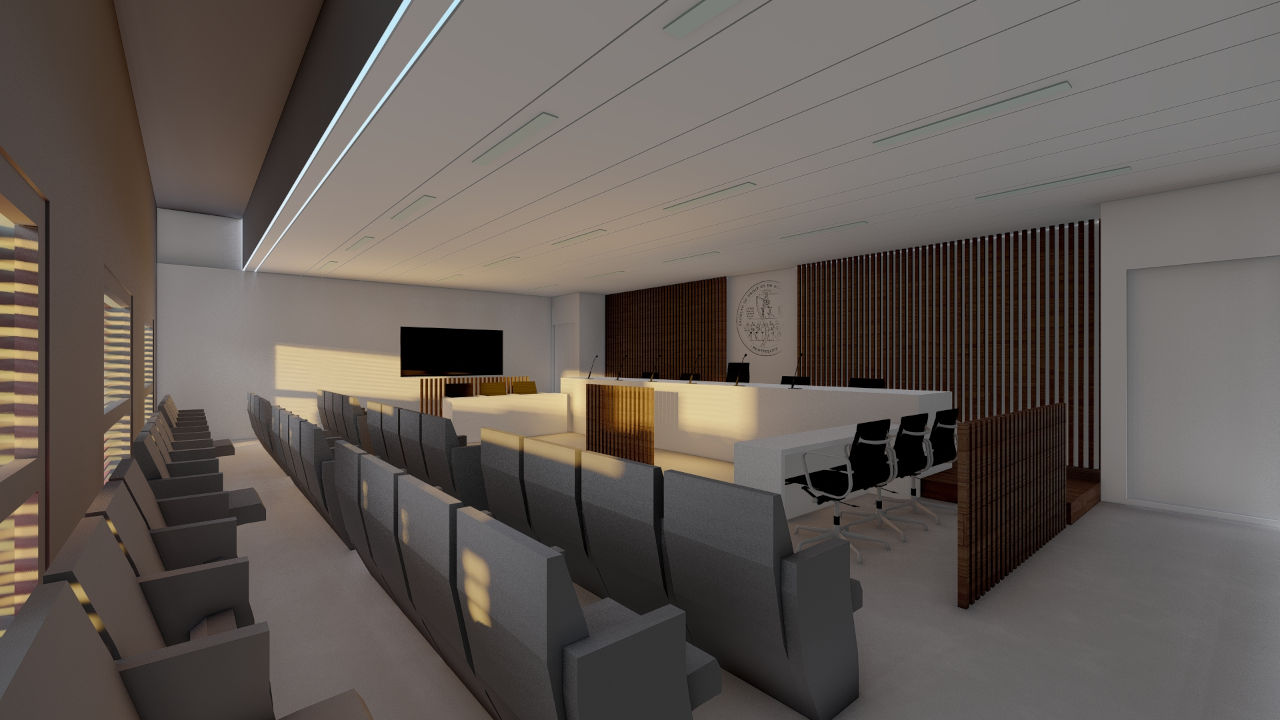 Third setting: the Law School’s mock courtroom. Designed with the help of an architect, this teaching facility is an exact replica of a real courtroom as found in a courthouse. "This active learning tool is a first of its kind in a university, not only in France but also in Europe. This room will allow students to organize their moot court or public speaking competitions while feeling as if they are in a real-life situation." " explains the dean of the faculty, Guylain Clamour.
Equipped with a dual videoconferencing system, this facility will also allow students in Montpellier to practice with students from other universities;“a collaboration is already in place with Paris 2,” the dean added. A connected camera will enable live streaming of the sessions on the university’s YouTube channel. The room’s modular design also makes the courtroom versatile, allowing it to serve as“a committee room, similar to those in the National Assembly, for political science students.” “The official inauguration is scheduled for sometime in January, but it is already in high demand,” concludes Guylain Clamour.
Créactive: Design Thinking
Finally, we head to the School of Chemistry, where the Creactive project offers students a space dedicated to learning project management through creativity. This marks a second phase for the EPIIC projects, which, for the past two years, have challenged students to work in teams to develop an innovation for commercialization. To support them in this process, Creactive is a creative space based on the principles of design thinking. It is a modular space equipped with tools designed to foster team collaboration: furniture, tablets, video projection and videoconferencing systems, cloud-based software, and more.
To promote the design of innovative functional parts, ENSCM has also acquired , through #Take Off 4, a 3D printing system capable of combining different types of materials: molecular materials, ceramic particles, resins, and photosensitive polymers. “ “Project-based learning plays a key role in ENSCM’s educational approach. Given their scope and the outcomes they will produce, the EPIIC projects will be a major vehicle for communicating this approach to our future students,” concludes David Virieux, the project leader.