2024 Olympics: Increased Surveillance for the Tiger Mosquito and Dengue Fever!
Over the years, the dengue virus has been making headlines more and more frequently in metropolitan France.
On July 8, 2024, the Occitanie Regional Health Agency (ARS) reported that it had identified the first case of local transmission this year in the Hérault department, near the city of Montpellier. The patient had not recently traveled to a country where the virus circulates endemically.
Yannick Simonin, University of Montpellier
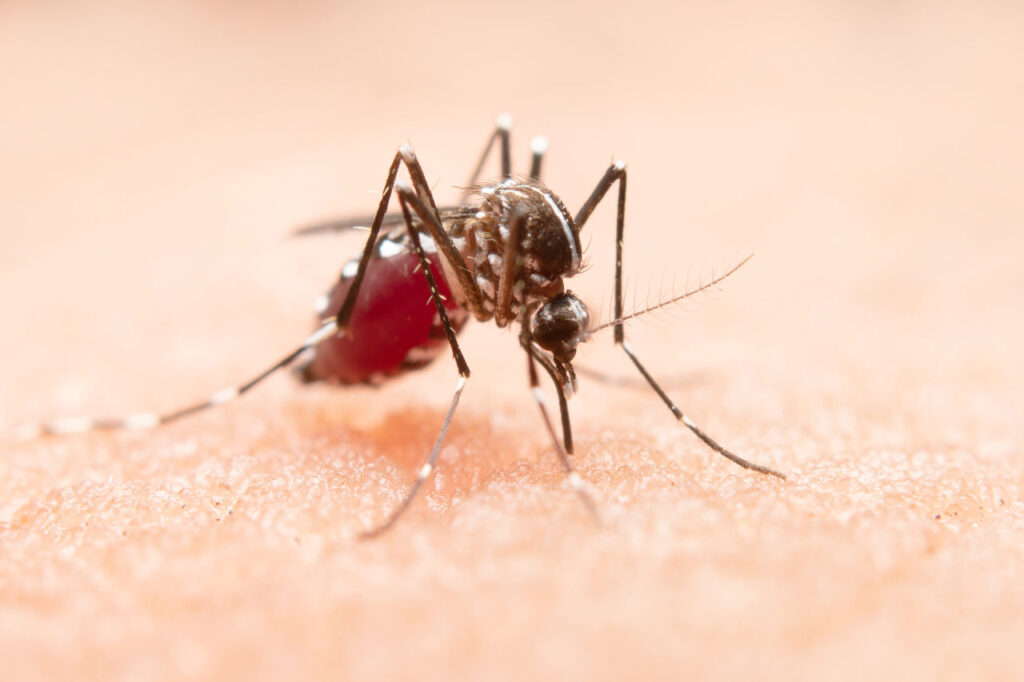
The situation is being closely monitored this year for two reasons: not only is climate change contributing to the proliferation of mosquitoes, but the risk of cases being imported from abroad is also very high, particularly during major international gatherings such as the Olympic Games.
What do you need to know about this threat, and how can you protect yourself from it?
Dengue fever, which is mostly asymptomatic but can sometimes be fatal
The dengue virus is transmitted by tiger mosquitoes (Aedes albopictus), an invasive species that has become well established in Europe. Although it is most often asymptomatic—in 50% to 90% of cases, depending on the study and the four serotypes—this disease can be severely debilitating when accompanied by symptoms (high fever, pain, nausea, vomiting, retroorbital, joint, and muscle pain, etc.). Dengue can also present in a severe form. Potentially fatal in 1–5% of cases, it is then accompanied by multiple bleeding episodes, particularly gastrointestinal, cutaneous, and cerebral bleeding.
Each year, between 100 and 400 million people contract dengue worldwide, making it the most widespread arboviral disease (the adjective “arboviral” is derived from the English term “arthropod-borne virus,” a viral disease transmitted by arthropod vectors, a phylum of animals that includes insects and arachnids, among others). It is estimated that approximately 500,000 people are hospitalized each year due to severe cases, and that between 10,000 and 15,000 die from the disease.
The dengue virus is not endemic in France: any local (so-called autochthonous) outbreaks that occur are always linked to the virus being brought in by travelers from other geographic areas. Transmission occurs when a female tiger mosquito bites an infected animal or human (this is known as a blood meal, which is necessary for the mosquito to lay eggs). The virus infects the mosquito and multiplies within its body.
Once a mosquito’s salivary glands are infected, each bite taken during a blood meal can infect another person, thereby enabling the cycle of arbovirus transmission within the human population. Consequently, as the number of imported cases increases, so does the risk of locally transmitted dengue.
This risk also increases with the seasonal abundance of the tiger mosquito, which is on the rise and will peak between July and October, driven by rising temperatures and rainfall.
2024: A Record Year
As early as last June, the European Center for Disease Prevention and Control (ECDC) issued a warning: this year, the risk of disease transmission by mosquitoes is particularly high. Indeed, in Europe, “climate change is creating conditions that are more favorable to the spread of invasive mosquito species into areas that were previously spared.”
Furthermore, 2024 began with a worrying trend, with a much higher number of imported dengue cases than in previous years. Between January1and April 30, 2,166 imported cases of dengue were identified (compared to an average of 128 imported cases during the same period). These imported cases involved travelers returning from abroad, primarily from the French West Indies: more than 80% of the cases were from Martinique or Guadeloupe, followed by Indonesia, Brazil, and Mauritius.
In addition, between May1and July 2, 719 additional imported cases were identified in mainland France (58% of which involved people returning from Guadeloupe or Martinique). For the record, 2,524 imported cases were recorded for the entire year of 2023.
This record number of imported cases is occurring very early in the season. It is attributed to the widespread circulation of the dengue virus in many tropical regions around the world, particularly in the Americas (more than 7.5 million cases since the beginning of the year, notably in Brazil), in Asia (particularly Malaysia and Thailand), and in West Africa (more than 30,000 cases identified in Burkina Faso).
This situation comes as no surprise: the Pan American Health Organization (PAHO) had warned that Latin America and the Caribbean should expect the worst dengue season on record in 2024, largely due to the El Niño phenomenon. The Caribbean has not been spared, and the high frequency of air travel between the Caribbean and mainland France naturally facilitates the importation of dengue cases.
The main problem with importing such a large number of cases is the risk that they could trigger, in mainland France, local outbreaks of transmission in the coming weeks and months in regions where the tiger mosquito is present. And many regions are now affected…
Indigenous Transmissions on the Rise in France
Since 2010, there have been a few cases of locally transmitted dengue fever each year in mainland France. These cases, caused by the tiger mosquito—which is considered an invasive species—have increased dramatically since 2022, with record numbers of locally acquired cases reported not only in France (66 cases in 2022) but also across Europe (130 cases in Italy, France, and Spain in 2023).
In 2022 and 2023, the total number of dengue cases reported in our region (110 symptomatic cases) was more than double the total for the past 20 years!
Outbreaks are on the rise, particularly in the south of France, but the north of the country is no longer spared from local transmission: the first cluster was identified last year in the Paris region.
This situation can be explained in part by the distribution of the tiger mosquito. Introduced to Menton in 2004, it had managed to colonize 20 departments by early 2014. Ten years later, it is established in 79 departments in mainland France, and even in a few municipalities in Belgium.
This rapid and expanding spread of colonized areas was made possible by the mosquito’s ability to adapt to temperate climates, as well as by the extensive dissemination by humans of its eggs (laid in containers) and fertilized females (all transported in vehicles).
The Olympic Games: Boosting Viewership
The Olympic and Paralympic Games will take place between July 16 and September 8—right in the middle of the tiger mosquito’s active season! However, we know that major international events, which generate very high volumes of travelers from many different countries, are likely to facilitate the introduction of arboviruses.
Such conditions not only increase the risk of local dengue outbreaks, but also those of other arboviral diseases, such as those caused by the chikungunya or Zika viruses. With dengue circulating very actively around the world this year, the number of imported cases could skyrocket.
While it is always difficult and uncertain to predict the spread of these arthropod-borne viruses, we can expect the number of locally acquired dengue cases to set new records in France in 2024. This is all the more likely given that the tiger mosquito is now well established in the vast majority of locations where the events will take place, particularly in the Paris region…
Surveillance Under Increasing Pressure
The exceptional situation we are experiencing in 2024 risks overwhelming the existing vector control system—from public health officials responsible for epidemiological surveillance to mosquito control operators in charge of insecticide treatments.
Operational from May through November, this system had already been under significant strain over the past two years, approaching its maximum capacity in some areas. For example, the workload for vector control operations increased 30-fold between 2021 and 2023 during the months of August through October in the Occitanie and Nouvelle-Aquitaine regions.
Those involved in vector control must therefore, each year, do their best to plan the scope of their actions based on the risk, despite the unpredictable nature of the occurrence of cases and episodes of indigenous transmission over time and space.
However, despite the record numbers of the past two years, the number of dengue cases is likely still well below what lies ahead. Indeed, climate change is likely to further exacerbate the problem, as warmer temperatures not only extend the active period of the tiger mosquito but also promote the proliferation of arboviruses within it.
How can we tackle this issue in 2024 and in the years to come?
To meet the challenges ahead, we will need to take action on several levels. The organization and scale of surveillance and control measures must be strengthened. Local governments must implement effective preventive policies to combat the tiger mosquito. But that’s not all: citizens themselves must get involved. Since the tiger mosquito travels only 100 to 200 meters from where it lays its eggs, local efforts remain the most effective!
This year, the first adult tiger mosquitoes emerged in late March 2024 in southern France. The pattern observed so far is no different from that of 2023. If tiger mosquitoes ruined your days last year, this year is likely to be just like the last! Unless you and your neighbors take action to eliminate their larval breeding sites…
Controlling mosquito larvae is essential from April through October: since the tiger mosquito lays its eggs almost exclusively in artificial containers, it is important to prevent them from accessing water by tightly covering rainwater tanks, covering sand traps at the bottom of gutters with sturdy mosquito netting, and emptying planters, buckets, and saucers every 7 days (or, if that’s not possible, pouring boiling water into them), etc.
Finally, to limit the spread of mosquito-borne viruses, it is also essential to protect yourself from mosquito bites by installing window screens. When outdoors, be sure to wear long, loose-fitting clothing and apply effective repellents to uncovered areas of the body.
The original version of this article was co-authored by Guillaume Lacour, a medical entomologist and head of R&D, and Antoine Mignotte, a research fellow, both employees of Altopictus, a private vector control company.
Yannick Simonin, virologist specializing in the surveillance and study of emerging viral diseases. University Professor, University of Montpellier
This article is republished from The Conversation under a Creative Commons license. Readthe original article.