Biodiversity from Field to Plate
At the intersection of agronomy, ecology, and health, Didier Bazile has launched an innovative personal project aimed at creating bread made from a blend of quinoa flours. His dual goal is to preserve quinoa biodiversity and offer consumers a healthy food option. The project was a favorite of the 2020 jury for the Montpellier Innovation Booster.
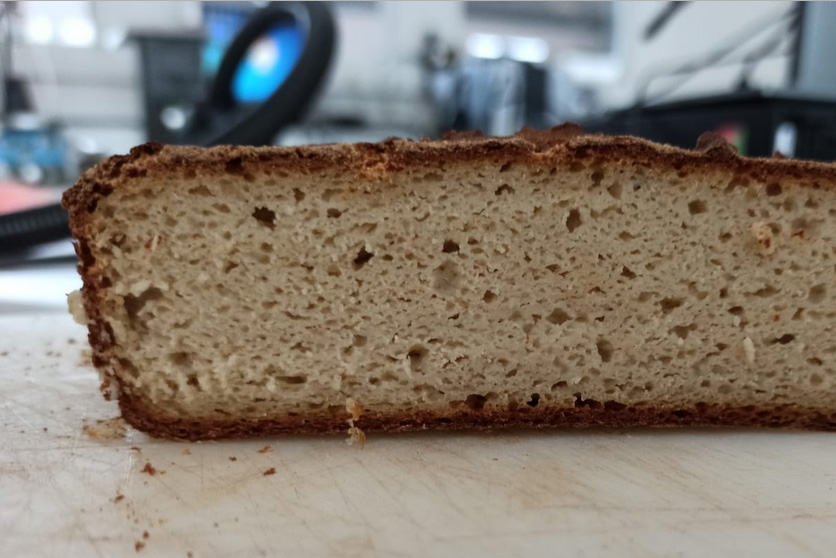
A bread of exceptional nutritional quality, containing three times more protein than wheat flour bread, all the essential amino acids, and no gluten. Have you been dreaming of this? Didier Bazile has made it a reality. A researcher at CIRAD, he works on preserving the agricultural biodiversity of food crops. “I was working on participatory breeding programs for millet and sorghum in West Africa in the early 2000s, where I helped farmers set up community seed banks,” recalls Didier Bazile. “That’s when I was asked to contribute my expertise on smallholder seed systems for quinoa in the Andes, where biodiversity—still largely unknown—was collapsing.”
Quinoa actually comprises more than 6,000 heirloom varieties selected by generations of farmers. “Despite this vast biological and cultural diversity, only a tiny fraction of this agricultural heritage is found on our supermarket shelves—reduced to large-grain white quinoa, or at best expanded to three colors, ” laments the specialist. “That’s why I developed a personal project, Quinoa-div, by adopting a holistic approach to agricultural biodiversity to reconnect agriculture, food, and health.”
Preserving biodiversity
To reverse this loss of biodiversity and highlight quinoa’s nutritional value, Didier Bazile decided to create a flour for baking bread, made from a blend of hundreds of quinoa varieties. The problem: it is gluten that gives wheat its bread-making properties, and quinoa, as it happens, contains no gluten. “So we had to find a way to restore that famous bread-making ability to quinoa.” Some processes already exist, but they rely on numerous food additives: “That’s the whole point of the recipe I developed, because it uses no food additives, no eggs, no palm oil, no lactose, and no highly allergenic nuts.” A secret formula, though the researcher confides that it involves an optimized food technology process based on cassava.
Secret recipe
“The end result is a genuine gluten-free bread containing over 75% quinoa, whereas existing products contain no more than 10 to 20%,” says Didier Bazile, a member ofthe Atelier de Claret innovation hub, whose personal project is supported by the AgroValoMED incubator at Montpellier SupAgro. “Quinoa is truly a superfood with exceptional nutritional value; it can even be considered a functional food—a food that heals.” The researcher has also collaborated with the School of Pharmacy to develop a healthy and safe product for people with celiac disease and gluten allergies, who make up 1% of the global population. “Meeting the needs of these celiac patients is a guarantee of quality that allows me to expand my target audience to include the 10% of people with gluten intolerance, as well as the 20% of vegetarians and vegans, and the 30% of organic consumers who demand products with high environmental value in addition to nutritional value,” the specialist emphasizes.
Superfood
Next step: launching the company that will produce this “Baking Quinoa Mix” and distribute it through networks of specialty organic and health food stores, as well as pharmacies. “Starting in the fall of 2021, ” says the researcher, who already has his sights set on developing other quinoa-based products. “I’m already working on another flour mix for baking, and I’m also planning to adapt my Quinoa Mix for pasta, couscous, and 100% quinoa purée.” These are all assets for continuously diversifying in a global quinoa market that continues to grow rapidly.