The Radical Uncertainty of the Global Financial System
Every year, the traditional summer break is accompanied by comments—some more relevant than others—from economic analysts on duty regarding the situation expected when school resumes in September and the economic outlook for the last quarter of the year.
Roland Pérez, University of Montpellier

For this exercise—which can sometimes feel like a recurring theme—analysts scrutinize subtle signals that could serve as clues to support their predictions. In 2019, they will not need to go to such lengths to gather meaningful details, as the events, facts, and observable information from recent weeks are numerous and sufficiently consistent to allow for a well-documented analysis.
Most of these are linked to the steady stream of tweets from U.S. President Donald Trump, who, week after week, attacks anything he perceives as hindering his “America First” slogan; After Iran, Mexico, Venezuela, the European Union, and so many other countries, he is now once again targeting China, a country with which he wishes to reduce the structural trade deficit through the traditional means of import tariffs. But China is not Venezuela, and it has begun to fight back—on the one hand, by reducing some of its imports from the United States, and on the other, by allowing its currency to depreciate on the foreign exchange markets.
These two events are cause for concern, as they signal the early stages of a trade war, waged through the traditional tools of tariffs and exchange rates. While we know how such a conflict begins, no one can predict either its scale or its outcome. Given that this is a confrontation between the two giants of the global economy, we cannot rule out a lose-lose outcome for both sides, with significant collateral damage for the rest of the world.
Pre-election atmosphere in the United States
It is within this same context that we must view developments specific to monetary policy as reflected in the actions of central banks. Over the past dozen years—primarily in response to the 2008 global financial crisis —these central banks (Japan, followed by the United States and the EU) have implemented so-called “accommodative” monetary policies, resulting in a sustained decline in key interest rates—moving toward rates close to zero or even negative—and virtually unlimited purchases of bank debt (“quantitative easing”).
The strong performance of the U.S. economy in recent years had allowed Federal Reserve (Fed) officials to begin returning to a more traditional policy stance, which resulted in a gradual increase in key interest rates. That was before President Trump demanded another cut in those rates.
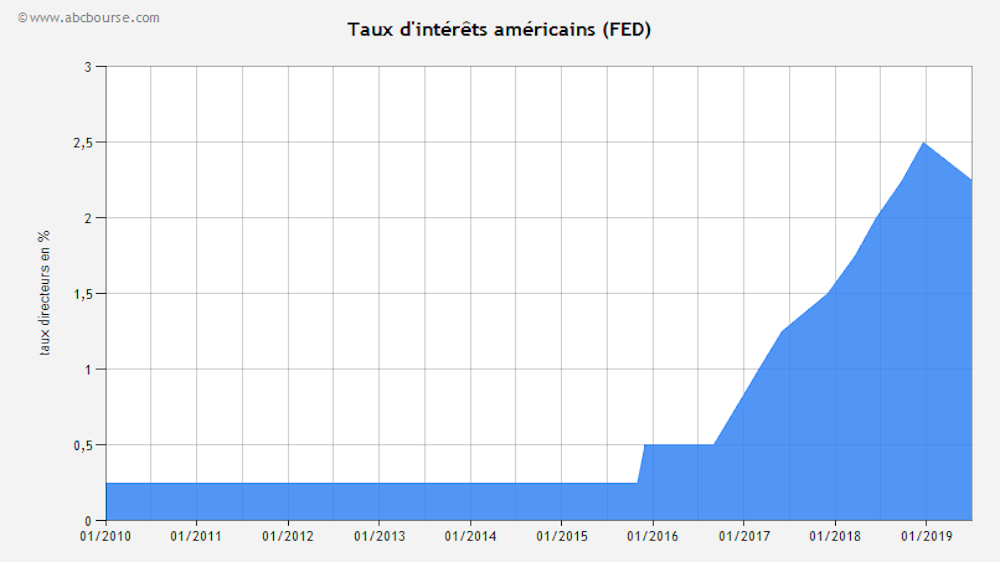
This internal conflict has so far resulted in a slight decrease (one-quarter of a point) in the key interest rate—a concession by the current Fed chair—accompanied, moreover, by a solemn warning from the four former chairs expressing their concern about the central bank’s independence from political influence. No one can predict at this time how the various positions will play out in practice over the coming months, especially given the pre-election climate in which the country in question now finds itself.
The financial markets, which abhor this kind of uncertainty, began to panic. In just a few trading sessions in August, the major indices lost a substantial portion of the gains they had made since the beginning of this year. Since the financial crisis of 2008, the market has been in a virtually uninterrupted bull run, so the real question analysts are asking is whether these recent fluctuations signal the beginning of a lasting reversal of the financial markets’ bull cycle or a temporary blip linked to current uncertainties regarding public policy.
Abundant Cash Reserves
To attempt to answer this question without preconceptions, we need to examine the current situation of companies listed on these markets. Several observations stand out:
- First, most of these large publicly traded companies have benefited greatly from accommodative monetary policies, which have provided them with virtually unrestricted financing (bank loans or bonds) at a very low cost, thereby lowering their average cost of capital and altering their financing structures.
- Nevertheless, the productive investments made in recent years by the major companies in question have not been exceptional, falling within the average range of previous years. As a result, many companies and corporate groups have abundant cash on hand awaiting investment.
- On the other hand, there has been a significant increase in share buybacks by publicly traded companies themselves, especially in the United States, where this type of transaction is less regulated than in the past; this has resulted in support for stock prices and an increase in leverage—or even double leverage—when these share buybacks have been financed through additional debt.
- Financing facilities, combined with tax breaks provided in particular by the current U.S. administration, have led to excellent net results, which in turn have boosted stock prices.
- These various factors combine and can result in the profile of a large publicly traded company with strong financial and stock market performance, and a balance sheet that includes both an abundance of cash on the asset side and significant debt on the liability side.
This situation—one with which many companies around the world would be content—raises concerns for us regarding its significance, intrinsic quality, and sustainability. Accounting performance—and even more so stock market performance—is not directly linked to the business model being followed, but rather to the financial transactions carried out (use of debt, share buybacks, etc.); there is no guarantee that these favorable effects will be repeated in the future unless their continuation is engineered through monetary policies (regarding the cost of debt) or stock manipulation (regarding share buybacks).
Early Warning Signs of a Recession
This summary analysis—which should obviously be refined by type of company and industry— leads us—if we are to offer our own assessment—to conclude that the U.S. economy and its financial markets are indeed at the end of a bull market that began with the bailout measures implemented after the 2007–2008 crisis to address that major crisis.
Signs that can be interpreted as early indications of a turnaround in the global economic climate and its impact on the markets have emerged in a consistent manner:
- In terms of the economic outlook, while indicators of U.S. economic activity remain positive, concerns are emerging regarding the consequences of the trade war with China. These concerns led President Trump, in a typical about-face, to postpone for several months the new tariff measures he had announced—in particular to protect consumers worried about rising prices during the Christmas season… Elsewhere in the world, the economic situation is more concerning, with indicators already deteriorating (Germany) or on the verge of doing so (United Kingdom).
- In terms of interest rates, we have seen a “yield curve inversion” between short-term and long-term U.S. Treasury bonds, a sign that analysts interpret as a harbinger of a recession.
- In the stock markets, on several occasions in the major U.S. financial centers, it was the companies themselves—through their share buybacks—that acted as the counterparty to other categories of market participants (individuals, investment funds) who were “net sellers.”
Investment funds appear to be aware of this troubling situation, and many of them are adopting a wait-and-see approach—much like Warren Buffett’s iconic fund, which has more than $120 billion in cash waiting to be invested.
These various effects interact with one another; some of them—such as the wait-and-see attitude of investment funds—are both a consequence of the other factors identified and a factor that exacerbates the situation.
The G7 Has Its Back Against the Wall
Leaders of institutions responsible for economic and financial policy are aware of this risk of a reversal, but have little room to maneuver. Central banks are mired in their policies of quantitative and interest-rate easing, which, as consultant Jacques Ninet put it in his 2017 essay, are something of a “black hole of financial capitalism.” President Trump is also aware of this, but will do everything in his power to prevent a new financial crisis from breaking out before the next political deadlines or, should such a crisis occur, to shift the blame onto others (the Fed, China, etc.) and absolve himself of responsibility.
The next G7 meeting, scheduled for August 24–26 in Biarritz, will inevitably involve a likely “heated” exchange among these leaders. French President Emmanuel Macron, who will host the summit on behalf of France, will certainly attempt to outline a solution that offers the partners involved at least a minimally acceptable outcome. He should be able to count on support from some G7 members and from the newly appointed heads of the European Central Bank (ECB) and the International Monetary Fund (IMF), who were named with his backing. This will not be easy, because in the financial sector more than any other, mutual trust among the leaders responsible for implementing a course of action is essential to the success of those actions.
Roland Pérez, Professor Emeritus, Montpellier Research in Management, University of Montpellier
This article is republished from The Conversation under a Creative Commons license. Readthe original article.