The Muse success story continues with “ExposUM”
On November 30, the University of Montpellier, working closely with its partners at I-site MUSE, secured 23.2 million euros in funding for its ExposUM project, which was selected as a winner in the “Excellence in All Its Forms” call for proposals under the Investments for the Future program (PIA4). This amount was matched by the Occitanie Region, bringing the total funding for this project—dedicated to studying external and environmental factors that can affect human health.
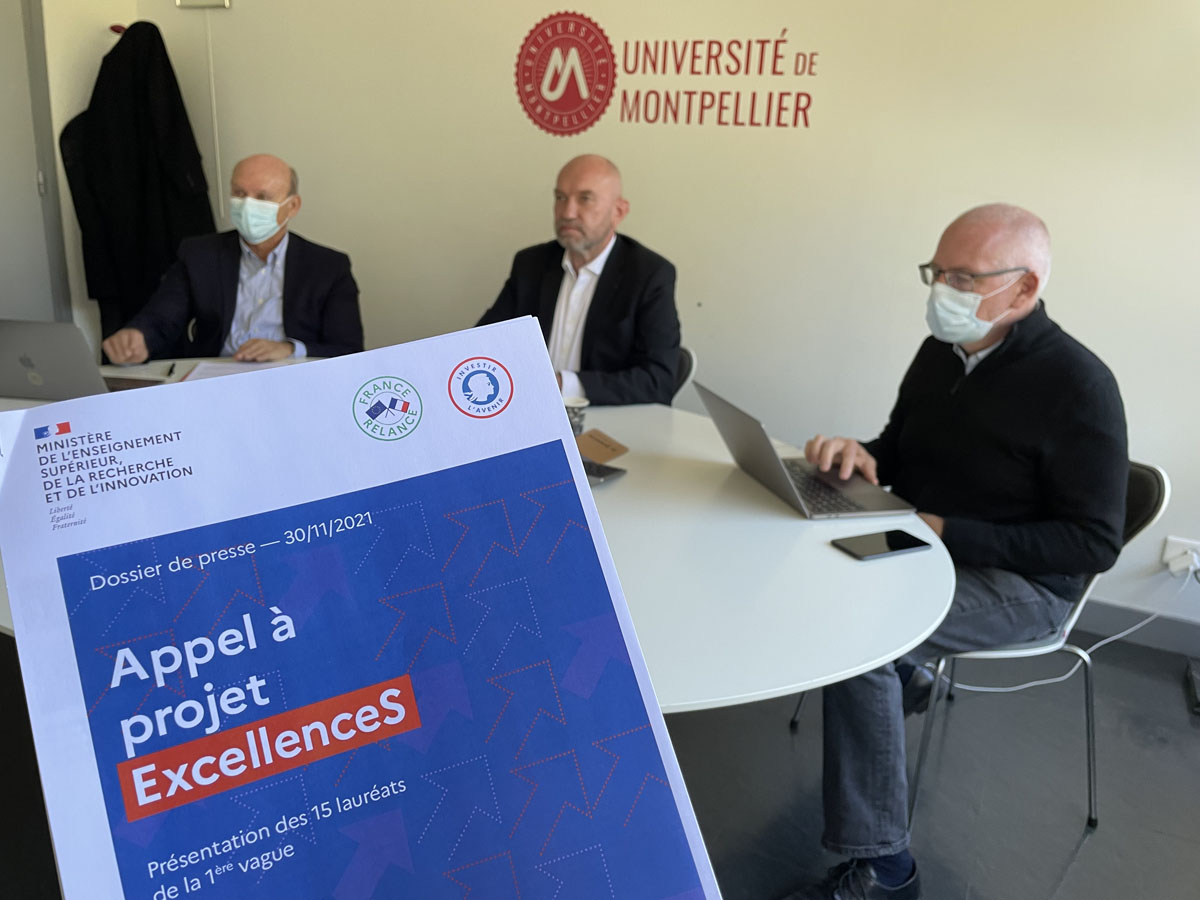
“This success is gratifying in more ways than one,” says Philippe Augé, president of the University of Montpellier. “First and foremost, it is recognition of the University’s leadership in the life and environmental sciences—a leadership we have built with our partners around the three key issues of ‘feeding, healing, and protecting,’ at the intersection of which lies ExposUM.”
A Unifying Project
ExposUm is the name of this ambitious project that the University and its partners presented as part of the“Excellence in All Its Forms”call for proposals.The name was chosen as a direct reference to the concept of the exposome, which refers to“the totality of exposures to external and environmental factors ( diet, pollution, infectious agents, etc.) capable of affecting human health,” explains Eric Delaporte, professor of infectious diseases and the project leader. “This is an extremely unifying theme in Montpellier that will allow us to bring together a wide range of topics as well as multiple disciplines such as oncology, nutrition, ecology, chemistry, and the humanities… And we have excellent research centers to carry this out.”
In response to this call for proposals, the University of Montpellier, along with the CNRS,IRD,INRAE, CIRAD,Inserm, Montpellier University Hospital,the Cancer Institute, Institut Agro,ENSCM,Ifremer, andInria, came together to develop a project that brings together the strengths of the Montpellier community.“This project is the result of a collective effort aimed at leveraging all the expertise we have at Muse, ” continues Eric Delaporte. For François Pierrot, director of I-site Muse, ExposUM is nothing less than the “keystone of the structure we’ve been building since 2017: bringing together a large number of scientific communities around the three pillars we’ve chosen.”
Strong support from the Occitanie region
Of the 35 applications received by the ministry, only 15 were selected in this first round of screening. While several major Parisian universities were rejected, the University of Montpellier is the only institution in Occitanie to have received the designation.“This is another success that builds on the 2.5 million euros secured 15 days ago for the innovation clusters. These successes further solidify the credibility of the University and its partners,” emphasizes Philippe Augé.
A ministry spokesperson stated: “The selected projects are all expected to have an impact on their local areas.” This local dimension is strongly emphasized in the Montpellier project, to which the Region chose to respond by matching the funding and contributing 23.2 million euros of its own. This commitment was made in the name of its Green Pact for Occitanie, as President Carole Delga emphasized:“The collaborative research that the University of Montpellier and its partners will conduct on the impact of external factors and our environment on health is essential. A better understanding of these phenomena will enable us to implement more appropriate and innovative public policies across the region. That is why I wanted to give this project every chance of success through strong financial support.”
By supporting the establishment and growth of businesses, ExposUM should also be a major asset for the metropolitan area and the Med Vallée project, which aims to make Montpellier a world-class hub for health, the environment, food, and well-being.
New Chairs of Excellence
In total, this means that more than 46 million euros over eight years will be added to the overall resources provided by the University and its eleven partners.“This is a significant amount and sends a strong signal for Montpellier on a national level, ”says Eric Delaporteenthusiastically . “Our project is extremely ambitious, and we must now collectively establish the precise strategic directions for the first initiatives we intend to implement.” Research projects will, of course, emerge thanks to the recruitment of young researchers as well as new chairs of excellence,“which will truly be at the heart of ExposUM.”
State-of-the-art technological platforms used to assess risks, measure pollutant concentrations, and monitor their effects on health will be strengthened through the hiring of engineers. Human and financial resources will also be allocated to better leverage research findings and make them directly beneficial to society. Training will, of course, not be overlooked, with the creation of new training programs in Montpellier, as well as in areas where emerging risks are significant.“With ExposUM, we’re simply going to write the next chapters in the Muse success story,” concludes Eric Delaporte.