“Gender is a form of influence”
On June 2, during the International Assembly on Hydrological Sciences held in Montpellier, the UNESCO-ICIREWARD Center and the “UM ” signed a partnership agreement with the UNESCO Chair “Water, Women, and Decision-Making” and Félix Houphouët-Boigny University in Abidjan. Interview with Euphrasie Kouassi Yao, holder of this chair, former minister, and special advisor to Ivorian President Alassane Ouattara.
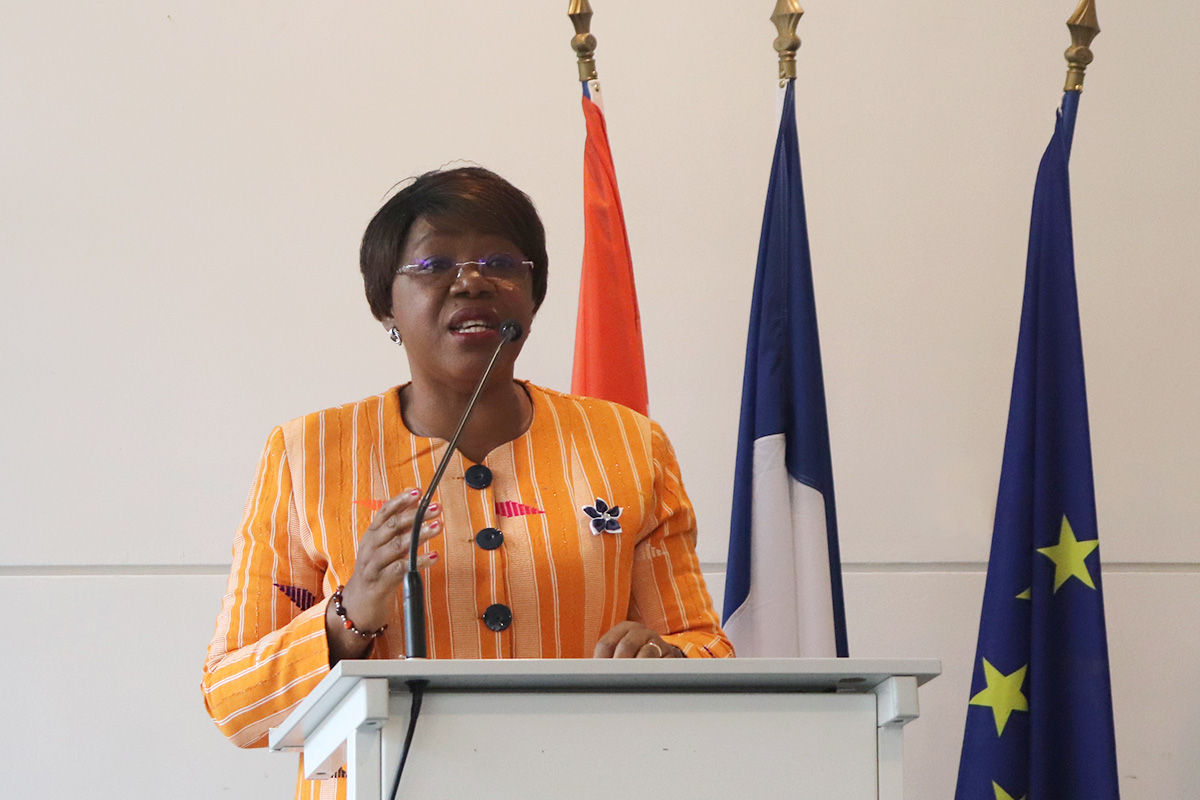
You head the UNESCO Chair on “Water, Women, and Decision-Making” in Abidjan. Why was a chair created that brings these three themes together?
If we look at water use, women account for 90% of it, yet they make up only 17% of the workforce in water-related professions. How can society improve? We must give decision-making power to these women, who know so much and understand the importance of water. We must address this imbalance through a gender and development approach.
In this approach, how exactly do you define gender?
Gender is a tool, a method, and a development strategy. A gender-sensitive approach analyzes the situations of women and men comparatively, identifies the sources of inequality in order to reduce and correct them. These include social inequalities in education and health; economic inequalities in terms of opportunities; and political inequalities in decision-making between women and men, and between girls and boys.
This chair has existed since 2006—why is it important that it be located in Africa?
Because in Africa we have our own standards, our own cultures, and our own ways of doing things that differ from those in Europe. We must take the tools of gender studies and adapt them to our context. And don’t forget that many African countries are developing nations. We don’t lack wealth in Africa—nor resources, nor even money, I’d say—but we lack strategies to align these resources with the expectations of our people, and that is the mission we have set for ourselves with this chair.
What steps are you taking to achieve these goals?
The first step is training, because people lack knowledge about the gender approach. We’ve structured these gender equality issues and developed tools to address practical and strategic needs, the division of roles, stereotypes, and more. We’ve already trained nearly 200 people, and I can assure you that when these decision-makers attend our training sessions, they change course—both for their families and for their companies.
Today you came to sign an agreement with the Icireward Center and the University of Montpellier. This agreement calls for exchanges between Professors, male and female students—what do you hope to gain from it?
For me, the University of Montpellier is the only university that matters. I know how powerful it is; I know its international influence. With this partnership, we’ll have a broader reach and be better positioned to meet sustainable development goals in the areas of water, gender, and technological innovation. We could save the world—and I mean that literally. Many countries are knocking on Côte d’Ivoire’s door; if we can rely on a university that’s already well-known and has the necessary technology, then we’ll be able to move faster.
This agreement also provides for joint research programs, as well as academic and scientific activities. President Philippe Augé mentioned earlier the possibility of creating an international degree program—what could that offer?
I think it would be a very good collaboration between France and Africa; I think that’s exactly what this is all about. I’ve already mentioned the importance of training; there is expertise in Africa and there is expertise in Europe—how do we bring them together? So we’re definitely on board with setting up this international degree program.
This agreement also mentions the reciprocal participation of partner entities from both institutions, such as research centers and companies. In Côte d’Ivoire, you yourself helped establish the “ “Gender and Competitiveness in Business”—what is its purpose?
You know, companies are in it for profitability; we can’t just tell them they need to include women in their organizations. We need to offer them a certification that will enable them to increase their profitability, visibility, and leadership through women. We’ve set up a comprehensive program to do this in the water sector, and we need to expand it to all sectors. Thanks to the label, these companies will become more structured; they’ll benefit from greater strength, intelligence, and human resources. We already have 67 companies on the list.
You served as Minister of Women’s Empowerment, Family, and Child Protection, and you are now Special Advisor to the President of Côte d’Ivoire, Alassane Ouattara, on gender issues. How has this career path enabled you to advance the cause of women?
I started out teaching at girls’ high schools. I saw how brilliant they were, and yet I didn’t see them in society. Why? Women didn’t believe in themselves, and society didn’t make much room for them—we had to take action so they could reclaim their place. I began working at the ministry, where we launched the Compedium of Women’s Skills in Côte d’Ivoire, a program that highlights women and enhances their visibility across all sectors and at all levels, regardless of ethnicity, political party, or religion. I then created the Directorate for Equality and Gender Promotion—the first of its kind in Africa. From there, I served as minister and then as special advisor on gender issues. At every level, I propose initiatives; at every level, I strive to exert influence—and I assure you that a gender-based approach is a powerful means of influence.
In France, the issue of gender is also the subject of intense debate. How do Ivorian women view what is happening in Europe?
European women are doing a lot, but it’s important to remember that we must not project what is happening in Europe onto Africa, nor what is happening in Africa onto Europe. In our country, to ensure that women become decision-makers, we must start by improving their living conditions. We must give them access to healthcare and education; we must raise their awareness of what is happening in the world so that they can then participate and exercise control. I’ve seen the #MeToo movement and cases of rape in Europe… All of this exists in Africa, of course, but we won’t be able to do anything about it unless we first fight poverty.