The book “Flic,” or How Some Police Officers Feel They Are Embarking on a “Divine Mission”
In *Flic*, a journalist went undercover in the police force (published on September 3, 2020, by Goutte d’Or) Valentin Gendrot describes his two years with the police as a security assistant.
Stéphane Lemercier, University of Montpellier
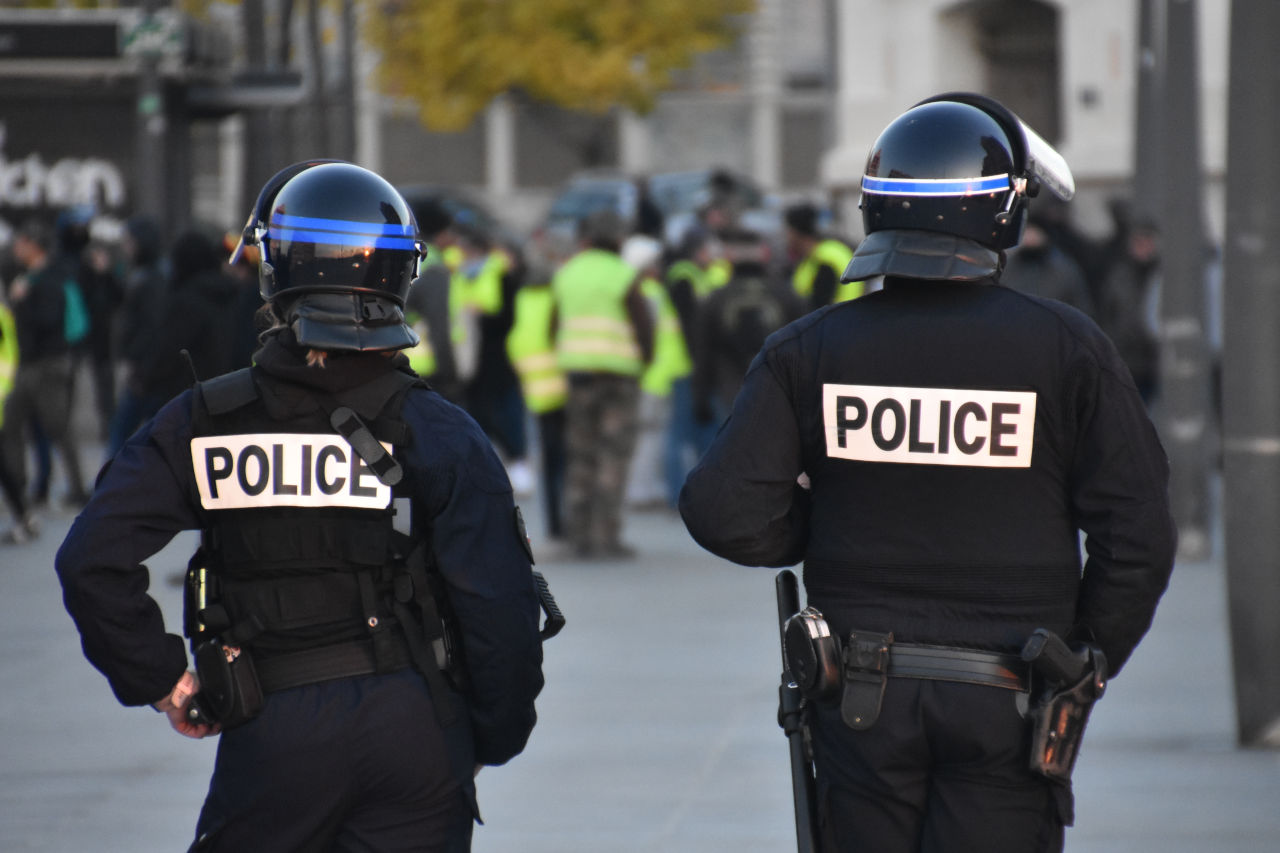
In it, he recounts his three-month “low-cost” training program and his assignment to a patrol unit in Paris’s19th arrondissement, where he witnessed—and even participated in—several criminal acts committed by his colleagues.
Beyond the controversy sparked by the fact that he did not intervene at the time and that he decided to cover for the perpetrators by giving false testimony, without ever reporting the incident to his superiors, the fact remains that the reported actions describe a reality and attest to a “no-holds-barred” attitude that is increasingly characteristic of certain police officers whom I would call the “Templar cops.”
What is this all about? Who are they? Why is this behavior harmful to the police force, and how can it be addressed?
Hunter-gatherers
In the police force, “hunters” are the officers who go to any lengths to catch offenders in the act, while “fishermen” are those who wait for a traffic violation to occur right in front of them so they can “catch” it.
Some of these hunters seem to believe that they are on a “divine mission.” News reports mention military or religious insignia that have been repurposed and pinned onto uniforms, elevating the status of those who wear them and linking their profession to a role of great symbolic significance.
Some thus see themselves as society’s last line of defense and want to wage a crusade against delinquency and crime, just as the Knights Templar once set out across France to protect pilgrims and defend the Holy Land. These police officers are less concerned with their public service mission than with eradicating all offenders, even if it means breaking the law to achieve their goal.

Joel Saget/AFP, FAL
Above all, they want to defend their territory (which falls under the jurisdiction of the police precinct) and their prerogatives (which are to maintain order and public tranquility), asserting their authority by force if necessary, instilling fear throughthe performance of rituals (systematic identity checks involving very thorough pat-downs and degrading or humiliating remarks…) and belligerent attitudes, since masculinity and violence are valued—as Valentin Gendrot repeatedly notes in his book—when his bored colleagues take pleasure in telling him about the dangerous arrests and beatings they’ve dished out over the course of their careers.
They never back down: that would be seen as cowardice. They never turn themselves in: that would be a betrayal of their own “code of honor,” which has nothing to do with the Code of Ethics…
The feeling of being the only ones who know the truth
Why do they act this way? Because they feel they are the only ones who know the truth, and they believe that what they endure every day is ultimately the reality of life: street violence, social deprivation, drugs, and death lurking on every patrol.
They also get their news from media outlets dedicated to their profession, which often feature anxiety-inducing stories. The website actu17.com is very popular; it also has an app and a social media presence (279,000 followers on Facebook). However, Actu17 is a media outlet run by a private individual, and the information it carries is not always verified. These sites also serve as an outlet for law enforcement professionals who feel they are neither sufficiently heard nor properly represented.
However, these networks encourage them to remain within a certain insular circle that rarely admits outsiders. Valentin Gendrot describes this quite well when a certain Stan, the squad’s hunter, sighs because he’s going to have to patrol with him—the inexperienced ADS, “the dead weight.”
They know each other and often recognize one another by the professional gear they wear—which tends to make the police uniform look more military (tactical vests, riot gloves, modified weapons, etc.)—as well as by their attitude on the job.
They carry out an increasing number of routine checks during which they provoke the “bastards” (the young people they encounter and whom they automatically label as delinquents, as the author reports); they slap them, hurl threats, and even hurl insults—especially when they are on duty in the holding cells, but also on public streets. And this can escalate to full-blown beatings if the target dares to protest after being insulted, shoved, or struck.
Stand United
That’s what happened to this undercover journalist during a routine ID check of three or four teenagers who were hanging out at the foot of an apartment building. One of them was slapped in front of his friends, then dragged into the police car, where he was punched repeatedly by an officer before being taken into custody for contempt and making threats.
The young man will file a complaint, and the responding officers will be interviewed. But they will all close ranks around their colleague who was caught in the act, including those who clearly disagreed (which seemed to be the case with the patrol leader, who had commented to the officer in question about his approach but did not stop him…).
And Valentin Gendrot explains this very well: he describes how police officers behave toward one another, how they withdraw into their own world, and how they communicate with each other. In fact, they close ranks within their professional group, united by a common, identified enemy: young people from immigrant backgrounds or simply the “troublemakers” who are corrupting society. They use private messaging apps that allow them to gather and “let loose” easily, without being challenged.
Furthermore, because of their irregular schedules—which prevent them from having a social life outside of work—they cut themselves off from society due to a distorted perception of reality fueled by news sites that focus heavily on tragic news stories, lenient judicial measures, and police officers who are injured or killed, not to mention police suicides: there were 28 such cases in 2020, including three in the past week alone.
"Resentment is the most common thing in the world."
All these factors contribute to a sense of professional identity from which they draw the strength to continue working, casting themselves as true warriors (not to say heroes!) in the fight against delinquency and crime—the last bastion of a society in decline.
In 2006, in an essay, the German philosopher Peter Sloterdijk observed that “resentment is the most widespread thing in the world.”
And he added later: “The fury of resentment stirs the moment the offended person decides to let themselves sink into resentment as if it were an election…” What Valentin Gendrot describes is, unfortunately, all too common. In a book titled *La peur a changé de camp*(* Fear Has Changed Sides*), journalist Frédéric Ploquin quotes a police sergeant:
"It's true that we sometimes put up barriers, but the guys just kept their heads down."
The undercover reporter's colleagues use similar slang terms: they “put in some slats, some donuts, some meals.”
They believe it calms things down, but it often gets out of hand. But is it really honorable to make a teenager bow his head by slapping him? Who hasn’t felt a sense of humiliation and a desire for revenge tenfold after being hit or insulted in front of friends or family? This kind of reprehensible behavior breeds bitterness, resentment, and often even hatred. Given that, is it any wonder that police officers get pelted with rocks when they drive through certain neighborhoods? Young people may end up keeping their heads down when they’re alone or outnumbered, but as soon as they’re in a group, they take their revenge just like any humiliated human being would…
The Urgency of the Moment
The problem is that police officers act in the heat of the moment, guided by the traditional codes of conduct instilled in them by their predecessors, rather than considering the potential future consequences of their actions. Max Weber explained this as follows:
“Activities that stem from traditional behavior—based on attitudes acquired in the past—sometimes give way to other activities in an endless response to an unusual stimulus, in which the course of action is consciously determined according to axiological or teleological rationality.”
The first reality is that agents conform to imperatives or duties imposed upon them (duty, dignity, piety, etc.) without regard for the foreseeable consequences of their actions. The second is that agents systematically weigh the ends, the means, and the primary or secondary consequences of their actions and act accordingly. Law enforcement officers should therefore strive toward a teleological rationality.
If police officers came to realize that ever-increasing levels of violence will ultimately undermine the cause they defend—the rule of law—then things might take a turn for the better. There has been a palpable sense of unease within the police force for years, and reform is urgently needed.
This would require better initial training, a higher staff-to-trainee ratio for new recruits, and an overhaul of thepolice ethics. This approach would prioritize dialogue over violence and be based on empathetic, non-authoritarian judgment.
Stéphane Lemercier, Lecturer – Member of the Montpellier Criminal Law Team (EDPM), University of Montpellier
This article is republished from The Conversation under a Creative Commons license. Readthe original article.