The Astronomy Pavilion at the Jardin des Plantes: A Scientific Heritage Site Restored byUM
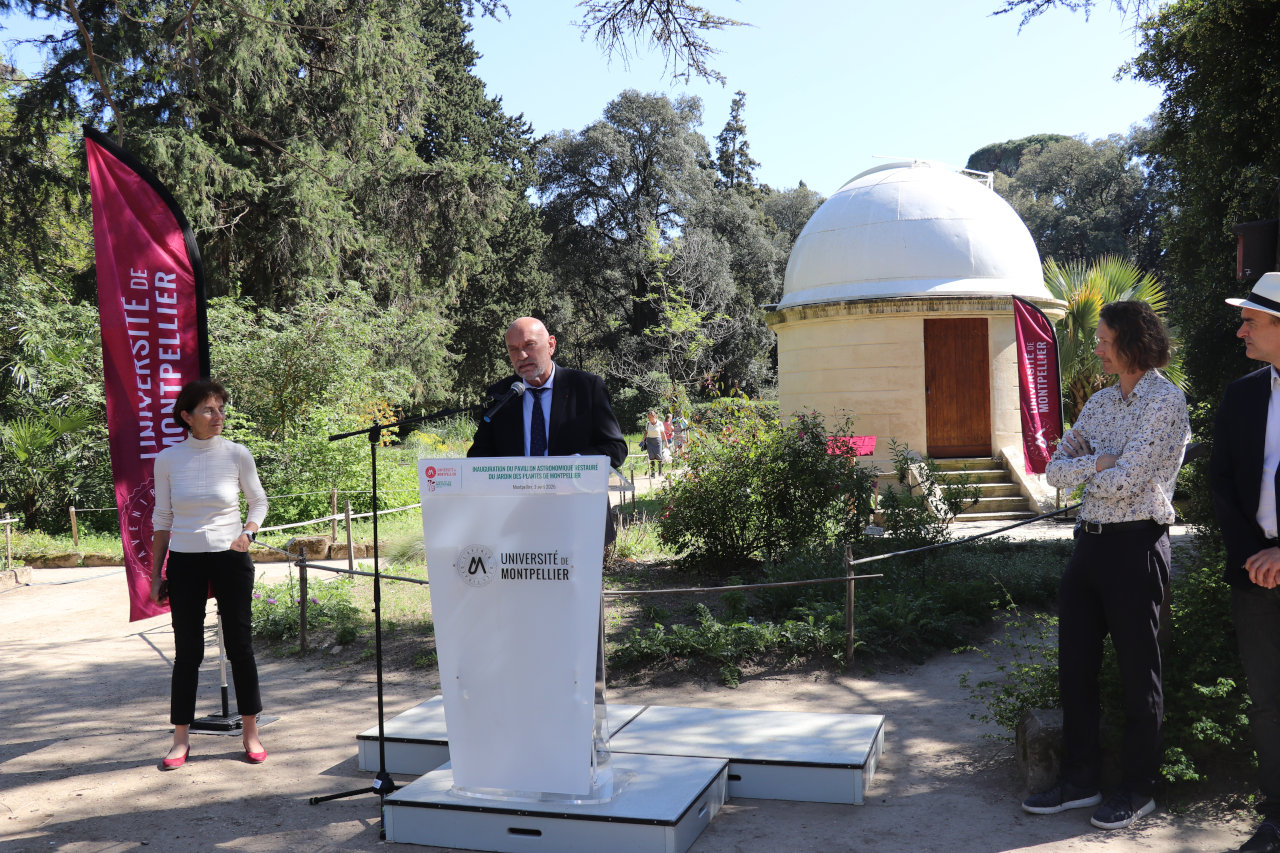
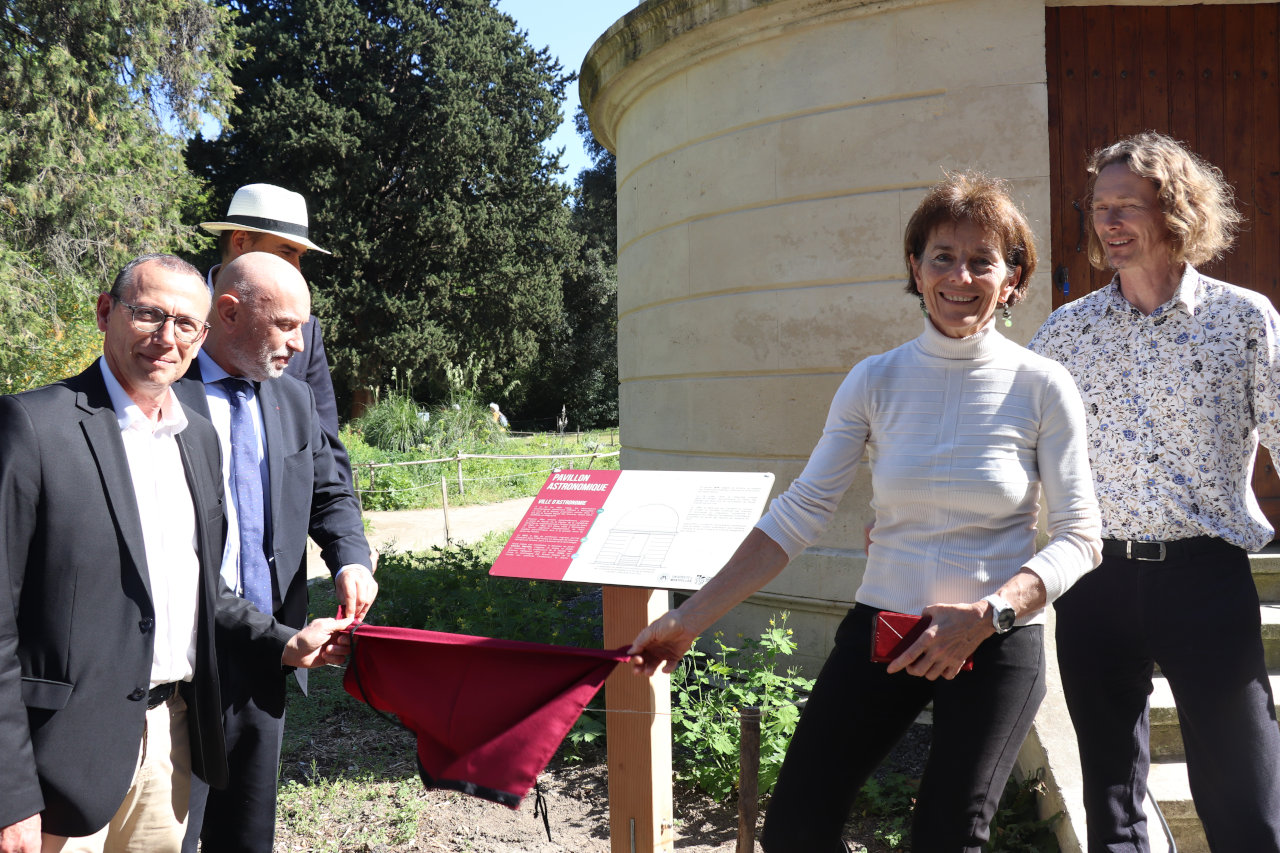
On Thursday, April 9, 2026, the University of Montpellier inaugurated the restored astronomy pavilion at the Jardin des Plantes in Montpellier. The inauguration was attended by Philippe Augé, president of the University of Montpellier; Isabelle Laffont, dean of the Montpellier-Nîmes Faculty of Medicine; and John De Vos, director of the Jardin des Plantes. Entirely funded by the University of Montpellier, this €122,000 restoration project highlights an iconic part of Montpellier’s university heritage.
A Testament to Montpellier’s Scientific History
At the end of the 18th century, Montpellier was looking for a new site for astronomical observation following the closure of the observatory at the Babote Tower in 1793.
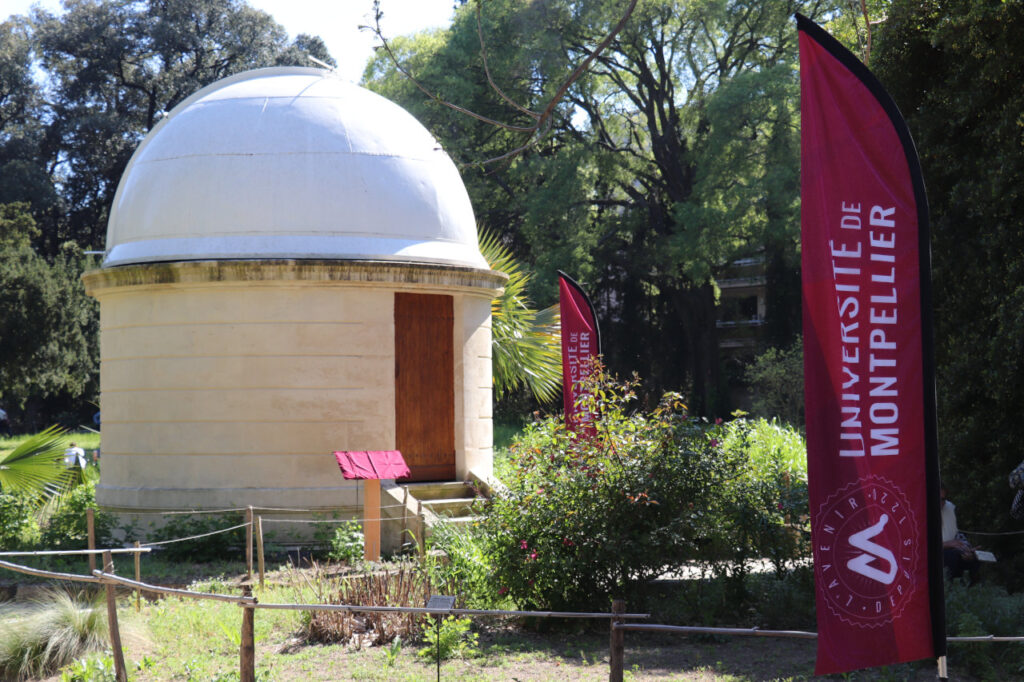
In 1877, a bequest from astronomy professor Jean-Nicolas Legrand made it possible to acquire a Foucault telescope, considered a state-of-the-art instrument at the time. To house it, a pavilion was built at the Jardin des Plantes at the request of Professor André Crova, who held the chair of physics at the Faculty of Sciences. The site, approved as early as 1862 by astronomer Urbain Le Verrier, was chosen for its relative distance from urban disturbances, making it ideal for astronomical observation. The pavilion was situated in the English garden near the lotus pond. It was inaugurated on July 28, 1879, on the occasion of the observation of the occultation of the star Antares by the Moon.
Amid Controversy and Gradual Phase-Out
However, the construction of the pavilion was not universally supported. Charles Martins, then director of the Garden and a professor at the Faculty of Medicine, opposed it, believing that the dampness of the site could damage the equipment. A controversy arose with faculty members from the Faculty of Sciences, requiring arbitration by the Minister of Public Instruction, who ultimately approved the project. By the early 20th century, the dome had begun to deteriorate. Use of the pavilion gradually declined until the telescope was removed in 1964 and transferred to the University of Science and Technology of Languedoc.
A Restored Site, Bridging Memory and Education
Temporarily converted into a planetarium in 1988, the astronomy pavilion is now entering a new phase in its history with this restoration. The site now embodies heritage, education, and symbolism. It highlights the connection between observing living things and understanding the universe, continuing Montpellier’s scientific tradition. This restoration thus breathes new life into an iconic part of the university’s heritage, while enriching the experience of visitors to the Jardin des Plantes in Montpellier.