The Joint Documentation Service joins theUM
Since the 1stJanuary January 1, 2021, the staff of the Joint Documentation Service have officially transferred from the administrative jurisdiction of Paul-Valéry Montpellier University to that of the University of Montpellier. This transfer follows a decision made last June by the universities in consultation with the Ministry, which ensures the quality of service for users of university libraries while clarifying the status of the staff.
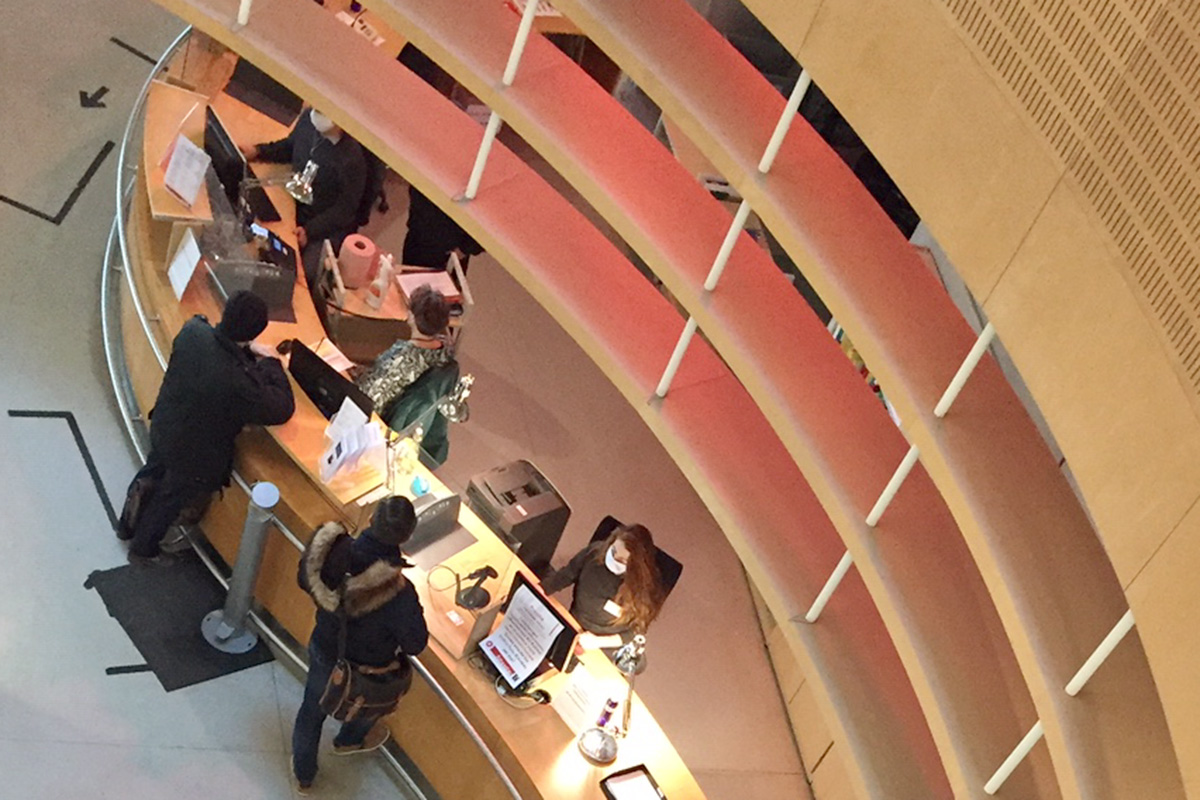
Many people were unaware of this: the staff of the University of Montpellier’s Joint Documentation Service (SCD) had, until now, been administratively attached to Paul Valéry University as part of the BIU (Interuniversity Library). “ It’s true that this organizational structure might have come as a surprise,” admits Sandrine Gropp, director of the SCD, with a smile. “We work for theUM, as part of theUM, but our administrative point of contact was the UPV.”
The Reasons for the Document Reorganization
The situation in Montpellier was unique in France, a legacy of the 1970s and the creation of inter-university services (preventive medicine, sports activities, libraries, etc.). In the 1990s, inter-university library services disappeared in all major French university cities except Montpellier, where the BIU remained in operation until the end of 2020.
Why make such a transition 30 years later, when this organizational structure—as surprising as it may be—had functioned satisfactorily for many years? Because the institutional environment of higher education has changed, particularly with universities gaining expanded responsibilities and authority, the strengthening of institutional strategies, and the restructuring of regional development policies (I-Site, PIA, etc.). “Under this model, the University of Montpellier funded its library services by transferring funds to the BIU, but without being able to participate in the decisions, which were made by the UPV’s governing bodies, ” explains the director.
The SCD at the Heart of the Institution’s Strategy
The responsibilities of the Joint Documentation Service are, in fact, increasingly linked to the university’s overall strategy. First and foremost, of course, is the management of the 12 university libraries and the coordination of the library network, which includes some 20 affiliated libraries spread across the various campuses, making the SCD a cornerstone of student services. But beyond this core mission, the department also plays a key role in supporting education and research. “We’re transforming the university libraries into learning centers; we provide support for projects such as the student business incubator; and we’re developing the information resources components of partnerships—in the paramedical field, for example,” emphasizes Sandrine Gropp. “And we also serve as the lead department for open science within the University.”
All of these arguments led each university to appeal to the General Inspectorate of Higher Education and Research to review the continued existence of this national exception and ultimately put an end to it, thereby allowing each university to benefit from a fully operational SCD. In addition, tasks supporting their activities (documentary information systems, heritage workshops) have been entrusted to an interuniversity documentary cooperation service (SIU), managed by the UPV and co-funded by theUM.
"New" agents at theUM
On January1, nearly 100 staff members were welcomed to theUM. This transition was completed in just six months, despite the challenges posed by the health crisis. “It was a challenge, and it was met thanks to everyone’s commitment—at the political level as well as within the University’s business units, departments, and services. Every decision was the result of consultation between theUM and the UPV, and their implementation took placee in a true spirit of cooperation. ” Users can rest assured that this restructuring will have no impact on them. Whether they are at theUM or the UPV, they will retain the same access to the same services across all university libraries. At theUM, access to library resources and services is even expected to be expanded, particularly through the I-site MUSE and the new experimental facility.
The “new” staff members, for their part, will discover a new administrative landscape. “We were very warmly welcomed thanks to the dedication and responsiveness of theUM departments. ID badges, cafeteria access forms, computer access… Everything was ready before the summer break. The Campus Life Department even sent us a welcome message! ” While the nature of the SCD’s activities will not change as a result of this reorganization, Sandrine Gropp is already highlighting its positive effects, including in terms of cooperation: “ Beyond the new projects within the University, there is a renewed dialogue with our colleagues at the UPV because we want to continue building things together—out of a shared desire and to serve our users.”