Soundscapes: An Overlooked Natural Heritage
Soundscapes are part of our rich natural heritage; however, they remain little known and are given little consideration in biodiversity conservation policies.
Cyprian Czaban, Sciences Po ; Jérôme Sueur, National Museum of Natural History (MNHN); Julie Trottier, University of Montpellier; Ludovic Crochard, National Museum of Natural History (MNHN); Nicolas Hette-Tronquart and Sylvain Haupert, National Museum of Natural History (MNHN)
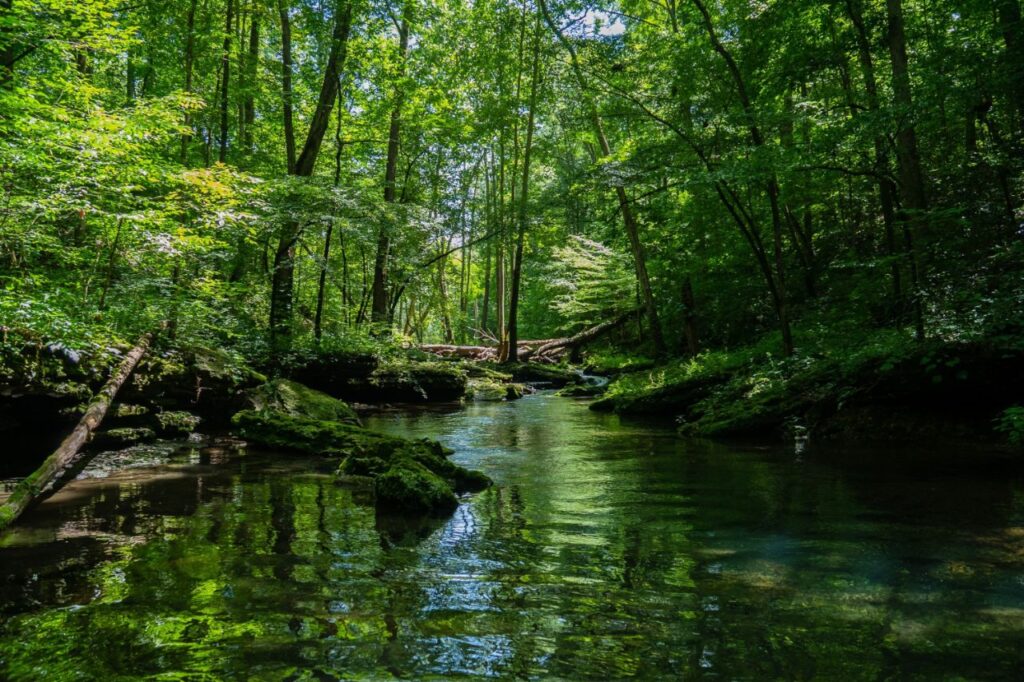
Our days very often begin with a sound—the jingle of an alarm clock, a radio turning on, a phone vibrating, or a voice telling us, “Time to get up! ” Even with our eyes still closed, other sounds are already reaching us: a door slamming, a car driving by, a bird singing, neighbors chatting in the street or on the sidewalk.
Even though we are organisms that primarily explore the world through sight, we are constantly on auditory alert: we listen—sometimes without even realizing it—to avoid danger, find things, move forward, communicate, or, quite simply, enjoy music.
We are constantly immersed in soundscapes composed of the vibrations of machines used for transportation or construction (known as “technophony”), human voices (“anthropophony”), the vocalizations of non-human animals (“biophony”), the patter of rain, the rustling of the wind, and the roar of the ocean (“geophony”).
Every acoustic mixture—whether more or less structured, more or less pleasant, and whether terrestrial, aquatic, or subterranean—constitutes a soundscape. The scientific concept of the soundscape emerged in the 1970s, notably in the book *The Soundscape: The World as Music*, written by the Canadian musician and scholar Murray Schafer. A soundscape can be defined as a collection of sounds originating from active vibrating sources at a given location and at a given moment.
There are an infinite number of soundscapes, since every place on Earth is unique and, at any given moment, is filled with a singular set of sound vibrations. These soundscapes are perceived, analyzed, and interpreted by all living organisms equipped with pressure receptors or particle-motion sensors, whether relatively simple—such as the eardrums of certain moths that detect the calls of the bats hunting them— or highly sophisticated, such as the asymmetrical ears of certain owls, which can pinpoint the exact location of the small rodents they feed on.
More generally, mammals, birds, amphibians, reptiles, fish, insects, spiders, crustaceans, and even certain mollusks and cnidarians—such as mussels and jellyfish—listen to and analyze the soundscapes they traverse and that surround them. Each interpretation of soundscapes is also unique, as it depends on the physiological and cognitive abilities of each individual.
Listening to France’s Protected Forests: The Sonosylva Project
In France, soundscapes reflect the great diversity of the country’s mainland, Corsican, and overseas territories—ranging from simple suburban green spaces filled with the songs of a few birds, to the vast tropical forests of the Amazon, filled with the croaking of frogs and the chirping of insects, and the coral reefs of the Pacific islands, crackling with pistol shrimp whose sudden snapping of their oversized claws produces a clicking sound as air bubbles implode.
One-third of the area of these French socio-ecosystems is protected by nature conservation organizations, whether local (prefectural decrees for biotope protection, integral biodiversity reserves, national nature reserves), national (national parks), or European (Ramsar sites, Natura 2000 sites).
In most cases, these protected areas were established and delineated based on criteria related to wildlife and/or plant inventories, or specific habitats, with particular reference to the European Habitats, Fauna and Flora, and Birds Directives. However, these areas give rise to soundscapes that constitute a little-known part of the nation’s natural heritage, the value of which must be defined so that it can be better recognized and protected.
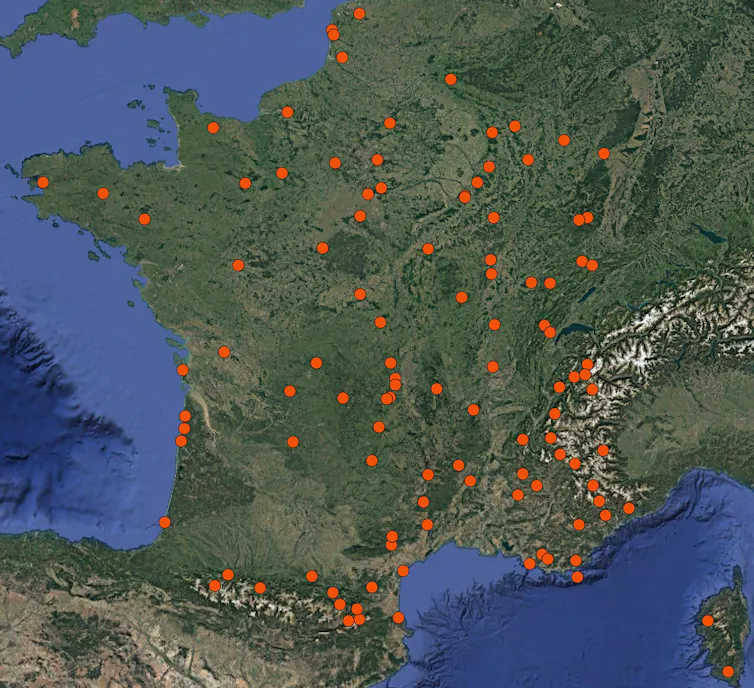
To meet the information needs of policymakers and citizens regarding the state of biodiversity, the French government published a master plan for terrestrial biodiversity monitoring in 2024. Within this national framework, a three-year pilot project led bythe French Office for Biodiversity (OFB) and the National Museum of Natural History (MNHN) aims to document and analyze the soundscapes of protected forests in mainland France and Corsica.
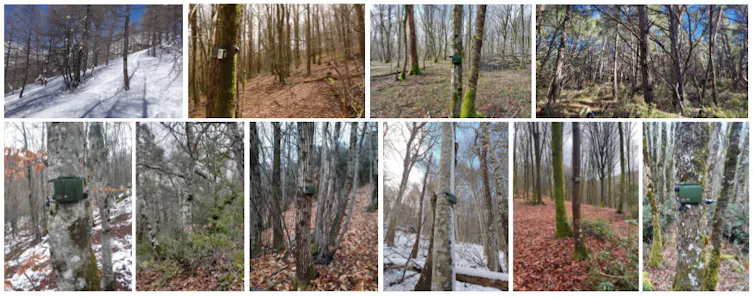
This project, Sonosylva, relies on the collaboration of more than 200 staff members employed at 80 organizations covering a total of 110 forests. These biodiversity conservationists have installed autonomous audio recorders in the heart of their forest territories to record soundscapes—one minute every quarter-hour, every other day, from spring to fall—in 2024, 2025, and again this year, in 2026. This participatory scientific observatory collects more than one million audio files each season—more than 16,000 hours of forest soundscapes.
While the analysis of this vast database is just beginning, a survey has already been conducted among 162 participants to gauge their interest in this heritage. How are natural soundscapes perceived? Can they be incorporated into policies for the conservation, preservation, and public awareness of protected areas?
A Perception of Soundscapes Shaped by Geography
Most managers consider that their protected areas are characterized by a unique soundscape that contributes to the identity and heritage of their territories. For example, one respondent noted that the site under his charge “has rich and iconic soundscapes (wildlife, livestock, the ocean).” “The distance from urban areas and the limited size of the public area allow us to maintain a soundscape conducive to tranquility on site.”
This acoustic footprint results from the combination of natural and anthropogenic sounds, with their spatial and temporal variations linked to meteorological, ecological, and societal factors. Managers also perceive disturbing sounds differently depending on their local context. Constant, distant noises—such as those from a road, an air corridor, or industrial activity—are relatively well accepted and may even be considered mere “background noise.”
Occasional noises attributed to neighborhood disturbances—such as local traffic, groups of visitors engaged in somewhat lively conversations, or recreational activities like music—are viewed negatively. There is, therefore, a clear distinction between uncontrollable distant noises and avoidable nearby noises.
A lack of awareness-raising and training initiatives
The survey also reveals a significant disconnect between managers’ growing interest in soundscapes and a sense of powerlessness stemming from a lack of training and concrete applications that have an impact on national or local public policies, as one participant notes:
“This is a relevant approach; soundscapes and noise pollution are rarely addressed in our fields, even though they should be given greater consideration. As for me, I don’t explore these topics due to a lack of expertise. Introductory courses or training on these subjects could serve as a good foundation.”
The promotion and protection of soundscapes appear to be hampered by a lack of awareness at the national level and a shortage of resources to support management and communication regarding the acoustic value of protected sites. The topic of soundscapes is notably absent from key documents, such as the guidelines for developing management plans for natural areas (document CT88). The administrative bodies responsible for protecting natural areas also suffer from limited human and financial resources, which currently prevent them from treating soundscapes—including their richness and the sources of pollution that threaten them—as management priorities.
Noise pollution causes conflicts
Noises associated with human activities in protected areas—particularly the forests of the Sonosylva project—give rise to conflicts primarily linked to a fundamental property of sound: it is non-exclusive. Indeed, it is nearly impossible to prevent an individual—whether human or non-human—from producing sound, and it is also very difficult to control the propagation of sound in the environment. Sound, whatever its nature, knows no boundaries: it traverses landscapes in an uncontrollable manner. A soundscape lacks the defined boundaries of a visual landscape; it is fluid rather than solid, flowing rather than stagnant.
Managers also face a scaling issue when managing noise-related conflicts. Certain national land-use decisions—such as the routing of new rail lines or highways—do not take into account the impact on the local soundscape.
Conversely, local issues can lead to positive national changes: the recent “urban exodus” has sparked neighborhood conflicts with some newcomers to rural areas who are bothered by frogs, roosters, or cicadas—which led, in January 2021, to the inclusion of the sounds and smells of natural and rural environments in the first article of the Environmental Code, as part of the “nation’s shared heritage.”
New noise conflicts may arise in protected areas, but in such cases it is human visitors who are likely to cause disturbances: engine noise (from cars, motorcycles, and ATVs), noise from gatherings (meals, raves), or loud voices can affect both non-human species and other humans who have come in search of a quiet place. :
One of the participants remarked:
“In recent years (in connection with the increase in visitor numbers), there have been numerous noise disturbances (visitors with musical instruments, portable speakers, and very noisy dogs). Groups of visitors are themselves very noisy and often do not realize the extent of their shouting and the disturbance they cause.”
Another person noted that “the sounds of motor vehicles can be heard from the recorder’s installation site, particularly those of motorcycles, which are especially noticeable. Several fighter jets also fly over the site each day.”
Taking Action for Soundscapes
It would appear that we are witnessing a gradual rise in collective awareness of the cumulative impact of noise in daily life, as illustrated by reports fromthe French Environment and Energy Management Agency (ADEME),the European Environment Agency, andthe World Health Organization (WHO).
Managers are demonstrating a commitment to change, as evidenced by the creation of conferences and symposia on land-use planning aimed at integrating soundscapes into public policies for biodiversity conservation, within a“One Health” framework. Discussions are also underway, particularly in the Lille metropolitan area (Nord), to incorporate the “white network”—which aims to ensure acoustic continuity—alongside the green, blue, brown, and black networks that preserve the continuity of habitats, soil, and night skies.
In France, awareness-raising zones have been established in various national nature reserves and national parks (the “Quiet-Attitude” initiative in the Mercantour National Park), bans on connected speakers (regulations in the Calanques National Park), and educational initiatives to raise awareness of acoustic heritage (the “Acoustic Biodiversity” project by ANA–Conservatoire d’espaces naturels in Ariège).
However, these efforts remain relatively limited. In order to better integrate soundscapes into public policy, we suggest revisiting regulations so that they effectively limit noise levels. Beyond these guidelines for use, we propose the creation of “listening zones” dedicated to the sounds of nature, inspired by a sense of wonder rather than by restrictions.
In these listening areas, the goal would be to promote solutions that reduce noise at the source, for example by limiting the use of machinery (transportation) and encouraging quiet behavior (small groups). Already piloted a few years ago by the Haut-Jura Regional Nature Park, these areas would highlight the existence of remarkable soundscapes, encouraging a shift from disruptive, dominant behavior to an attitude that is considerate of others and respectful of the sites and their soundscapes.
Today, soundscapes represent a little-known aspect of our natural heritage, and there is still almost everything left to be done in this area: incorporating them into public land-use planning policies, integrating them into biodiversity conservation plans at both small and large scales, and, of course, educating all audiences to help us listen more closely to the living world.
Cyprian Czaban, a graduate of Paris Sciences et Lettres University, Sciences Po Paris, Sorbonne University, and the Conservatoire à Rayonnement Régional de Paris, Sciences Po ; Jérôme Sueur, Professor, National Museum of Natural History (MNHN); Julie Trottier, Director of “ Research ” at the CNRS, specialist in the Palestinian territories, ART-Dev, UMR 5281, University of Montpellier; Ludovic Crochard, Ph.D. in Ecology, National Museum of Natural History (MNHN); Nicolas Hette-Tronquart, Research Project Manager, and Sylvain Haupert, CNRS Research Engineer in ecoacoustics, National Museum of Natural History (MNHN)
This article is republished from The Conversation under a Creative Commons license. Readthe original article.