Youth networks: key but overlooked players in environmental governance
Young people constitute a major demographic group but are underrepresented in decision-making processes. Drawing on the experiences of 12 youth networks engaged in environmental governance from the local to the international level, Marie-Morgane Rouyer—who completed her dissertation at the Center for Functional and Evolutionary Ecology (CEFE)—and her co-authors shed light on the key roles of these networks in connecting different stakeholders, describe some of their successes and the barriers they have encountered, and offer recommendations. The study, published on April 10, 2026, in People and Nature highlights the political role of youth networks, which contribute to the democratization of environmental governance.
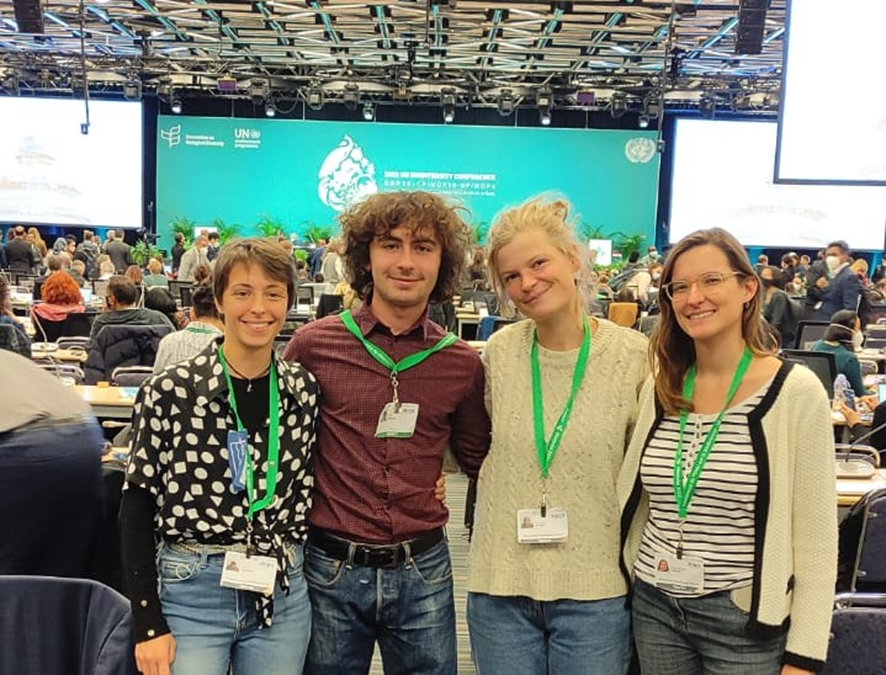
Today’s socio-environmental crises (climate, biodiversity, pollution) demand profound societal changes, particularly a rethinking of how stakeholders are included in decision-making. Young people make up a significant portion of the population but are underrepresented in governance, as they are often not viewed as political actors. To address this lack of inclusion, young people have created alternative avenues for participation, such as youth networks. These networks bring together individuals and organizations that work together to address current challenges and envision a desirable future for themselves and future generations. Their role in environmental governance remains largely unexplored.
Drawing on the experiences of 12 youth networks engaged in environmental governance (biodiversity, oceans, forests, climate) at the local, national, and international levels, the study highlights the bridging role these networks play in environmental governance. They connect young people with one another and across generations, facilitate interactions between local movements and decision-makers from the local to the international level, and between different decision-making spheres. Youth networks also achieve tangible successes: they empower young people to take action to transform certain aspects of society, contribute to the recognition of young people as key actors, and influence certain political processes.
A shared challenge that requires the cooperation of all generations
However, they face significant obstacles. Some hinder their access to governance forums: a lack of structures for youth engagement, a lack of resources—particularly funding—and significant inequalities in access to environmental governance. Others are systemic, meaning they are rooted in the very functioning of institutions: a lack of recognition of young people and their contributions, insufficient support for local initiatives that transform societal practices, and power imbalances among stakeholders.
These findings call on stakeholders and institutions involved in environmental governance to pay greater attention to youth participation processes, particularly by recognizing young people’s right to participate in decision-making, implementing best practices for youth engagement, supporting local initiatives aimed at transforming societies, and critically rethinking environmental governance to avoid power imbalances. This is a collective challenge that requires the collaboration of all generations to ensure meaningful youth participation, which is essential for achieving the necessary societal transformations.
Rouyer, M.-M. Aminian Biquet, J., Dela Paz, I.C.P., Eriksson, A., Gietzelt, J.M., Kostianaia, E., Mukhin, P., Russell, S., Sánchez, M.E., Singh, D., Soriano, D.F.C., Stotra Bhashyam, S., Weins, N. Youth networks as bridging actors in environmental governance: roles, achievements, and barriers (2026). People and Nature. https://besjournals.onlinelibrary.wiley.com/doi/10.1002/pan3.70302