[LUM#23] Things are heating up on the dance floor
35 degrees in the shade—weather that would keep even a marathon runner indoors… And yet, athletes continue to train even in sweltering heat. This trend is becoming more common due to global warming, and it is not without risk, as Sébastien Racinais, a researcher at the DMEM laboratory, explains.
In July 2021, athletes from around the world gathered in Tokyo for the Summer Olympics. An event that comes with its share of records, one of which wasn’t marked by a medal: the heat record. With temperatures exceeding 34°C, “these Games were the hottest in history, ” notes Sébastien Racinais. The researcher at the Muscle Dynamics and Metabolism Laboratory, who chaired the “Extreme Environment” working group created by the International Olympic Committee, warns: “These conditions increase the risk of heatstroke during exercise, which is the most serious incident faced by athletes.”
Optimal temperature range
What are the symptoms? “A disruption of the central nervous system that can lead to erratic behavior; the person may be disoriented, lethargic, and sometimes even violent, and, most importantly, their body temperature rises above 40 degrees. " That’s hot—way too hot… 'Our organs function best within an optimal temperature range, and above 43 degrees, the proteins that make up our bodies denature, which can lead to very serious complications.'"
A potentially serious problem, but a simple solution: when dealing with heatstroke, you have to cool the person down. And it’s a real race against time. “If the athlete is cooled down within half an hour, there are no lasting effects; if treatment begins between half an hour and an hour, they will need to be hospitalized. Beyond an hour, damage is certain, and if we wait more than two hours, they will require organ transplants and risk death, ” explains the researcher, who also heads the “Environmental Stress” unit at the CREPS in Montpellier.
Acclimatization chamber
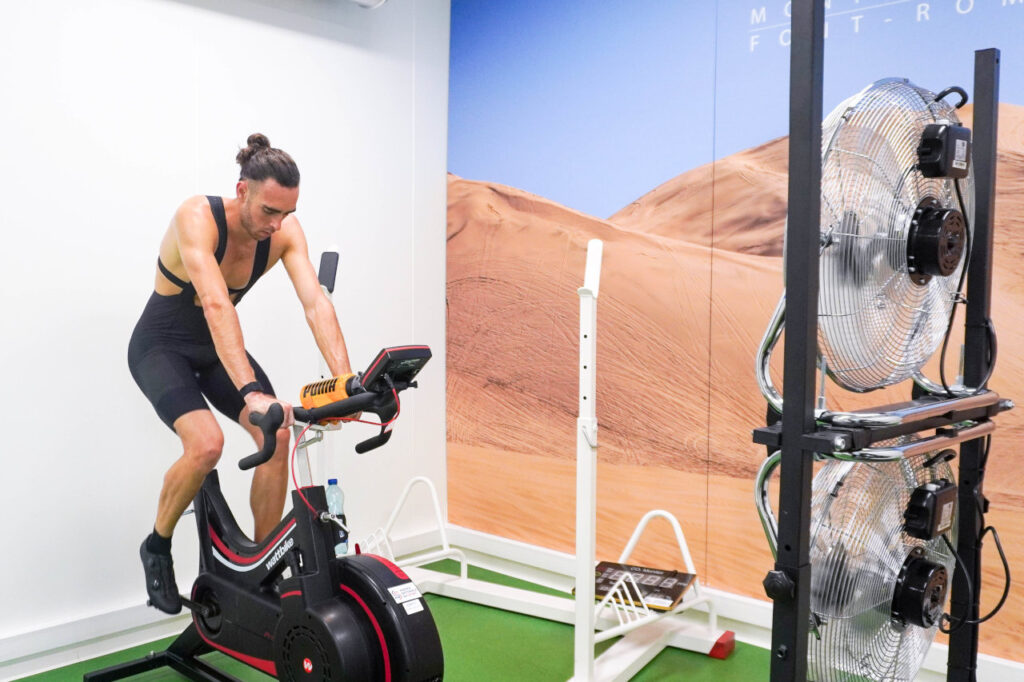
A tragic outcome that remains extremely rare, as coaches today are trained to recognize and treat heatstroke during exercise. “At the slightest sign of trouble, we immerse the athlete in an ice bath, which is the most effective way to lower their body temperature. ” Furthermore, athletes themselves are becoming increasingly well-prepared for these practices in extreme conditions. “The CREPS in Montpellier has a climate chamber where we control heat and humidity levels to allow athletes to gradually acclimate to the heat, ” notes Sébastien Racinais.
This preparation is all the more important given that the risk is exacerbated by global warming, which is increasing the frequency and severity of heat waves. “Hot and humid weather requires a high degree of vigilance; it’s more dangerous because athletes sweat to release excess heat, and if the air is too humid, the sweat doesn’t evaporate,” explains Sébastien Racinais. A call to keep a cool head as the 2026 Youth Olympic Games approach, set to take place in Dakar, where temperatures are expected to be even more intense than during the Tokyo Olympics.
See also:
UM podcasts areUM available on your favorite platform (Spotify, Deezer, Apple Podcasts, Amazon Music, etc.).