Seas of Exile: The Last Refuges of Large Marine Predators
To escape the pressure caused by human activities, large marine predators have no choice but to seek refuge in isolated reefs and seamounts located more than 1,000 km from our coasts.
This is the finding of a major international study published in PLOS Biology, in which David Mouillot, a professor at MARBEC, and several doctoral students at the University of Montpellier participated.
Sharks, tuna, and swordfish—whose size and numbers decrease as one gets closer to areas of human influence. This is the alarming finding reported by researchers from the international PELAGIC project, funded by FRB-CESAB.
More than 1,000 sites monitored
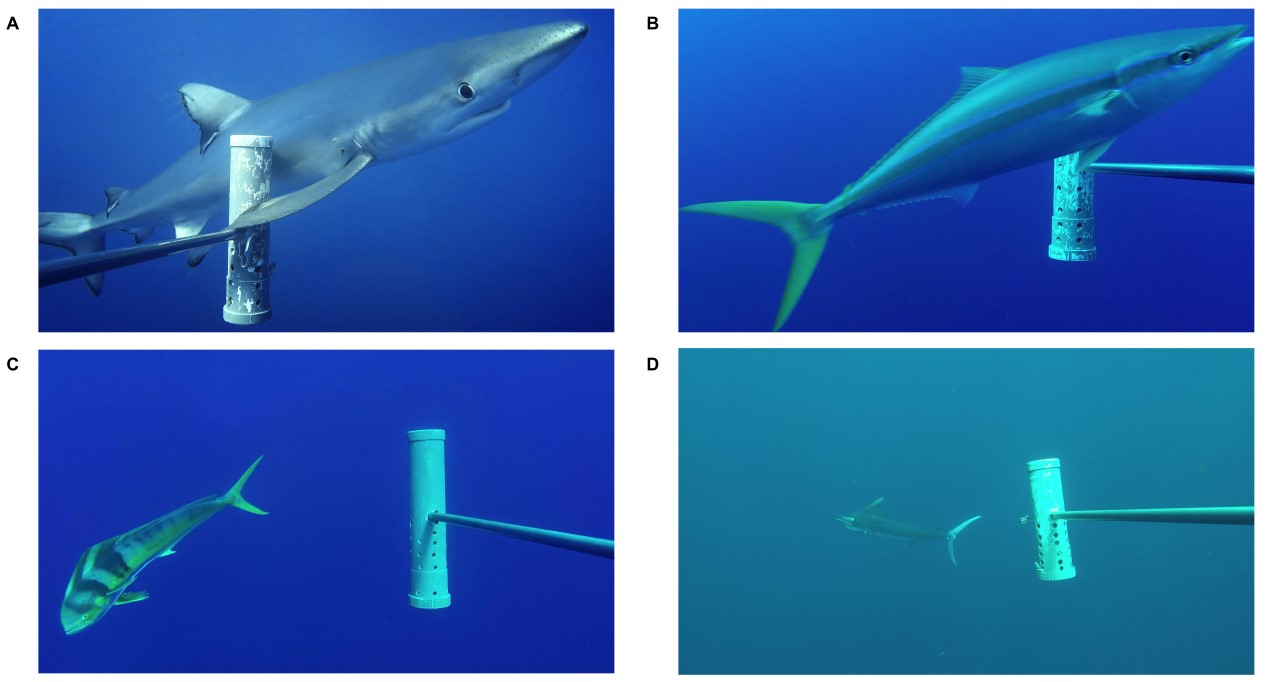
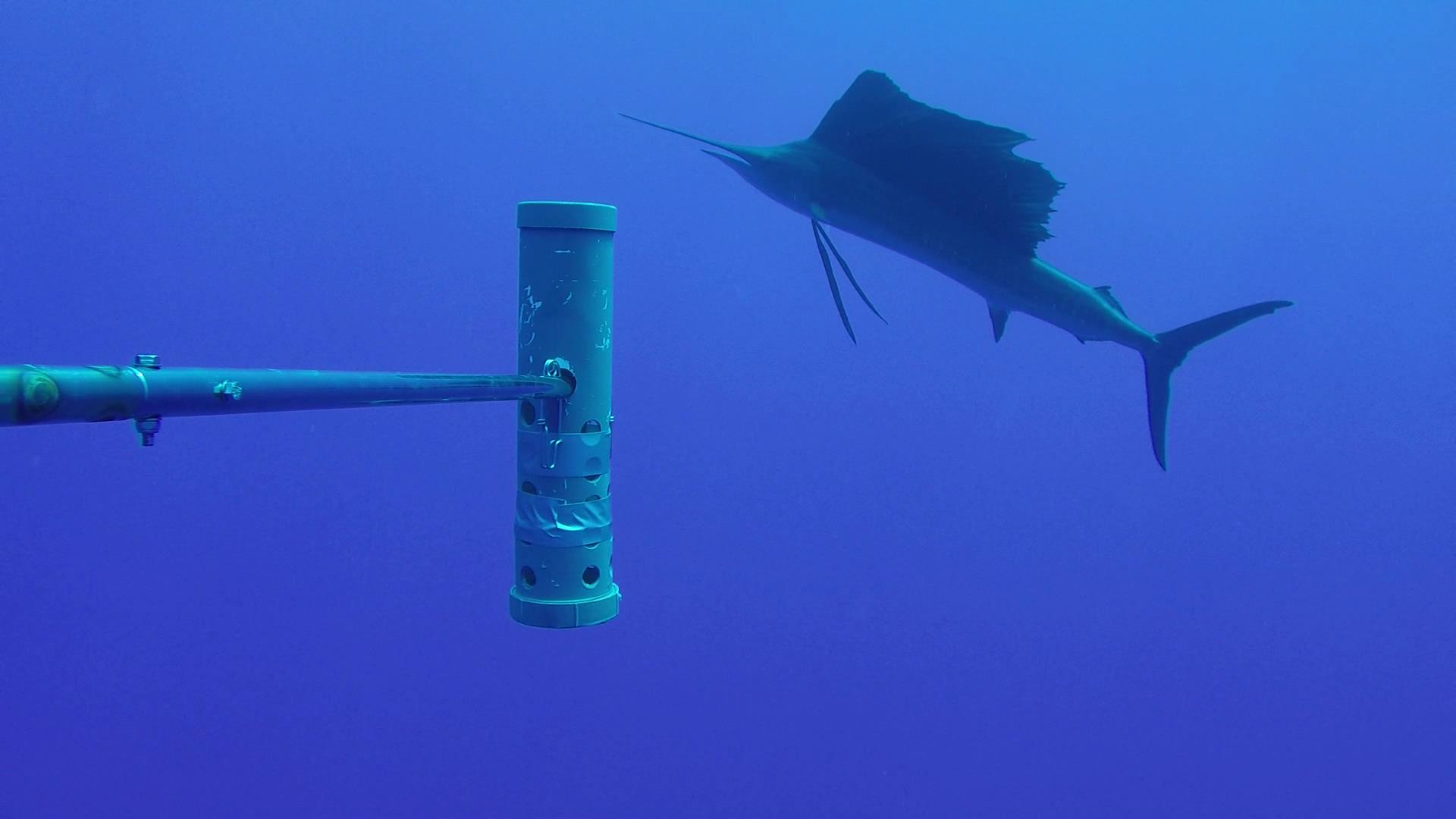
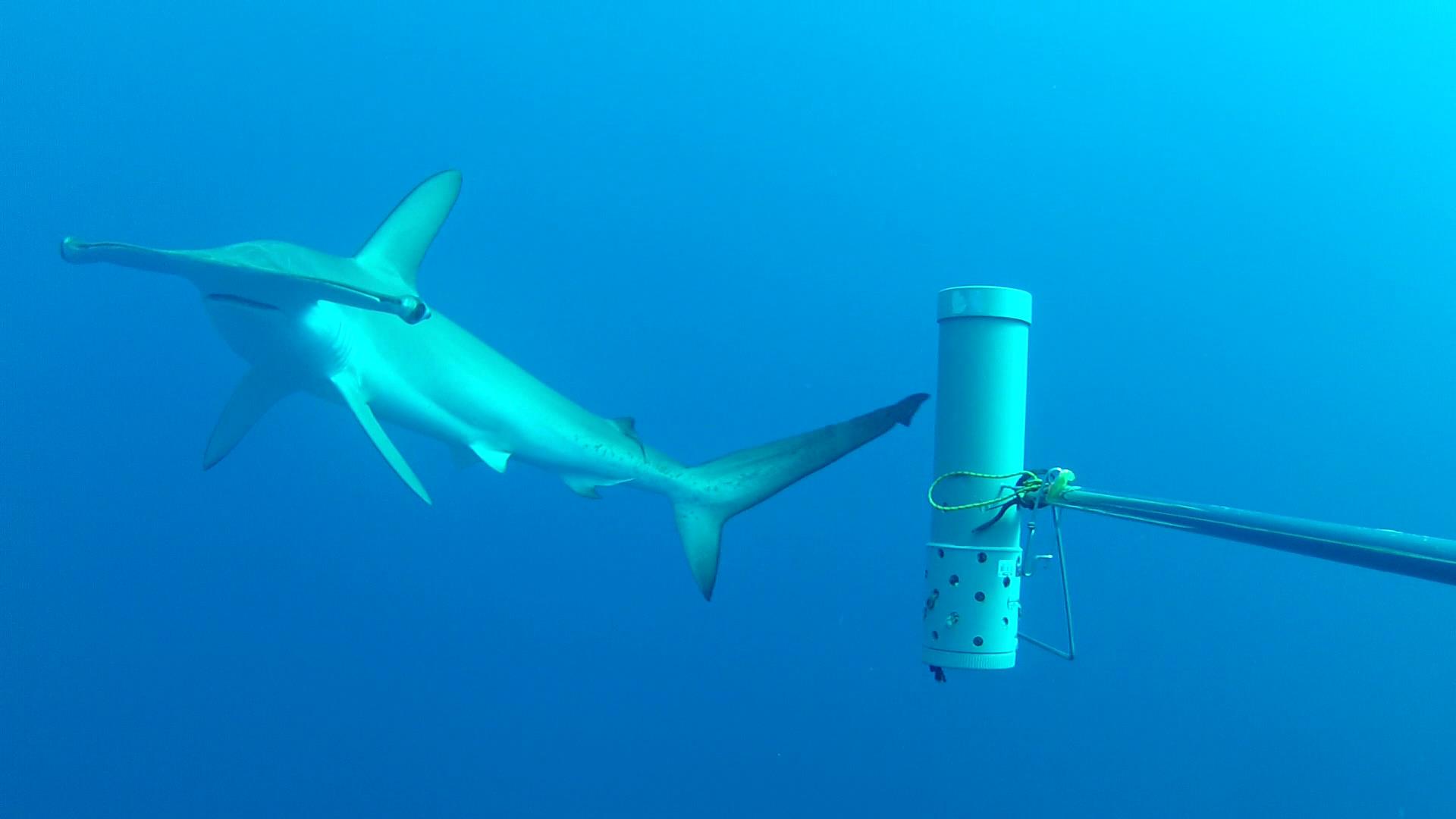
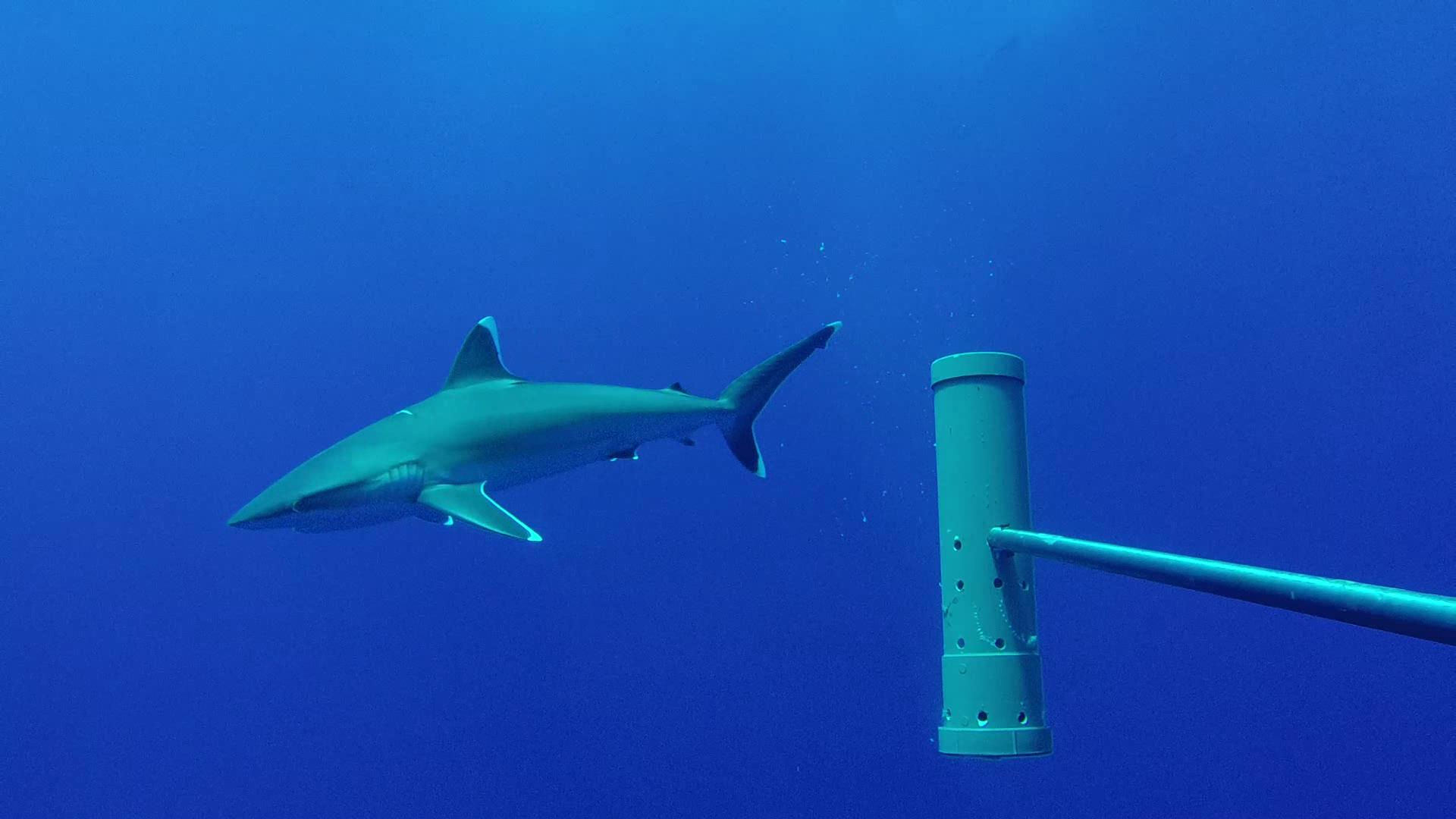
For several years, from 2010 to 2015, the team surveyed more than 1,000 sites in the Indian and Pacific Oceans. At each site, floating stereo cameras equipped with bait—sardines and anchovies, to be precise—were deployed for several hours. The goal? To film and count the large predators in each area and estimate their size without having to handle or capture them. “A world first,” says David Mouillot, a professor at Marbec. “Never before has a study been conducted on such a large scale based on visual counts.”
The results published in PLOS Biology on August 6 leave no room for doubt. In areas with high human pressure—due in particular to fishing—the cameras did not record a single shark. This came as a very unpleasant surprise to the researcher, who did not expect “to find a total absence of these species at nearly 80% of the sites observed.”
Critically Endangered Species
It was more than 1,250 km from ports, in isolated reefs or seamounts, that researchers began to observe a significant concentration of these species (more than twenty individuals in a single image) and catch glimpses of large specimens (>5 m).“They are gathering in the last remaining refuges available to them, but their survival is now extremely threatened,” warns David Mouillot. “It is much more difficult to prove extinction events at sea than on land. We’ve only been studying this for about ten years.”
The only good news is that biodiversity—in other words, species diversity—does not appear to be affected by human activities. How long before humans reach these last refuges?“A thousand kilometers from human settlements is surely the threshold beyond which certain boats do not go because fishing is no longer profitable, due in particular to the cost of fuel ,” explains David Mouillot, who warns of the potential consequences of a drop in fuel prices or a reduction in subsidies designed to offset those costs—which likely act as a barrier to the overfishing of certain areas of the ocean.
Using Science to Shift Political Paradigms
Since the 1950s, the volume of industrial fishing has quadrupled , rising from 20 million metric tons to 80 million. In total, 55% of the oceans are exploited by fisheries, while marine protected areas account for only 3.4% of the ocean’s surface.
These protected areas ultimately cover very little of the preferred habitats of marine predators, as the researcher had already pointed out in a previous publication (see our article “Trop proche humain” in LUM No. 8). Hence the importance of establishing new marine protected areas as quickly as possible, including areas of the high seas far removed from all human activity.
This is a priority for David Mouillot, for whom“publication in journals is not an end in itself. We want to bring about change at the legislative and political levels by conveying simple messages. We must raise awareness among leaders about the scarcity and importance of our last remaining refuge ecosystems in this new Anthropocene era.” This research-driven advocacy has already led to the protection of the Chesterfield Islands off the coast of New Caledonia through previous expeditions.
Drones and Environmental DNA
The international team is currently conducting this study at more than 3,000 sites. The Mediterranean is now part of their monitoring areas. In addition to baited cameras, the researchers are now working with environmental DNA in collaboration with SpyGen, a company that recently set up operations at MARBEC through iSite MUSE’s “Companies on Campus” initiative.“These techniques allow us to detect the presence of predators—in addition to camera traps—by analyzing the DNA traces they leave in the water. This opens up a much broader spatial and temporal window for detection. Here too, we aim for global coverage of the oceans through a biodiversity observatory using eDNA (ALIVe: All Life InVentory using eDNA), which has just been certified by ADEME with SpyGen as the lead partner.”
Identifying megafauna using drones and ultralight aircraft in coastal areas will further enrich this study. A postdoctoral researcher from MARBEC, who has just been awarded a European Marie Curie fellowship through the University of Montpellier, will work on this project in the lagoon of New Caledonia in collaboration with the ENTROPIE laboratory. “These new techniques willensure a new generation of monitoring for this megafauna, which is a major conservation challenge,” concludes David Mouillot. “These species will be the first to disappear from our oceans.”
On Friday, November 29, 2019, CESAB (Center for Synthesis and Analysis of Biodiversity)—the flagship program of the Foundation for Biodiversity Research s (FRB), which funds the project and the Pelagic working group—is organizing a conference on this topic in Montpellier. The conference will address new challenges related to monitoring wildlife and human activities in protected areas.
- Registration is required at http://www.fondationbiodiversite.fr/