[LUM#15] One Health
Over the past fifteen years or so, the One Health approach has been gaining traction in research projects involving the Global South and North to combat emerging risks, including zoonoses. Aurélie Binot, an anthropologist and agronomist at the Astre* laboratory, explains.
To begin with, could you explain the OneHealth approach to us?
One Health is a holistic approach to health that integrates human, animal, and plant health (see the CIRAD PowerPoint presentation ). It emerged in the early 2000s and was officially launched by the United Nations in 2008 with the aim of addressing zoonotic diseases, which account for 75% of human infectious diseases. It is based on the concept of intersectorality, linking health with other development sectors: agriculture, the environment, rural development, land use planning, and more.
Is this the first time we’ve approached health in an integrated way?
No, it was discussed as early as 1987 in the Brundtland Report and atthe1992Earth Summit in Rio. Alongside the One Health movement, there have also been schools of thought such as Ecohealth, One Medicine, Global Health, and more recently Planetary Health, all of which focus on the relationships between human and animal health and the state of ecosystems (see: From One Health to Ecohealth: Mapping the Unfinished Work of Integrating Human, Animal, and Environmental Health, Serge Morand (CNRS-CIRAD), Jean-François Guégan (INRAE-IRD), Yann Laurans (IDDRI), Décryptage, May 2020)… This proliferation of schools reflects the creativity we need today to design and implement actions aimed at managing health risks.
Is this a preventive approach?
The goal is to shift from a pathogenic paradigm to a salutogenic paradigm. How can we ensure that people stay healthy in a healthy environment? I’m not just talking about the biological health of humans, animals, and plants. We can also focus on social justice and the fight against poverty, as long as local stakeholders believe that these efforts truly contribute to the health of their community.
You’re talking about the United Nations—is the institutional aspect important?
Yes, the success of One Health depends on this strong international governance, which gives it its legitimacy. As early as 2008, the One Health framework brought together the World Health Organization (WHO), the World Organization for Animal Health (OIE), and the Food and Agriculture Organization of the United Nations (FAO) in a tripartite agreement. They were later joined by the United Nations Environment Programme (UNEP). This is what has enabled progress to be made in terms of public policy and local action.
Do these programs affect the Global South as much as the Global North?
The earliest programs, particularly those under the Ecohealth framework, were aimed primarily at developing countries and highly rural areas where the government is unable to provide adequate healthcare systems. Thirty years later, agricultural intensification, the erosion of biodiversity, globalization… have led to dramatic health problems, and countries in the North are not spared. Ultimately, we are in a process of mutual learning. It is very fruitful in terms of cross-pollination.
In fact, since July 20, you have been participating in a new One Health program in the Global South.
This is the“Santés-Territoires” program, led by CIRAD, which brings together—for a five-year period—a whole cluster of projects focused on the link between agroecological transition and global health in Southeast Asia and West Africa. We aim to explore how changing agricultural practices—specifically in terms of production systems, supply chains, and resource management methods—can positively impact regional health.
Can you give us an example?
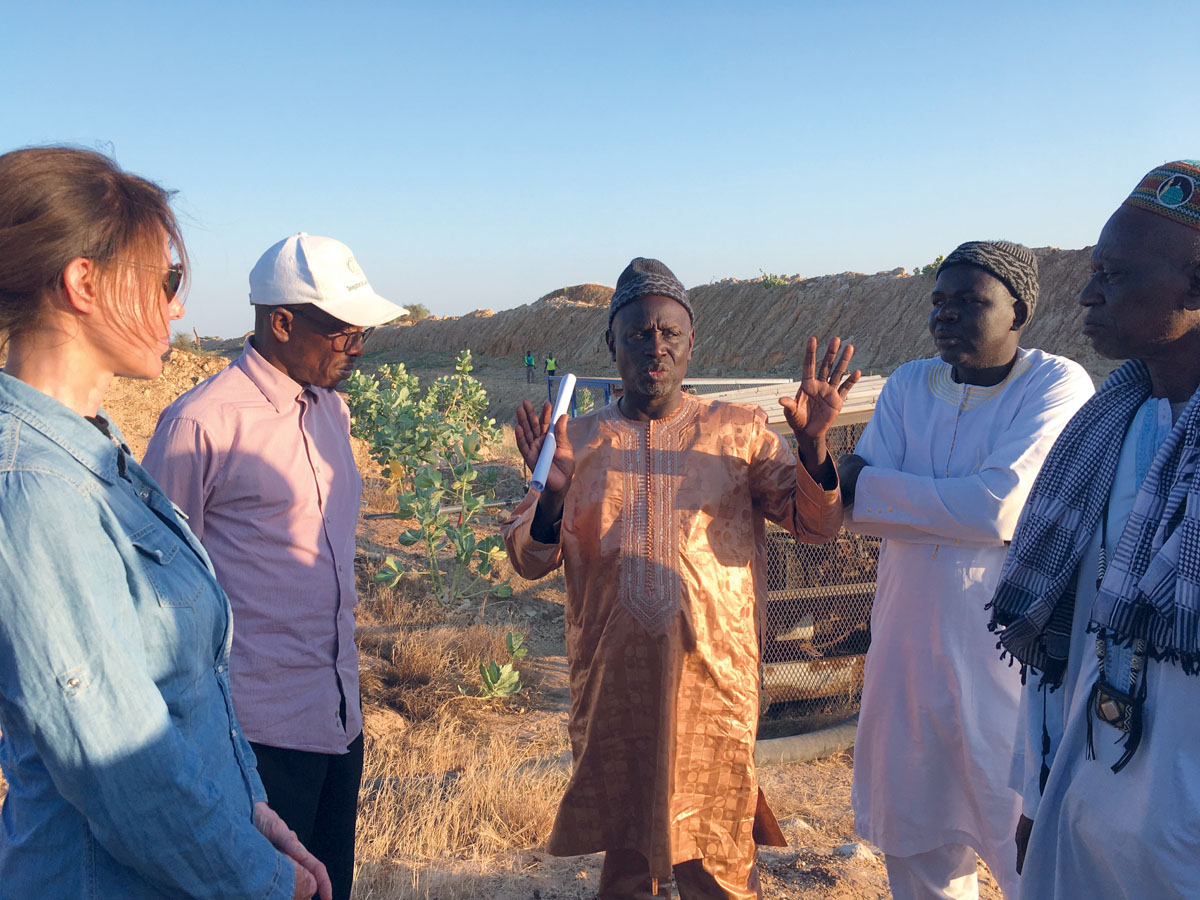
In Benin, we’re working with the National Institute for Agricultural Research (INRAB) on the sustainability of cotton production practices, and in Senegal with the Higher Institute for Training and Applied Research (ISFRA). There, the focus is more on issues related to land tenure tensions in a context where farmers, herders, and agribusinesses struggle to communicate. We aim to co-create frameworks for dialogue among these various stakeholders in the agroecological transition to support them in activities that will improve the overall health of their region.
You are both an agronomist and an anthropologist—how does this dual role benefit you?
My background as an agronomist helps me understand what’s at stake when we talk about agricultural production systems, but my work today is primarily anthropological. I analyze local perceptions and work with local stakeholders to define what, in their view, constitutes their well-being, with the goal of translating this into changes in practices, particularly agricultural ones.
Is there also an element of support in your approach?
Yes, and that is the second pillar of an anthropologist’s work. The emergence of these new approaches was very quickly accompanied by the idea that local communities needed to be involved. This cannot be done in a top-down manner; we must engage herders, village chiefs, and farmers, and collaboratively develop a conceptual framework for the health of the region by identifying the attributes of this health and transforming them into indicators to measure change.
In practical terms, how do you work with local stakeholders?
We work through collaborative workshops to support the establishment of“living labs” using participatory mapping, serious games, or forum theater. Our methodology combines modeling, theory of change, and foresight. We facilitate dialogue and the dynamics of co-learning… It’s not about getting everyone to agree or smoothing over social reality, but about understanding health as a shared resource.
UM podcasts are now available on your favorite platform (Spotify, Deezer, Apple Podcasts, Amazon Music, etc.).