Economic Stimulus Plan: TheUM Receives Nearly 18 Million Euros for Energy-Efficiency Renovations of Its Buildings
Building on the real estate construction and renovation projects already underway at the University as part ofthe “Opération Campus” initiative and the State-Region Plan Contract (CPER), the University of Montpellier submitted several proposals in response to the call for proposals issued by the government last September as part of the economic recovery plan known as“France relance.”
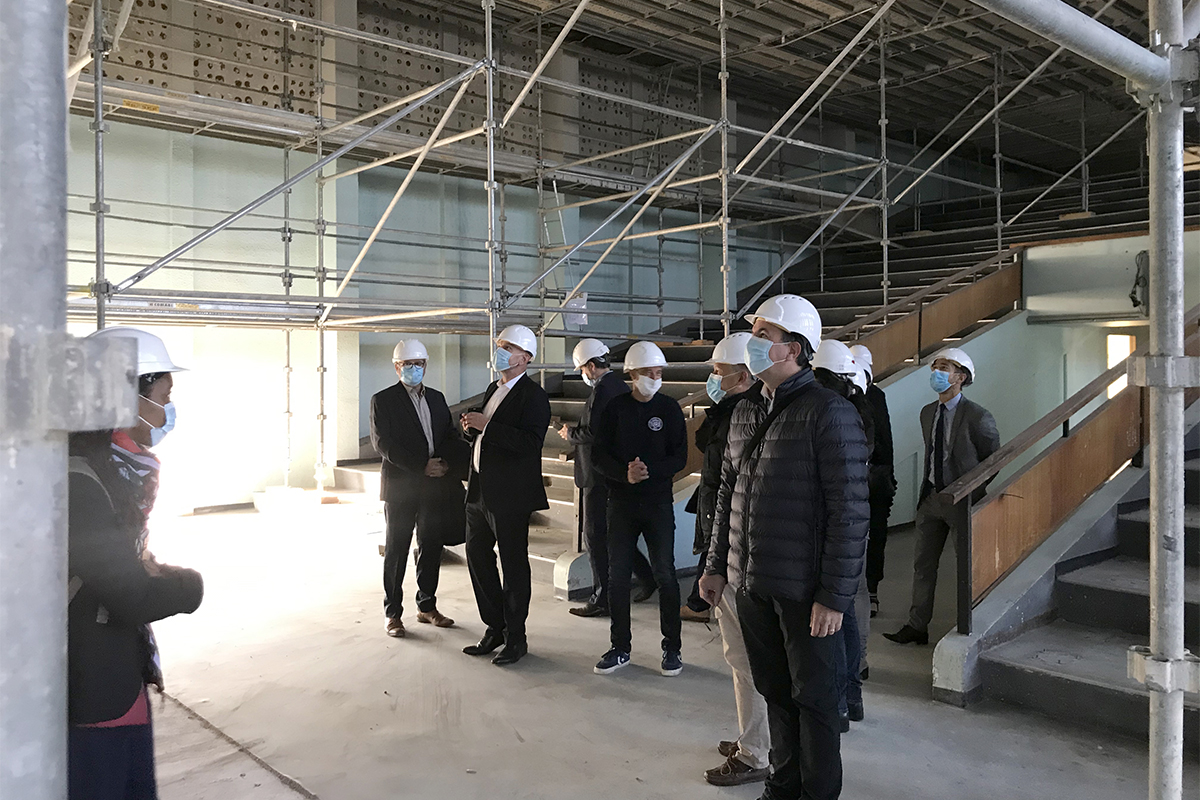
“Eleven of our projects have been selected, for a total of 18 million euros. This success not only acknowledges the reality of our needs but also demonstrates the relevance and maturity of our proposals,” said Philippe Augé, president of the University of Montpellier.
A challenge for the teams
The challenge for the teams was commensurate with the stakes, as the government gave institutions barely a month to submit their projects. Three major energy-efficiency and eco-friendly renovation projects were highlighted: the main building ofthe UFR STAPS, several buildings on the pharmacy campus, and a building on the Triolet site—buildings that“require extensive work to improve energy efficiency, as well as renovation and restructuring of the spaces,”says Bernard Maurin, vice president for real estate and sustainable development.
"Other projects that are less extensive butoffer 'quick returns'—that is, ones that provide a return on investment within a few years—have also been selected, " the vice president explains. These will involve replacing inefficient equipment such as boilers (Faculty of Law and Political Science, Sète Mediterranean Coastal Environment Station, Pharmacy Campus) or windows (historic Medicine Building), as well as installing energy management systems (dual-flow air handling unit for Building 5 Triolet, thermostatic valves in Building A of the Nîmes School of Medicine, and a centralized technical management system in the Saint-Priest Mechatronics Hall).
A tight schedule
However, all of this work will have to be carried out on a very tight schedule.“The contracts must be awarded before the end of this year, and the work must be completed by the end of 2023. That’s another challenge—an operational one this time,” explains Bernard Maurin.“But we understand the reasoning behind it, because the goal is also to boost business activity and, consequently, employment,” adds Philippe Augé.
This will keep the University’s teams fully engaged in the coming months, particularly the Real Estate Management Department and the Procurement Department.“A dedicated organizational structure has been established to facilitate the implementation of these projects,” adds Philippe Augé, emphasizing that:“Environmental and energy-efficiency issues are fundamental, and we thank the government for helping usaddressthem. “Let’s not forget that our infrastructureisa key factor in the appeal of our institutions,” concludes Philippe Augé.