Pl@ntNet, the app created by researchers in Montpellier to identify plants
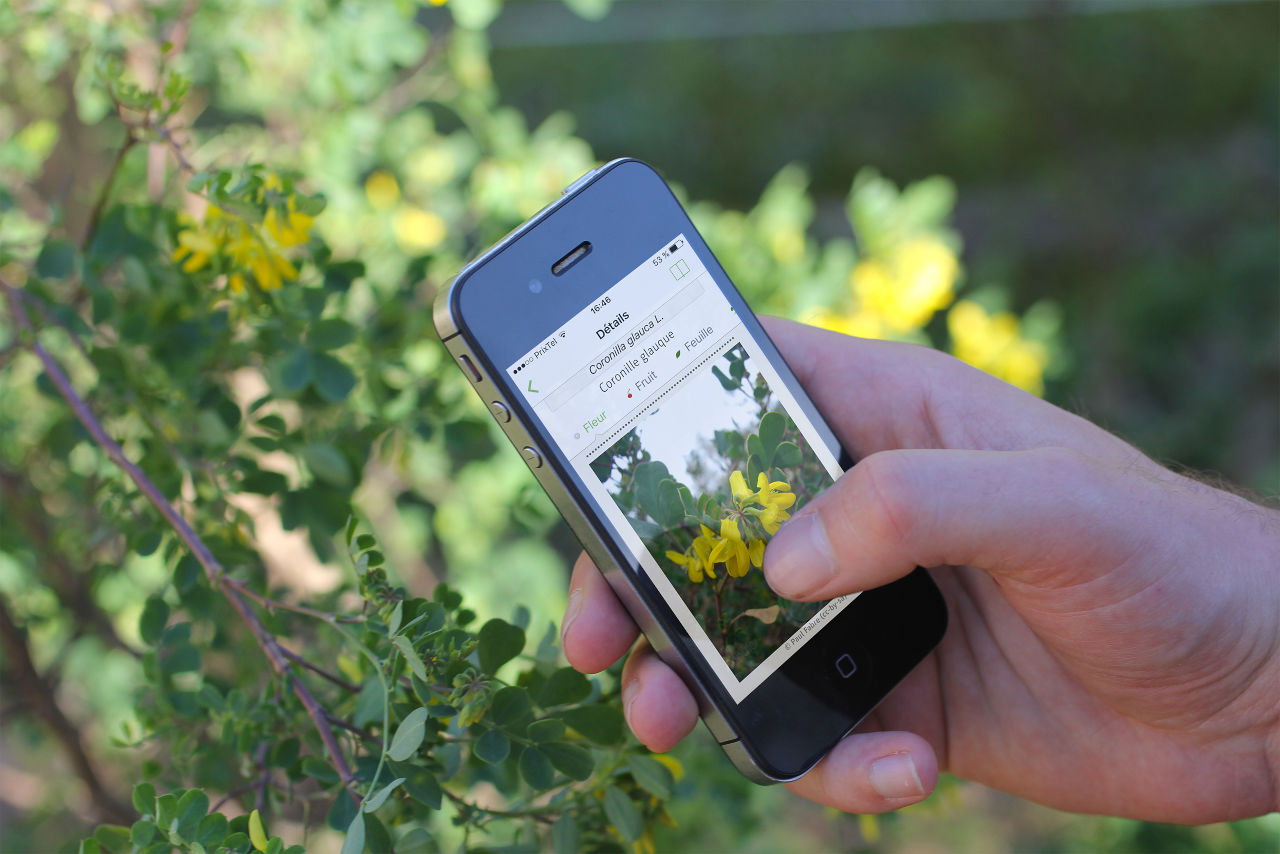
What is this plant called? For the past few years, thanks to the work of researchers in Montpellier, your phone can give you the answer through the Pl@ntNet app. This technological innovation was recognized with the Inria Prize, awarded by the French Academy of Sciences.
Pl@ntNet is a digital tool that allows users to identify plants based on photos: users take a picture of the plant or flower they’re interested in and upload it to the app on their cell phone—the answer is now immediate.
Developed starting in 2009 in Montpellier by CIRAD, INRA, INRIA, and IRD, in collaboration with the Tela Botanica association and with support from the Agropolis Foundation, this app was launched in 2013.
Its goal: to make it possible to identify tens of thousands of plants around the world.
The Success of a Crowdsourced App
Three years after its launch in 2016, this app designed to identify wild plantshad already been downloaded more than 2 million times on smartphones!
A year later, in 2017, the app had been downloaded in more than 170 countries, and its dataset included more than 545,000 images of approximately 11,000 species.
This popularity can be attributed not only to the fact that it’s free but also to the app’s accessibility to everyone: you don’t have to be a professional botanist to participate; anyone can contribute to the site by submitting their own photos of identified plants.
Many plant lovers have gotten into the spirit of things, both in the Hérault and around the world. Over the years, the image database has grown, and the plant recognition algorithm has improved.
Honored by the Academy of Sciences for its 10th anniversary
To mark its 10th anniversary, the collaborative platform received a wonderful gift: the Inria–Académie des sciences–Dassault Systèmes Innovation Award, which recognizes major innovations and advances in digital science and technology.
"Pl@ntNet is undoubtedly one of the most significant technological innovations of recent years."
Inria-Academy of Sciences
“It is the result of an extraordinary scientific journey at the intersection of digital sciences, life sciences, and citizen science,” as stated on the Inria-Académie des sciences website.
According to thewebsite, more than 10 million people around the world use it today, including hundreds of thousands of farmers and natural area managers.
20,000 euros for 6 award-winning researchers
Alexis Joly, research director at Inria Sophia Antipolis Méditerranée and a member of the Montpellier University/CNRS team, is delighted:
"This award is one of the most prestigious in France! It's a wonderful recognition after 10 years of hard work."
Alexis Joly, Research Director at Inria
But what matters most to this researcher—one of the six winners sharing this innovation award—is the fact that this app contributes to environmental education, first because it is used by a large number of teachers in the classroom and during nature outings with their students, but also and above all because it helps combat the use of pesticides:
“It’s useful in agroecology: when we identify a beneficial organism—a plant that promotes crop growth or protects crops—farming practices evolve.”
Congratulations to the Pl@ntNet team on this initiative and this award!