Polysity: From the Lab to a Startup, with Support from the PUI
Supported since its inception by the Montpellier University Innovation Cluster (PUI), the startup Polysity has successfully transformed a disruptive innovation into a true industrial solution. It now aims to become the industry standard in the manufacture of silicone devices, particularly in the fields of training, medical robotics, implants, and microfluidics.
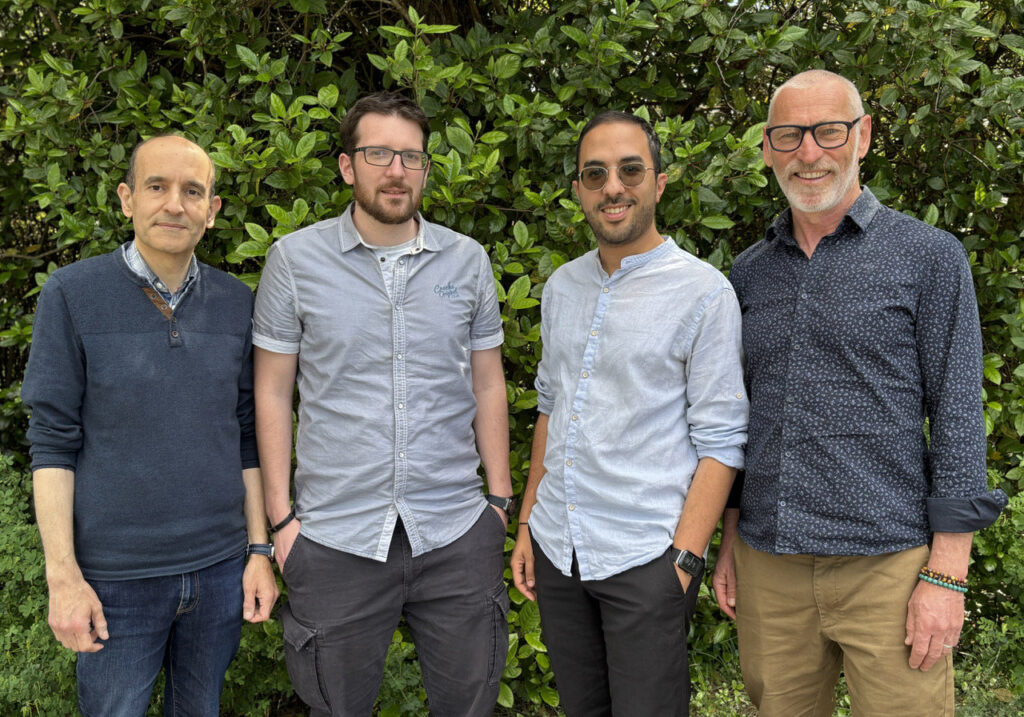
Four to six weeks—that’s how long it currently takes to receive a silicone object made using the molding process. To offer an alternative to this lengthy and costly process, the startup Polysity—based at Lirmm and spun off from the Clamps research project—offers 3D printing technology that can produce complex shapes using any type of silicone. This innovation makes it possible to create flexible, durable, and highly customizable structures—all with high precision, thanks to software powered by artificial intelligence.
Going forward, Polysity’s goal is to scale up to industrial levels and expand internationally. The project has, however, already come a long way from the laboratory, aided by various initiatives from the PUI, whose ecosystem continues to support its development on multiple levels.
The Early Stages of Maturation
In 2023, while the Clamps research project was still in its early stages, it participated in a session of the Montpellier Innovation Booster (BIM) and secured 34,000 euros in funding. “At that time, we only had a proof of concept, but we wanted to take it further,” recalls Hamza El Jjouaoui, CEO and founder of Polysity. “Thanks to BIM, that became possible: the funding we received as winners allowed us to recruit part of the startup’s future team. ” The project subsequently received additional funding through Prémat CNRS Innovation, the SATT maturation program, andBFTLAB.
Shortly thereafter, in December 2024, a patent application was filed with the INPI to protect the innovation. “For the patent application, we received support from start to finish from the University of Montpellier’s Department of Innovation and Partnerships (DIPA), as well as from the technology transfer office (SATT) AxLR,” says Hamza El Jjouaoui . “This support enabled us to properly draft all the necessary elements for the application. Since drafting a patent is a highly specialized process, their expertise also helped us better understand the challenges related to intellectual property and, above all, the various options for commercializing the innovation.” To date, SATT AxLR continues to manage this intellectual property and is working with Hamza El Jjouaoui to define the terms for its future commercialization by Polysity.
From Research to Entrepreneurship
“In Montpellier, our entrepreneurial ecosystem is particularly well-developed,” continues Polysity’s CEO, who says he feels fortunate to have been able to count on support from several PUI stakeholders when founding his company, particularly regarding legal, scientific, and human resources matters. The founder also had the opportunity to participate in two entrepreneurship training programs: Pépite Deeptech, offered bythe Initium incubator at the University of Montpellier, and Première marche, led by the Montpellier BIC.
“These training sessions really helped me build and assert my role as CEO during the first two years of the project,” explains Hamza El Jjouaoui. “At that time, my vision wasn’t yet clear or well-structured enough—first for myself, but also for the people to whom I needed to present it. Through the training sessions, I learned how to better position myself as the project leader, structure my vision, and communicate it persuasively.”
Putting Innovation to the Test in the Marketplace
Once you’ve assembled the right team, however, you need to “get out of the lab” and test your innovation. “This gives you a taste of what it’s like to run a startup, but more importantly, it helps you gain a deep understanding of your future markets,” says the entrepreneur.
In the summer of 2026, Polysity had the opportunity to showcase itself at the VivaTech trade show in Paris, at the PUI booth: “This visibility allowed us to engage with various investment funds, both French and international, and to establish initial contacts with a view to potential collaborations. We were also able to initiate discussions with several industry players regarding future partnerships and potential synergies with our project.”
While the PUI ecosystem has played a key role in Polysity’s inception, the journey is far from over for the young company. “Our short-term goal is to raise 500,000 euros to scale up our operations and seek out future clients.”