Why do some animals live longer than we do? Or shorter?
Life expectancy varies not only for us but also for animals. Among us humans, the world record for lifespan is held by Jeanne Calment, who passed away on August 4, 1997, in Arles (Bouches-du-Rhône) at the age of 122 years, 5 months, and 14 days. But not everyone on the planet lives to be 122 years old.
Simon Galas, University of Montpellier and Myriam Richaud, University of Montpellier
As early as 1982, while studying a small worm 1 mm long Caenorhabditis elegans, scientists were able to determine that genes account for 20 to 50 percent of a person’s lifespan. Later, it was observed that approximately one-third of a person’s lifespan is determined by genes inherited from their parents. In France, current life expectancy is 85 years for women and 79 years for men.
But lifespan also varies among animals that manage to break records. Their lifespans may be even more variable than ours—as if we were comparing the lifespan of a mouse (4 years) with that of a bat (24 years), even though they aren’t actually very different. A small worm 2 mm long (Strongyloides ratti does even better. Its lifespan is 5 days when it lives in clumps of soil, but 403 days when it parasitizes small mammals. A very, very flexible elastic band!
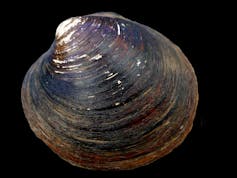
But there’s even more to it. In 1868, an oceanographic expedition around Iceland collected a shell—a clam (Arctia islandica)—whose age was determined in 2005 to be 374 years, and more recently, 507 years for other individuals.
An animal that's 11,000 years old!
Deep in the ocean, the glass sponge (Monoraphis chuni) was discovered in 1996 at a depth of 1,110 meters in the China Sea, south of Japan. This sponge produces a kind of stem made of glass fiber (silica), which allowed researchers to determine in 1986 that it was 11,000 years old!
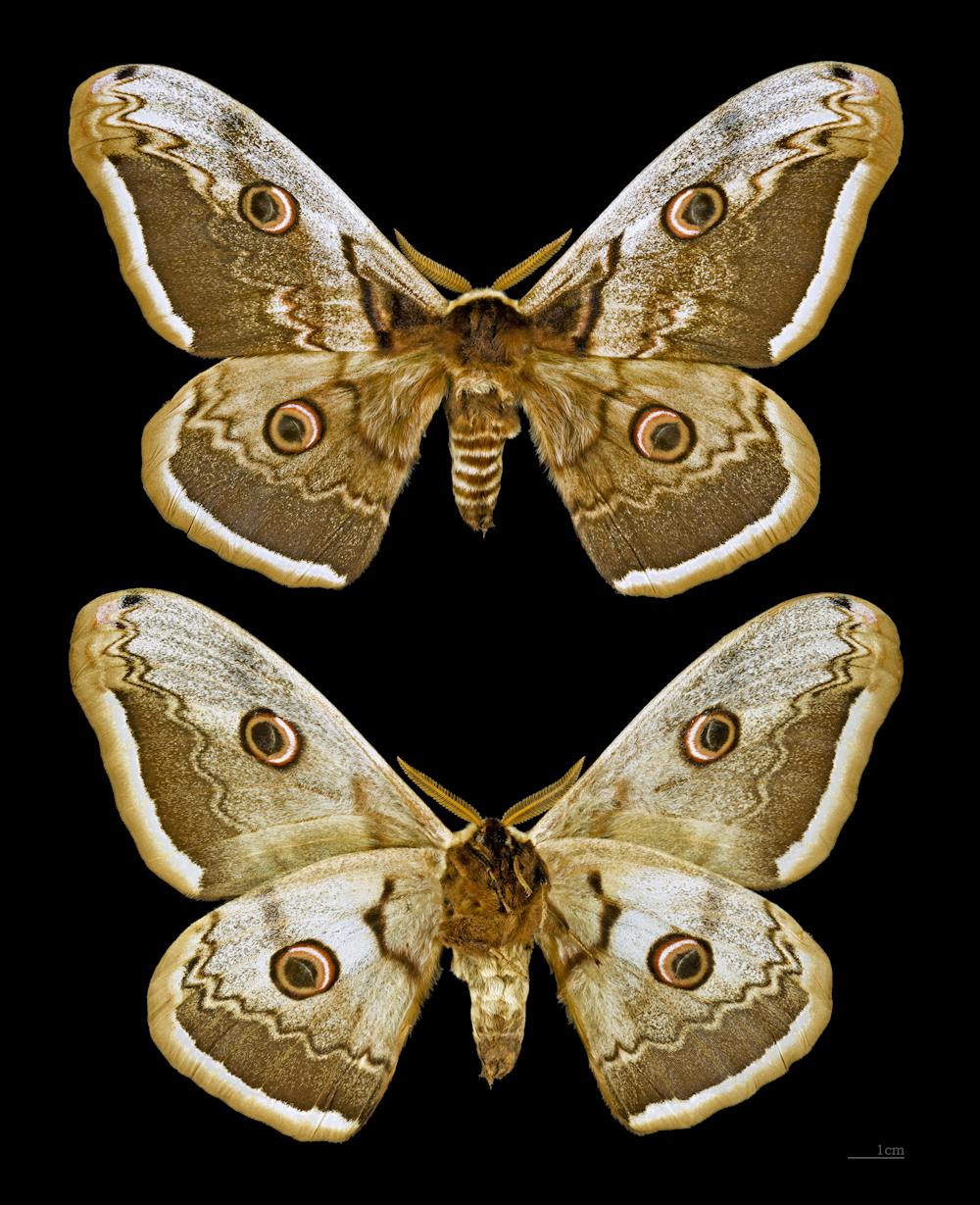
So there are animals that can live much longer than we do, and from these two examples, we can see that they are often marine animals. But there are also animals that live for very short periods of time—for example, mayflies, which fly for only a few days, or the peacock moth, whose lifespan does not exceed a week. These two insects share a curious trait: they lack the structures necessary for feeding and are therefore programmed to live for only a very short time.
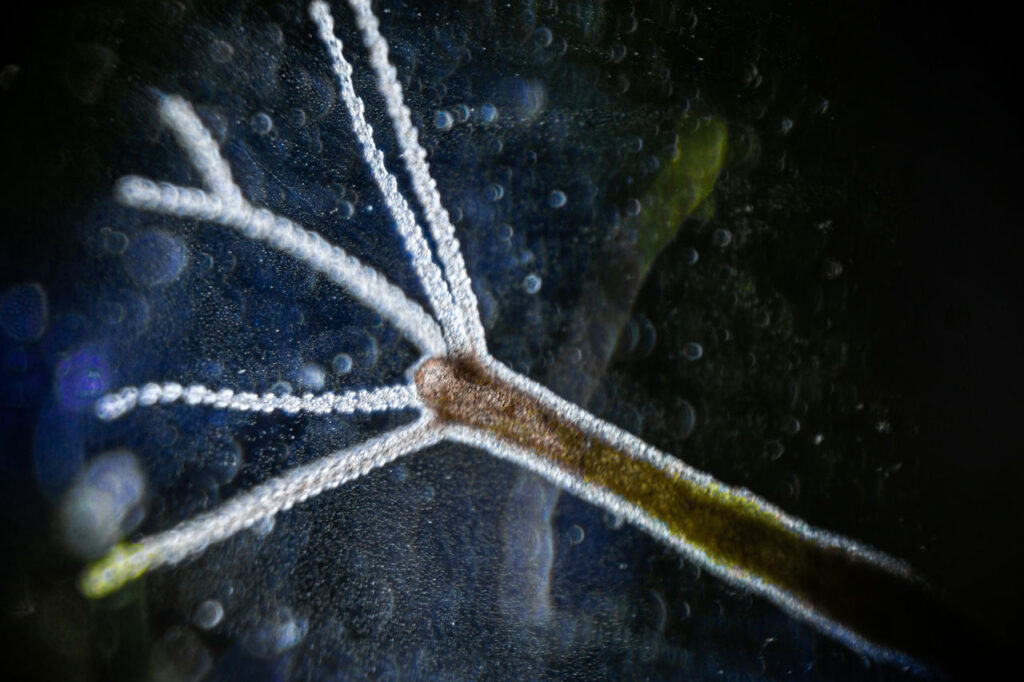
Some animals are also known for their ability to rejuvenate and, perhaps, live even longer. This is the case with the tiny 5-mm-long marine jellyfish Turritopsis , which is capable of rejuvenating every cell in its body and reverting to a baby jellyfish at will, while the freshwater hydra (Hydra vulgaris) is capable of renewing every cell in its body. In this animal, it has been impossible to observe the end of its normal lifespan.
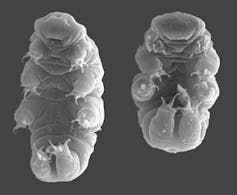

Sometimes, animals can come back to life after a very long period of suspended animation during which thethe animal’s vital functions cease and it sometimes becomes completely dehydrated—for example, tardigrades collected in Antarctica and revived after a 30-year hibernation, or small nematode worms hidden in squirrel burrows beneath the frozen soil of Siberia that were revived after 42,000 years.
As we can see, some animals live for a very short time compared to us, while others live much longer. Scientists are studying these animals to try to understand how they function and what determines their lifespan.
How can we explain this variability in life expectancy?
Several explanations have been proposed to account for these vast differences in lifespan. Scientists believe that some animals use mechanisms that allow their cells to remain functional for longer periods without aging—such as the clam or the glass sponge—while others use their ability to rejuvenate their cells at will—such as the small jellyfish or the freshwater hydra—to avoid death.
So where do we fit into all this? There is some good news, though. Even though we can’t rejuvenate ourselves at will like some animals, scientists have discovered that we do just that every time we have babies.
To produce our reproductive cells (eggs and sperm), our bodies have found a way to force some of our cells to become very, very young again. It is from these cells (germ cells) that a woman will produce eggs and a man will produce sperm that are no longer their original age but are much younger. It’s like turning back the clock, just as jellyfish and hydras do, but in humans this process occurs only at the time of reproduction, and that’s what allows us to have babies who aren’t as old as their parents at birth but are simply the same age as them instead.
If you have a question too, ask your parents to send an email to: . We'll find a scientist to answer your question.
Simon Galas, Professor of Genetics and Molecular Biology of Aging, IBMM CNRS UMR 5247 – School of Pharmacy, University of Montpellier and Myriam Richaud, Ph.D. in Genetics and Molecular Biology of Aging, Faculty of Pharmacy, University of Montpellier
This article is republished from The Conversation under a Creative Commons license. Readthe original article.