GAVO Program: A chemical library dedicated to nucleic acid constituents
Four French laboratories, includingthe Max Mousseron Institute of Biomolecules, are joining forces as part of the national Gavo program to create a library unlike any other… The goal: to synthesize a large number of nucleoside and nucleotide analogs in order to test their effectiveness against RNA viruses, and more specifically against SARS-CoV-2, the virus responsible for COVID-19.
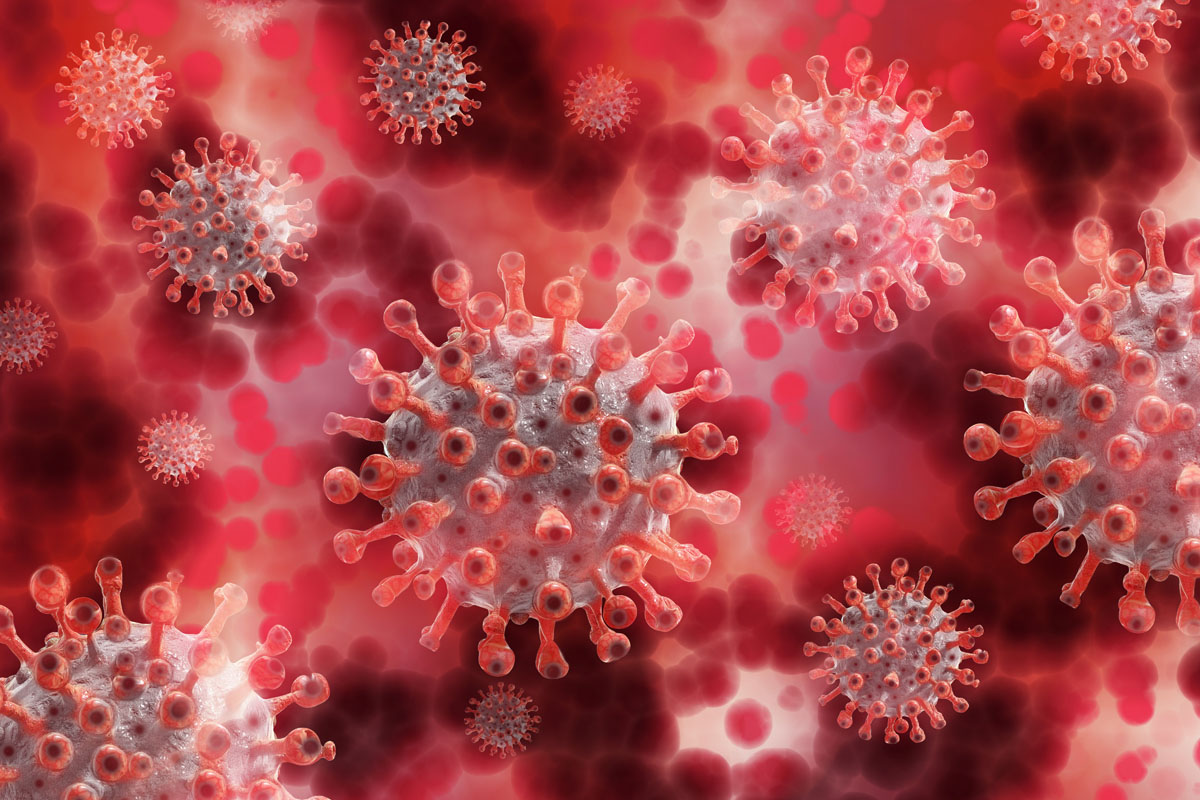
“The current strategy for combating SARS-CoV-2 relies on the vaccine, and that’s a very good thing, but not everyone has access to vaccination. We must therefore continue the fight to treat and cure patients with this disease,” begins Jean-Jacques Vasseur, deputy director ofthe Max Mousseron Institute of Biomolecules (IBMM). At the heart of this fight are nucleosides and nucleotides. These components of nucleic acids, found in 50% of antiviral drugs, are one of the major areas of expertise for the chemists at DACAN—the Department of Nucleic Acid Analogs and Constituents—within the IBMM.“We’ve been working on this topic for about forty years,” adds the researcher.
"Development of Novel Antiviral Drugs"
This recognized expertise has enabled DACAN—and its two teams, ChemBioNAC and NuEP, led by Michaël Smietana and Suzanne Peyrottes, respectively—to join the Gavo program. Gavo stands for“Generation of Original Antivirals.” This project brings together a French consortium of chemists led by Jacques Lebreton, a researcher at the Ceisam laboratory in Nantes.“He contacted us following a discussion with Jacques Maddaluno, the director of theCNRS Institute of Chemistry. In light of the COVID-19 pandemic, the institute awarded an exceptional grant of 700,000 euros to establish this consortium, which brings together Jacques Lebreton’s team in Nantes,the Institute of Organic and Analytical Chemistry (ICOA) in Orléans, the Laboratory of Theoretical Physics and Chemistry (LPCT) in Nancy, and, of course, our two teams at the IBMM.”
Their shared goal? To discover future nucleoside-based drugs to combat SARS-CoV-2 and RNA viruses in general—but not only those.“These compounds could also be tested against certain cancer targets,” explains Michaël Smietana, head of the ChemBioNAC team. “This research will lead to the creation of a national chem library dedicated to nucleic acids”—in other words, a bank of modified nucleosides designed to outwit the inner workings of viruses. Here’s how it works.
Block viral replication
RNA segments, released by viruses to replicate within the infected cell, consist of a sequence of nucleotides. By incorporating a nucleoside analog—that is, a modified nucleoside—into the viral RNA, it is possible to block or slow down viral replication and thus its spread throughout the body. This mechanism has already been used in the development of numerous antiviral drugs, provided that the correct nucleoside—one tailored to the characteristics of the targeted virus—is available, since each virus uses its own specific enzymes to carry out its replication process.
It is the action of these enzymes—known as RNA polymerases—that researchers at Gavo will therefore attempt to target by synthesizing novel molecules.“The goal is not to produce natural nucleosides—nature is perfectly capable of doing that—but to modify them in order to increase their efficacy and turn them into actual drugs. “France has a strong presence in this field,” notes Jean-Jacques Vasseur. This is particularly true at the IBMM, where research on nucleic acids and their components—initiated by Professor Jean-Louis Imbach in the 1970s and 1980s—covers the entire spectrum of nucleoside chemistry, from nucleosides to oligonucleotides. For example, telvibuvin, a synthetic nucleoside, is a drug for hepatitis B that has been marketed by Novartis since 2007 and was co-discovered by Jean-Louis Imbach and Gilles Gosselin. The Montpellier-based Virocrib platform will also participate in the program by testing these compounds on cells infected with SARS-CoV-2.
A consortium built to last
Scheduled to last an initial three years, this program enables the Montpellier teams to fund a one-year postdoc position and a doctoral dissertation set to begin next September or October.“They will join our team of four permanent researchers: Suzanne Peyrottes, Christophe Mathé, Michaël Smietana, and myself. “We will, of course, be able to draw on the lab’s infrastructure, equipment, and even its human resources,” explains the deputy director of the IBMM . “We hope this consortium will be a long-term initiative and even expand to include other teams nationwide—and ideally incorporate industrial partnerships.”