When Leenhardt Gets His Stride Back
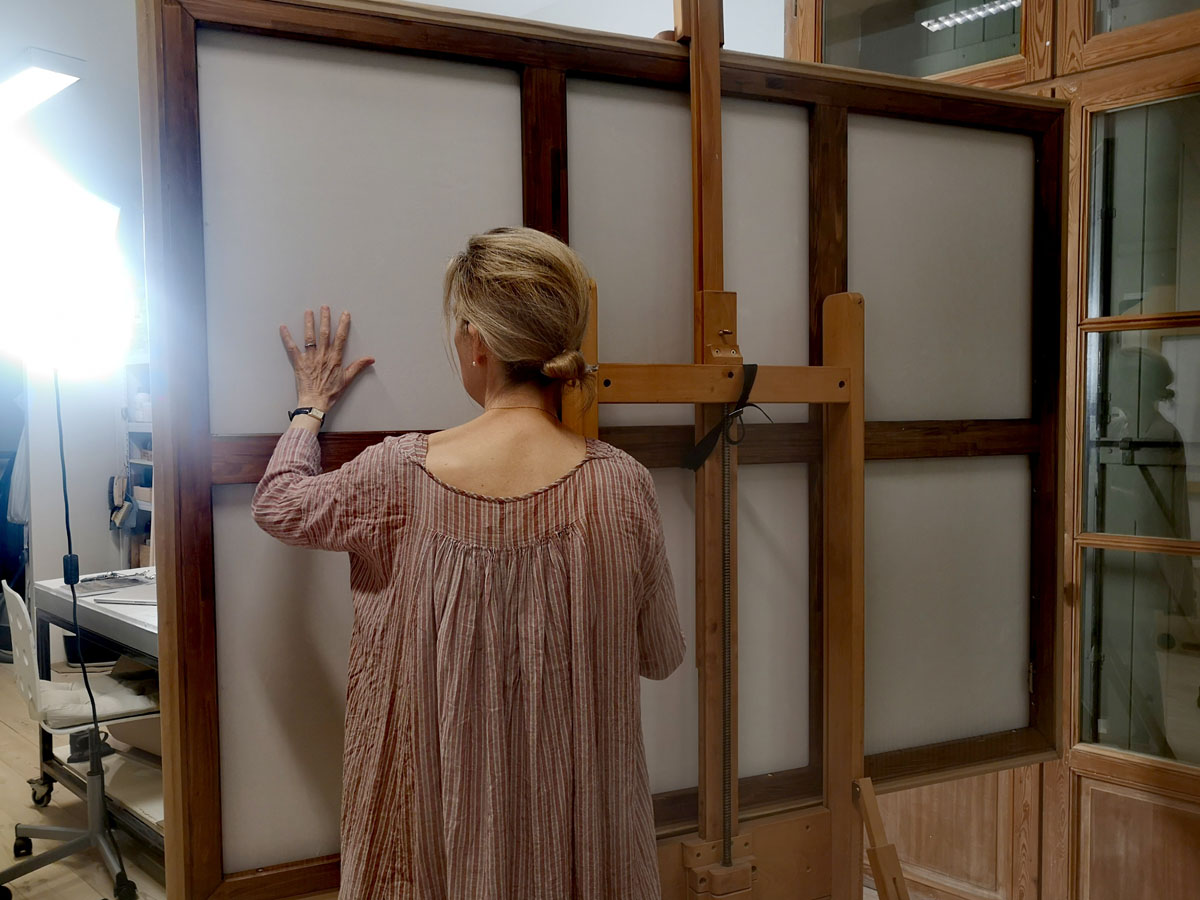
From June 16 to September 4, the Beaux-Arts de Paris will host an exhibition by Maison Chaumet titled “Végétal – L’ÉSchool of Beauty.” Among the 400 works on display are several pieces from the collection of theUM , including a painting by the Montpellier-based artist Max Leenhardt. For this exhibition, the painting underwent a spectacular restoration by Thierry Martel and Anne Baxter, who opened the doors of their studio to us.
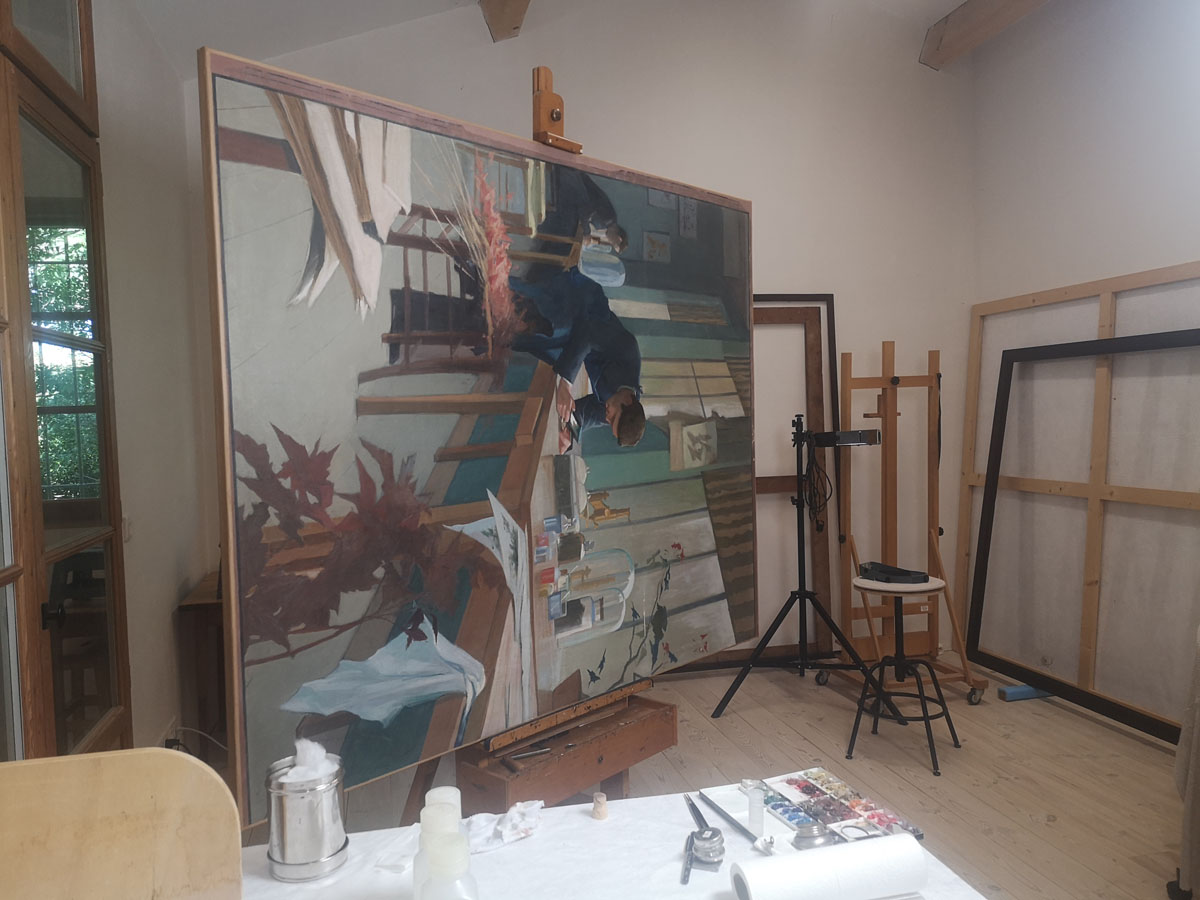
Anne Baxter welcomed us that morning at her home in the hills above Montpellier. The temperatures were still mild, but the restorer’s studio was already buzzing with feverish activity. It must be said that the deadlines were tight. In less than a week, the large canvas she was working on would have to be packed into a crate to be shipped to the Palais des Beaux-Arts in Paris. Starting June 16, art and botany enthusiasts can look forward to the Beaux-Arts and Maison Chaumet exhibition “Végétal – L’École de la beauté” (Sortir à Paris, February 14, 2022).
Botanical Scene
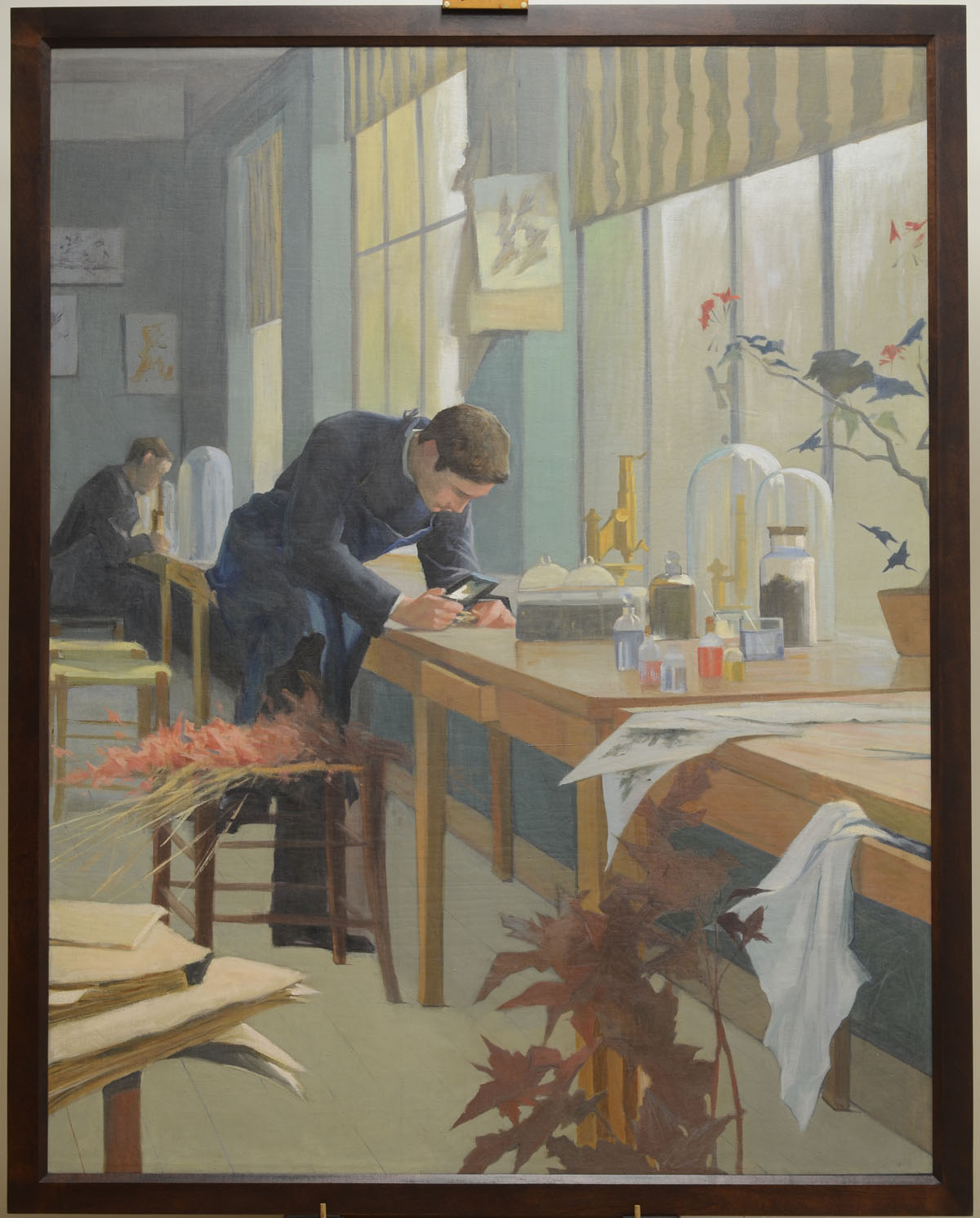
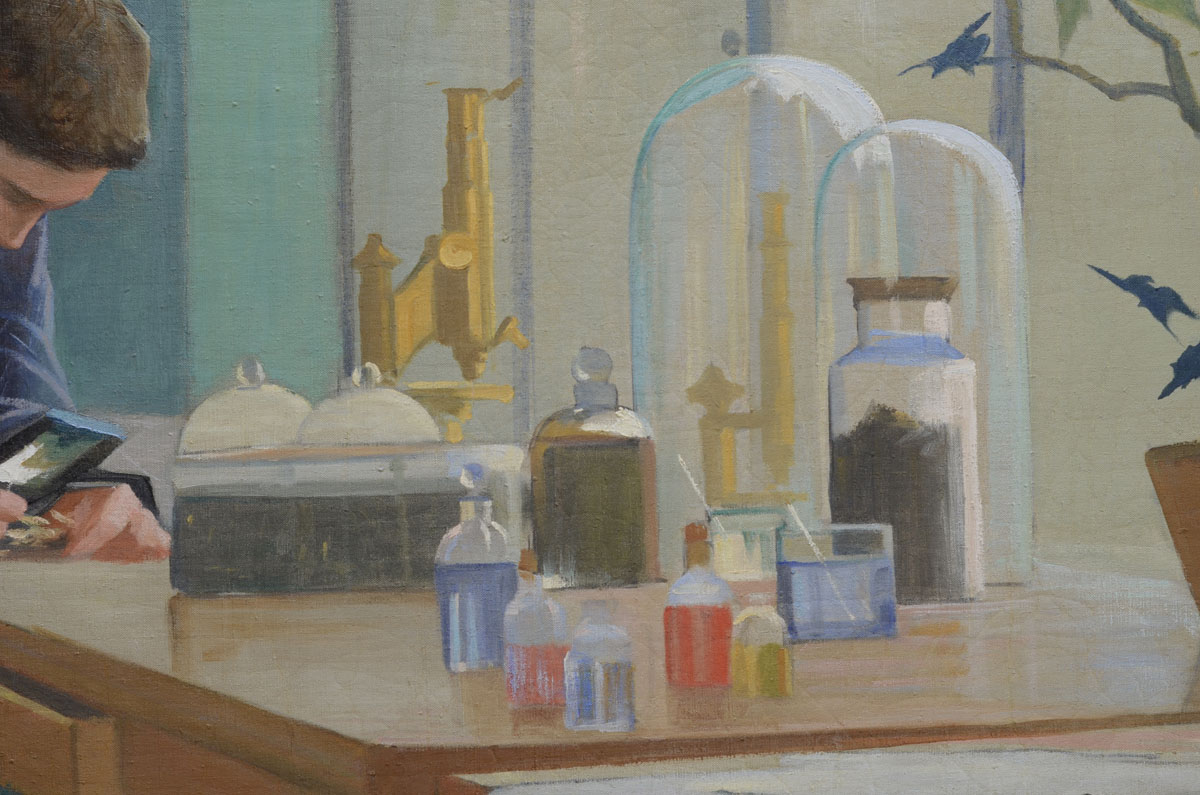
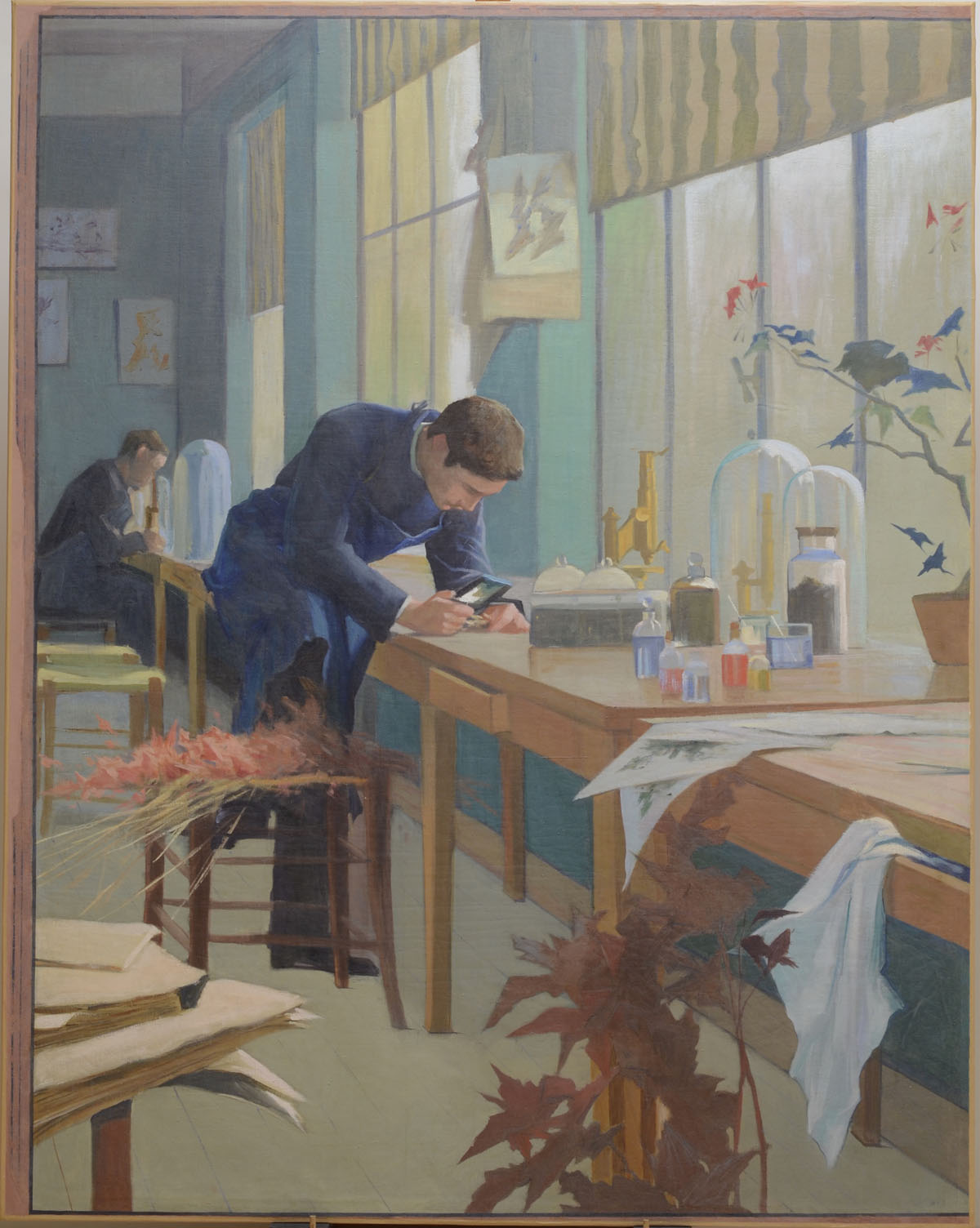
Among the 400 works on display are 80 pieces of Chaumet fine jewelry, as well as photographs byRobert Mapplethorpe, a bronze sculpture of Sarah Bernhardt, paintings by Monet, Courbet, Delacroix, Arcimboldo… and a painting by one of Montpellier’s most famous artists: Max Leenhardt. In this large painting, measuring approximately 2 meters by 1.60 meters and titled *The Laboratory of the Former Botanical Institute*, the artist depicts a man—Professor Léopold Galavielle—holding a magnifying glass as he examines botanical specimens. In the foreground are plants, including a begonia with Japanese-inspired forms, a few bottles of liquid, a microscope, and glass domes placed in front of a glass roof. In the background, a second scientist is bent over his microscope.
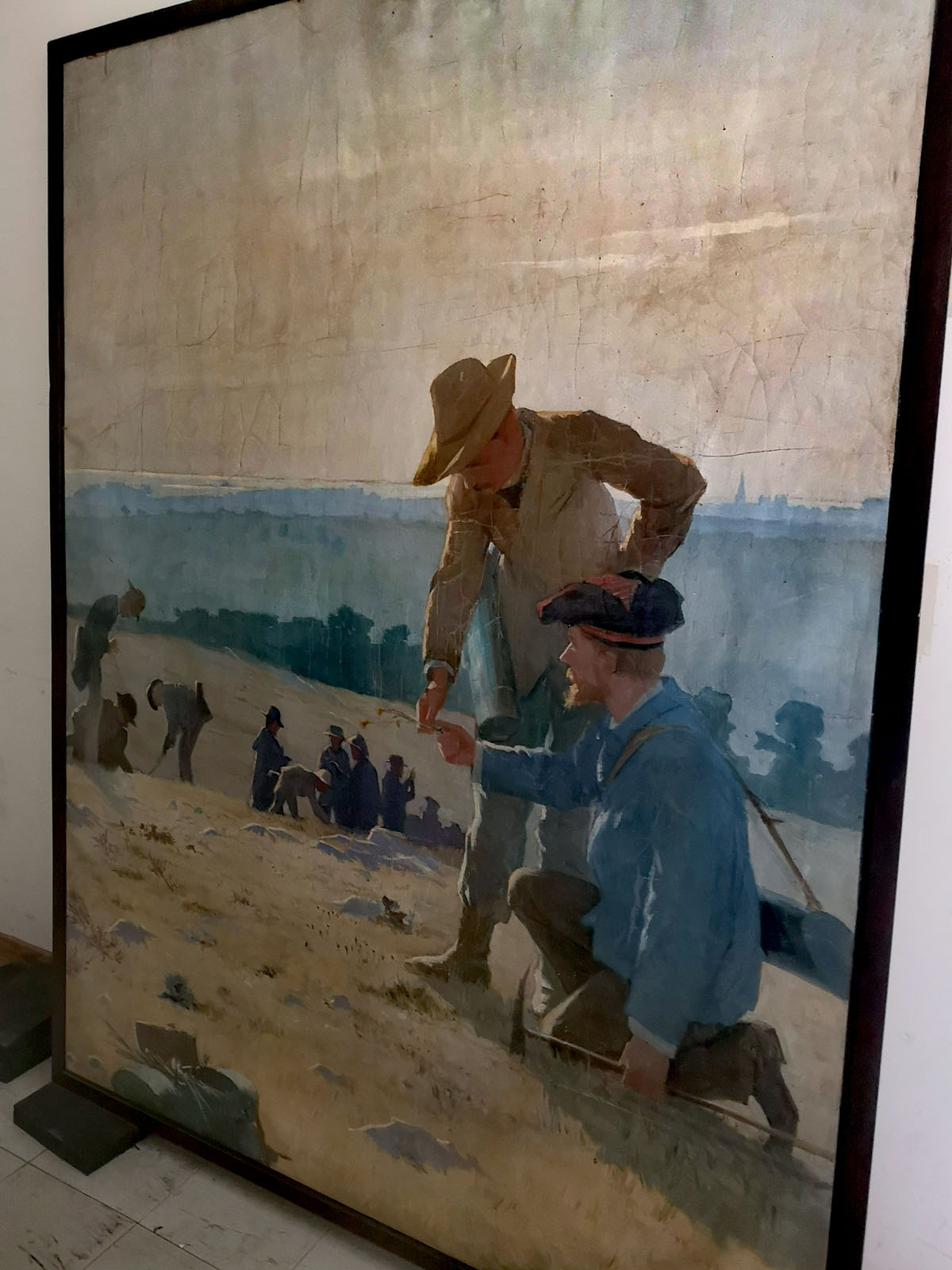
“This painting was created in the late 19th century, around 1890,” explains Véronique Bourgade, heritage curator at theUM.In the dissertation* that specialist Isabelle Laborie wrote on the subject, we learn thatit was displayed alongside its companion piece, ‘Students Collecting Herbs in the Garrigue,’ in the vestibule of the Richer de Belleval Pavilion before being hung in thefirst-floor lobby of the Institute of Botany until the late 1990s. It was then placed in storage to ensure its preservation while awaiting restoration. ” This restoration was finally made possible by Chaumet, which, in exchange for this loan, covered the costs, amounting to approximately 18,000 euros.
Tears and cracks
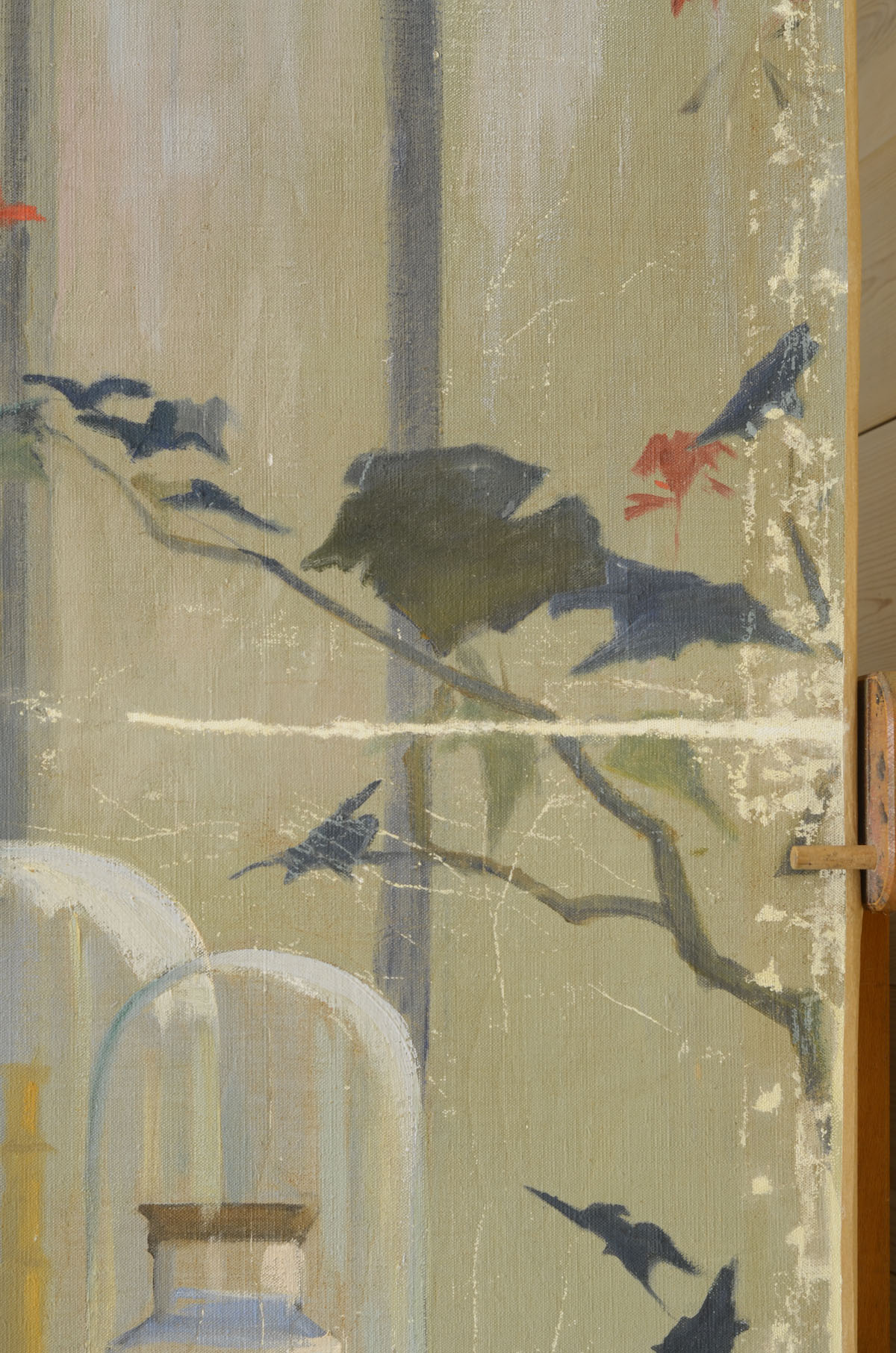
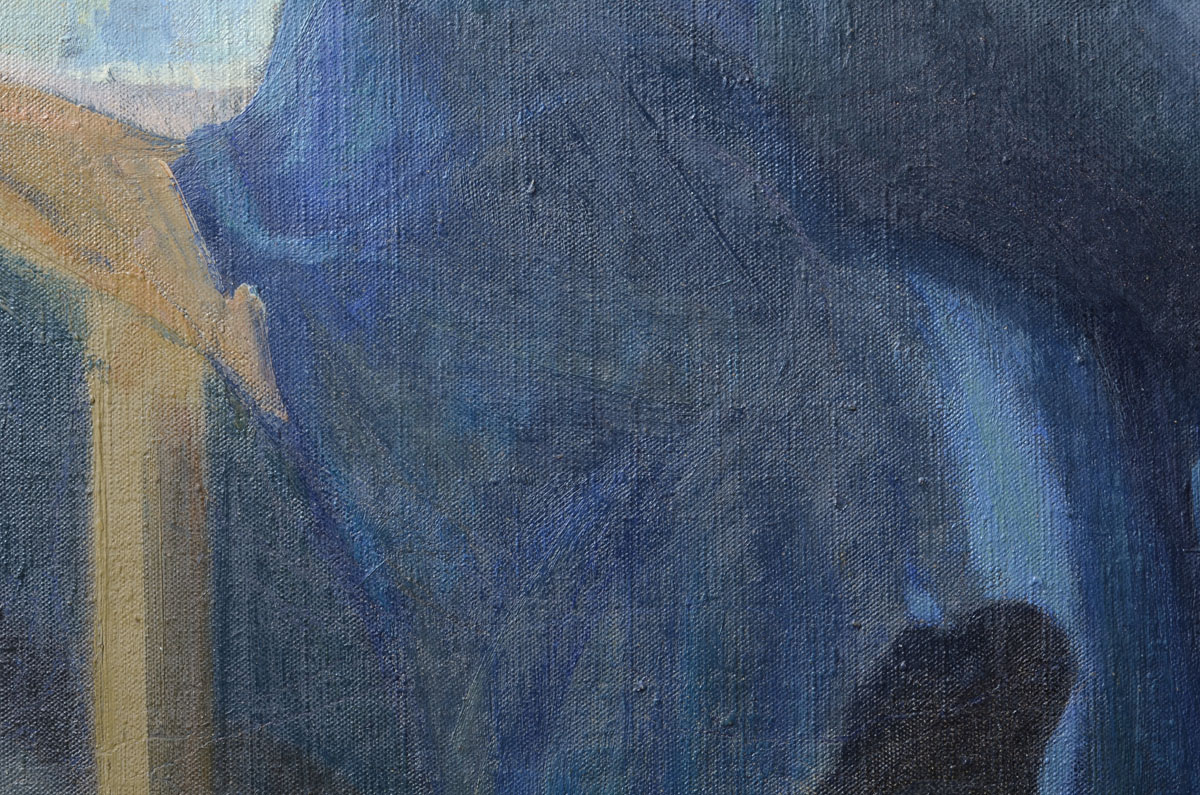
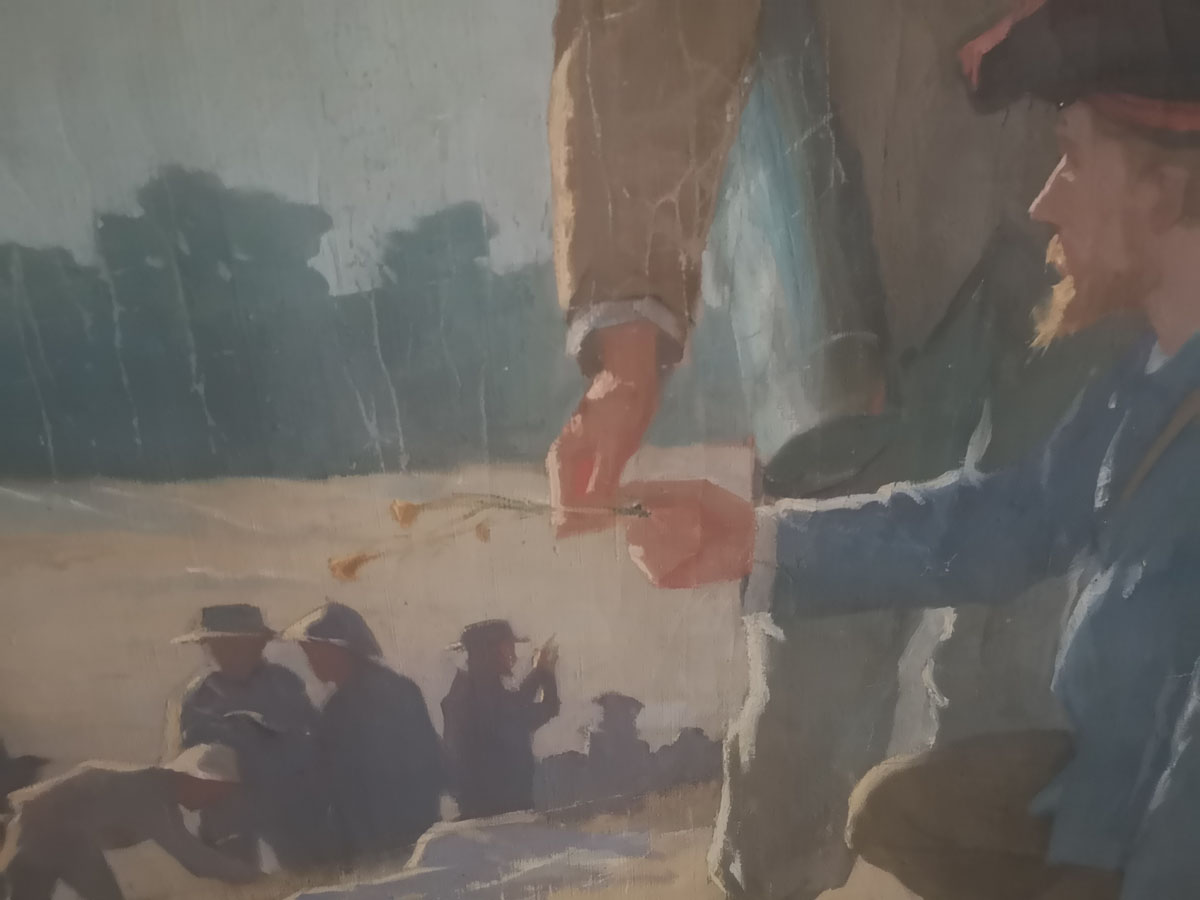
It must be said that after more than a century on display, the painting had not escaped the ravages of time.“First, we had to carry out a meticulous cleaning because the canvas had, among other things, suffered from moisture, ” explains Anne Baxter, a heritage conservator with a deep knowledge of Leenhardt’s works and a regular collaborator with the Fabre Museum. “ We also had to repair and conceal a 32-centimeter tear and restore several heavily damaged areas.”The colors, which had faded over time, were re-saturated using a resin that preserves the canvas’s semi-matte finish.
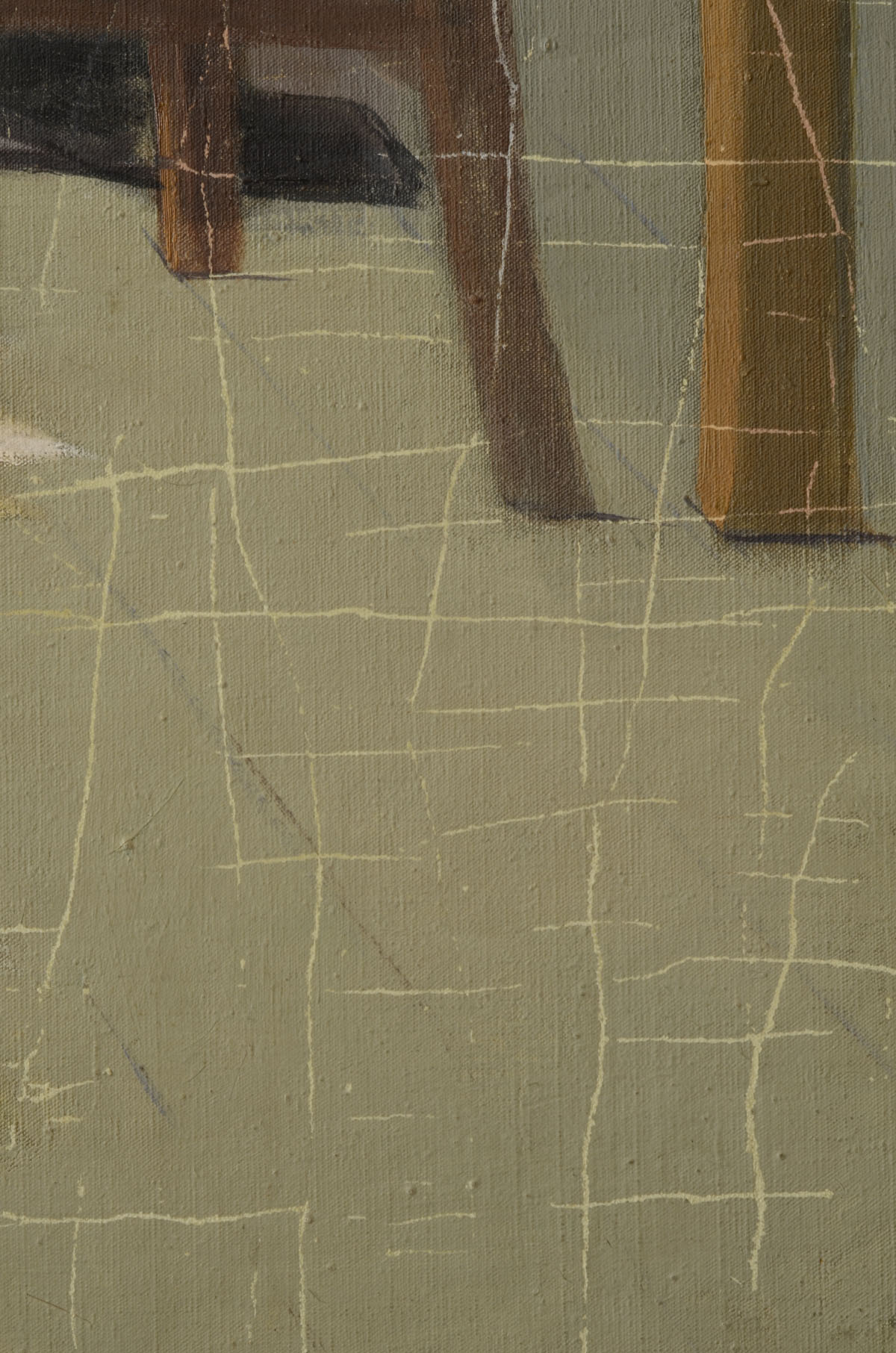
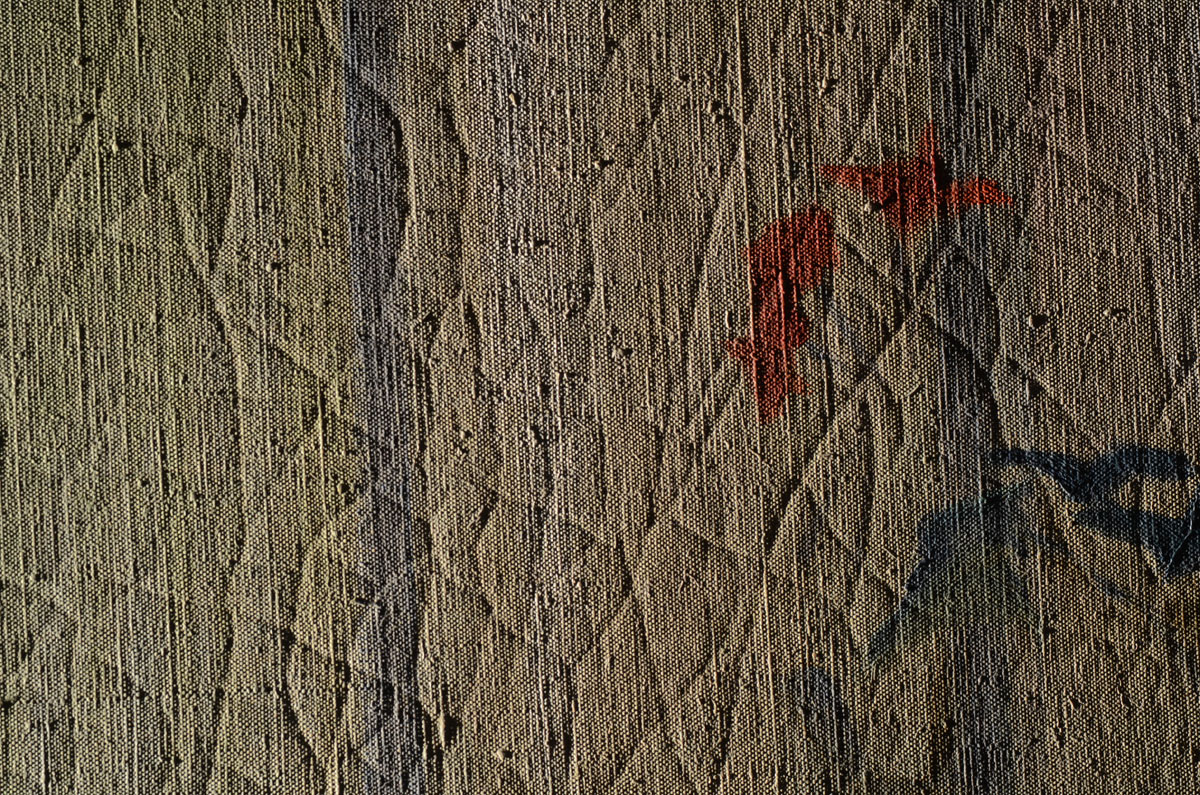
Another challenge was the numerous cracks caused by compression of the canvas.“Another painting had already been applied to the back of the canvas using a much thicker, opaque beige paint, which, as it aged, exerted a mechanical compressive force on the front, causing numerous cracks. ” In addition to the cracks, there were also numerous small stains that were difficult to conceal due to the chemical nature of the materials used by the painter.“In some of his paintings, Leenhardt added casein to his paint and alternated layers of varnish and paint. Here, the paint’s inconsistent composition makes retouching somewhat complex, since we must take the time to observe any chemical reactions between the products we use. This can take anywhere from several minutes to several days each time. As for retouching the matte paint, the final color is achieved only after it has dried completely, which takes a few minutes or even a few hours,” explains Anne Baxter.
Replacing the Frame
The canvas was stretched over a brand-new frame crafted by heritage restorer Thierry Martel.“The stretcher frame used by Leenhardt was a salvaged one. It was too damaged to keep, so it was decided to make a new one. The reuse of the canvas and the salvaged stretcher frame reflect the frugal approach that was quite typical of Leenhardt,” continues Anne Baxter.
This work revealed an irregular cut on the right side of the canvas, evidence that part of the painting was removed to make it fit the dimensions of this salvaged stretcher.“In a simulation, Thierry even attempted to reconstruct the original painting by projection in a format he imagines to be square.”
On the other three sides, the restorers uncovered the remains of a faux frame consisting of black lines on a red ochre background.“The edges of the painting are badly damaged because they were folded and nailed to the edges of the stretcher. To restore them, we applied canvas inlays and filled in the gaps with white putty.” A new frame was finally crafted by Pierre Susimi of ArtProtec.
Research patron
After a three-month exhibition at the École des Beaux-Arts in Paris,“The Laboratory of the Former Institute of Botany” will soonreturn to the University of Montpellier’s collection, where it is expected to take its place at the Institute of Botany once the building has been renovated. The space occupied by “Students Collecting Herbs in the Garrigue, ”its twin painting, will remain empty.“We estimate that the costs required to restore this second painting are roughly the same, that is, between 15,000 and 20,000 euros,” explains Véronique Bourgade.
Let’s hope a patron steps forward when the next loan request is made so that the public can once again admire this magnificent painting. A word to the wise…
* Isabelle Laborie. The Work as a Reflection of Its Environment: Michel-Maximilien Leenhardt, known as Max Leenhardt (1853–1941). Art and Art History. University of Toulouse le Mirail – Toulouse II, 2019. French. NNT: 2019TOU20041. tel-02901646