What Kind of Education About Living Things in the Anthropocene?
In school, knowledge organized into academic disciplines breaks down living systems, at the risk of downplaying the relational dynamics that structure them. Yet ecological crises remind us that living systems unfold within a web of interdependencies that disciplinary boundaries sometimes struggle to grasp.
Faouzia Kalali, University of Rouen Normandy and Jean-Marc Lange, University of Montpellier
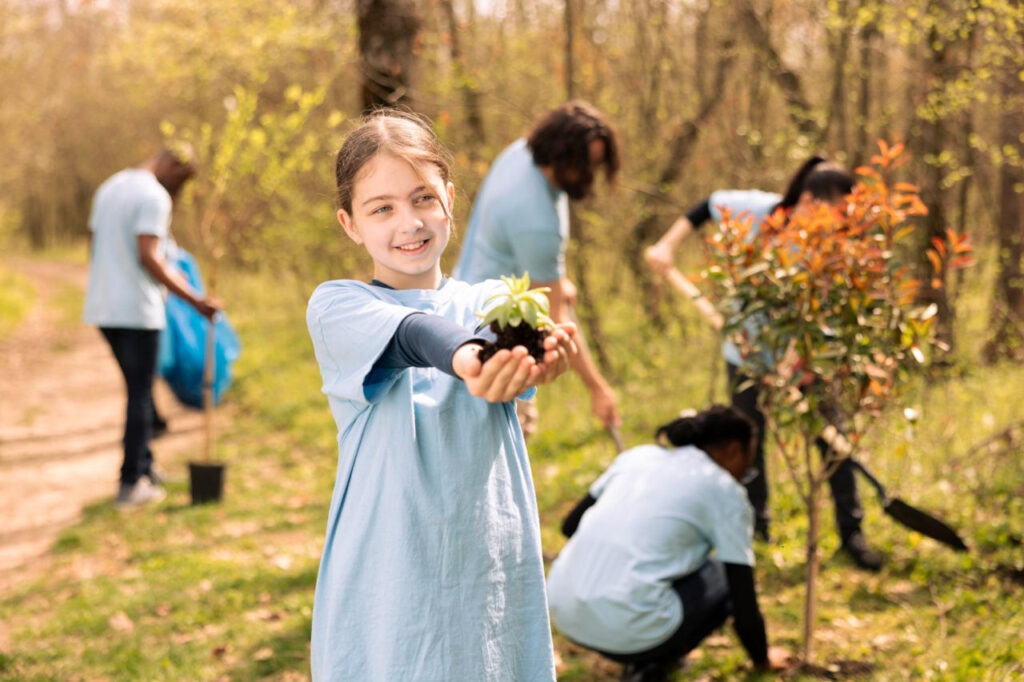
Why do we continue to teach concepts such as living organisms, soil, and climate separately, even though ecological crises reveal their interdependence? This disconnect stems in part from a structure of knowledge inherited from an analytical tradition and a logic of didactic transposition, which aims to isolate and stabilize phenomena to make their teaching possible, at the risk of diminishing their relational dynamics.
The limitations of education about living things are therefore not solely a matter of pedagogical choices: they also stem from a conception of living things that remains largely fragmented—one in which living things are understood as stable entities connected to one another, rather than as a fabric of dynamic, constitutive relationships.
An ecological crisis… but also a crisis of knowledge
The onset of the Anthropocene marks a turning point: human activities are now altering the planet’s fundamental balances.
Building on the work of Vladimir Vernadsky, this transformation can be understood as human activities exerting pressure on Earth’s systems. But this crisis is not merely environmental; it is also a crisis of knowledge. The ways in which we acquire knowledge shape our understanding of the world, guide our actions, and thus contribute to contemporary ecological transformations.
From this perspective, philosopher Bruno Latour emphasizes the need to rethink the conditions of habitability in a terrestrial world that has become unstable, while Boaventura de Sousa Santos calls for moving beyond the very idea of a single world to conceive of a multiverse based on the recognition of the plurality of legitimate forms of knowledge and worlds of knowledge, within the framework of Southern epistemologies.
Yet schools remain largely structured around knowledge designed for a stable and predictable world—a world that is no longer ours. They thus perpetuate a conception of knowledge as a way of organizing reality, at the expense of attention to the instability, transformations, and interdependencies that characterize living systems today.
A school out of step with contemporary challenges
Social expectations have changed profoundly. In the face of environmental crises, citizens—and students in particular—are seeking meaning, guidance, and the ability to take action. Yet academic knowledge often seems disconnected from these issues.
Biology education remains largely structured around a mechanistic approach based on the principle of breaking down subjects of study to facilitate their understanding. For a long time, this approach has served as a powerful tool for understanding the biological world. However, it involves a process of stabilizing knowledge: in order to be taught, phenomena are isolated, simplified, and broken down into distinct components to make them intelligible.
This act of reduction is not problematic in and of itself; it becomes problematic when it tends to obscure the dynamic relationships that constitute living systems. In light of contemporary ecological challenges, this limitation becomes particularly clear. Environmental phenomena cannot be reduced to isolated entities: they are part of complex systems composed of interactions among species, environments, and multiple timeframes.
This discrepancy, therefore, does not merely reflect a lag in school curriculum content, but rather a deeper tension between two ways of thinking about life.
Life Sciences: A Field Undergoing Radical Change
The issue at hand is part of a broader context of profound transformations in the life sciences and Earth sciences. In the context of the Anthropocene, these disciplines have gradually shifted their perspective: living organisms are no longer viewed merely as a collection of isolated entities, but as a network of dynamic interdependencies embedded in complex, multiscale ecosystems.
This development is not merely an expansion of knowledge, but a genuine shift in the framework of thought. The life sciences now place interactions, feedback loops, and emergent processes at the center of their focus, making it more difficult to draw a strict distinction between organisms, environments, and temporalities. They are thus part of an ecological way of thinking that is attentive to breaks and discontinuities.
From the work of Jacob von Uexküll, who demonstrated that every organism constructs its own world (its “Umwelt”), to that of Marc-André Selosse on symbiosis, living beings are increasingly viewed as a web of relationships. From a complementary perspective, Vinciane Despret’s research also helps shift our perspective by showing that the relationships between humans and non-humans contribute to the very construction of living worlds.
These developments point to a profound reconfiguration of the life and environmental sciences, which are now relational, situated, action-oriented, and shaped by political issues. We are no longer dealing with a primarily descriptive science: it is a science committed to understanding and supporting concrete transformations in institutions, public policies, and behaviors.
From this perspective, the production of knowledge itself becomes the subject of critical reflection, questioning the conditions under which it is produced, its effects, and the frameworks through which it is legitimized. This gives rise to a growing hybridization between science and society, in which scientific data intersects with social issues and conflicts among stakeholders—as illustrated by energy issues, which lie at the intersection of technical, political, and social justice dimensions.
Yet this relational and interactionist approach to living organisms remains largely absent from classrooms, where curricula still favor analytical approaches focused on objects rather than systems.
Greening Knowledge: Learning to Think About Relationships
Given this reality, a transformation is needed: making knowledge more environmentally conscious. This involves incorporating a systemic and complex understanding of living systems into the curriculum. Understanding an ecosystem is not just a matter of identifying its components, but of grasping the relationships that structure them.
In practical terms, this means working with systems rather than isolated elements, linking the different scales—from the micro to the global—and incorporating uncertainty as well as the dynamics specific to the phenomena under study.
Decolonizing Knowledge: Recognizing Its Plurality
But this transformation cannot be solely scientific; it is also political. Decolonizing knowledge does not mean rejecting science, but rather re-situating it within a dialogue with other forms of knowledge. It means recognizing that all knowledge is situated and produced within social, cultural, and historical contexts.
Boaventura Sousa Santos’s work thus shows that modern science has long imposed a hierarchy of knowledge, relegating other forms of knowledge—local, indigenous, or experiential—to obscurity. Yet understanding living things requires, precisely, recognizing this plurality of ways of knowing.
A Relevant Curriculum for an Uncertain World
In a world marked by uncertainty, a relevant curriculum can no longer be reduced to a simple list of facts. It must be designed based on three complementary forms of relevance.
The first is social relevance: it involves linking knowledge to contemporary issues and the search for meaning. This requires enriching that knowledge through controversies, public debates, and real-world situations involving conflicts of interest among different stakeholders, in order to educate students who are capable of understanding the world and taking action within it.
The second is scientific and ecological relevance: it involves acknowledging the complexity of living systems rather than artificially simplifying them. This requires the development of interdisciplinary approaches, the incorporation of uncertainty, and the adoption of systems thinking.
The third is political relevance: it is based on the recognition of the plurality of knowledge and on the demand for environmental justice. From this perspective, science education becomes a matter of democracy, closely linked to citizens’ ability to participate in collective decision-making.
Faouzia Kalali, Associate Professor, HDR, Science Education, University of Rouen Normandy and Jean-Marc Lange, University Professor, Education for Social Responsibility, University of Montpellier
This article is republished from The Conversation under a Creative Commons license. Readthe original article.