What are the main responsibilities of a medical examiner during mass disasters?
In regions around Kyiv, such as Bucha and Mariupol in particular, the recent discovery of mass graves has sparked horror. Ukrainian authorities have reported that hundreds of civilians were massacred by the Russian military, a claim the Kremlin denies.
Laurent Martrille, University of Montpellier
Just Click’s With A Camera – Flickr
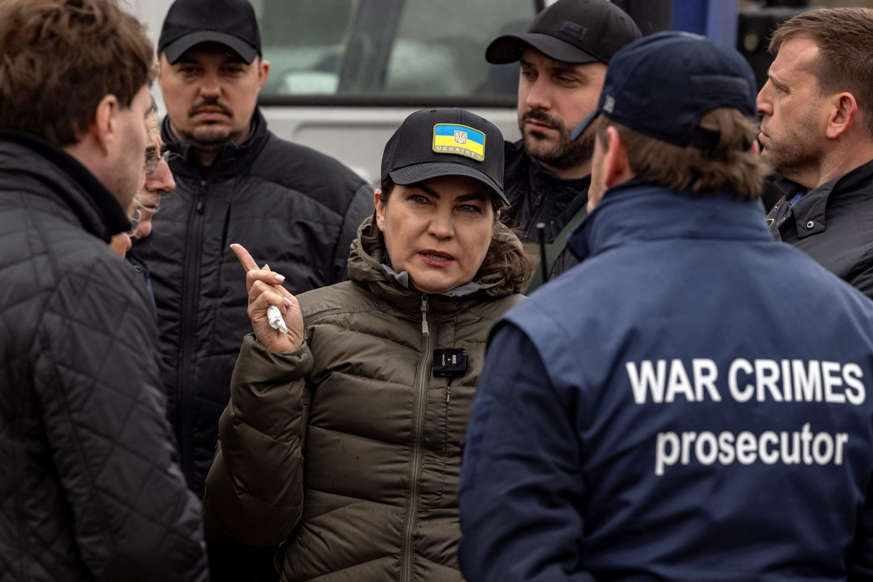
More than 7,000 investigations have been launched over the past two months by Ukraine’s Prosecutor General, Iryna Venediktova, and many countries (including France) have sent teams of experts to assist.
In general, what roles do forensic pathologists play in situations involving mass fatalities? And how does international collaboration work? An overview of the procedures typically implemented by Laurent Martrille, a forensic pathologist, associate professor at the University of Montpellier, and member of the French Society of Forensic Medicine and Medical Expertise (SFMLEM) and the Montpellier Team for Criminal Law and Forensic Sciences (EDPFM). He is also a reserve physician at the National Gendarmerie’s Institute for Criminal Research (IRCGN) and has previously been commissioned by the International Criminal Court.
The Conversation-France: What are the main roles of a medical examiner at the scene of a mass fatality?
Laurent Martrille: A medical examiner has two roles: identifying victims and determining the causes and circumstances of death.
However, in this context, identifying the victims is the primary task in which the medical examiner is involved. Every country has specialized teams for this purpose.
In France, the UNIVC (National Unit for the Identification of Disaster Victims) is in charge; it itself consists of two subunits,the UGIVC (Gendarmerie) and the UPIVC (Police). Each unit is composed of police officers or gendarmes (including specialists in DNA, fingerprints, etc.), medical examiners, and forensic dentists.
The UGIVC is part of the National Gendarmerie’s Criminal Research Institute (IRCGN) and is capable of operating anywhere in France; it can also be deployed internationally (a team was dispatched to the Lviv region, editor’s note]). It has the necessary equipment to conduct operations remotely—including radio communications, DNA analysis, autopsies, etc.
The second role—investigating the causes and circumstances of death—is not routine: the relevant authorities may or may not assign this task. After the December 26, 2004, tsunami in Thailand, for example, the sole task was identification. The situation may differ when a third party is potentially involved, whether in an accident, a terrorist attack, or a war.
TCF: When there are many deceased individuals to identify and the specialized teams on site come from different countries, how do they work together?
L.M.: There is no room for improvisation (even though every disaster is different and requires adjustments). All procedures were strengthened and standardized after the 2004 tsunami, during which more than 5,000 bodies had to be identified. This massive modern-day disaster helped establish international standards.
Work is now carried out according to standardized procedures established by Interpol and accessible to all: the so-called “Disaster Victim Identification” (DVI) procedures. This allows teams responding to large-scale disasters to share protocols and results.
With regard to identification, these international standards are based on three so-called primary identifiers, which must be strictly adhered to. A body can only be identified if one of these has been used: fingerprints, DNA, or dental records.
To enable identification, two types of data must be collected so they can then be compared:
- Postmortem data, collected at the scene and from the body by medical examiners, dentists, and sometimes anthropologists and fingerprint experts.
- Ante-mortem data, obtained from families or, where applicable, from the authorities of another country.
Interpol provides post-mortem and ante-mortem forms to be filled out, which are extremely detailed and use a very rigorous coding system to facilitate data comparison. Cross-checking is done using software, but ultimately, an identification commission—comprising judicial and local authorities from the countries involved, forensic pathologists, dentists, investigators, and others—reviews all the information before making a final determination.
In such circumstances, there are two main principles to follow: the protocol and nothing but the protocol… and adapting to the situation at hand, because every mission has its own unique characteristics, which often vary greatly from one situation to another. When you are deployed in response to a tsunami or an airplane crash, the circumstances are very different.
TCF: At what point does the medical examiner get involved?
L.M.: In theory, the medical examiner can be involved at every stage of the process. However, and as a general rule—except in special cases—he or she does not participate in what we call the recovery of bodies or, depending on the situation, their exhumation—there are specialized teams for that, although a medical examiner may accompany them. Our presence on site may be beneficial when there are very few bodies.
When there are a very large number of deaths, the added value of our on-site intervention is limited. Moreover, even though identification teams can be mobilized quickly, out of respect for the deceased, it is not possible to leave bodies on site—in the streets, for example—before the medical examiners arrive. There is then an initial “collection,” which, incidentally, is carried out by local authorities without using Interpol’s coding system.
That had been the case with the tsunami: the bodies were initially numbered according to Thai standards, and then, at a later stage, they were renumbered to facilitate international cooperation.
The specialized teams in charge of this stage follow Interpol procedures: with very precise numbering and a specific coding system. Each body or body part is placed in a separate bag and identified… Everything is planned and organized, and then the bodies are transferred to the morgues where we carry out our work.
Another point: In some cases, it may be necessary for bomb disposal experts or specialists trained in CBRN (chemical, biological, radiological, and nuclear) risks to secure the area. They verify that there is no risk—or that the risk has been eliminated—or decontaminate the scene if necessary. The bodies themselves may have been contaminated (chemically, biologically) or even booby-trapped.
So there is a whole process of verification that takes place beforehand to ensure that doctors and investigators are not exposed to additional threats. It’s fairly rare, but it’s a very significant requirement.
TCF: All of these preliminary steps will delay the point at which the forensic teams can begin their work. Is there a risk of losing information?
L.M.: Obviously, it is not possible to leave bodies exposed to the open air for extended periods. That is why, depending on the circumstances, initial exhumations are carried out to ensure (very) limited preservation. The ideal solution, of course, is to be able to place the bodies in refrigerated storage units.
If the remains are scattered over a fairly large area, they cannot be left on site for days while arrangements are made and a medical examiner can recover the bodies in situ… It’s a matter of common sense and showing basic respect for the deceased.
The recovery of bodies, even when carried out with great precision, will inevitably interfere with the subsequent investigation. However, following international protocols allows us to begin working with the evidence collected at the scene.
The most important thing is to implement solutions for storing the bodies at a low temperature. The standard storage temperature is 4 °C. In Thailand, there were dozens and dozens of refrigerated containers.
TCF: How is the process of identifying bodies that arrive at the morgue carried out?
L.M.: Depending on the circumstances (number of bodies, state of preservation, etc.) and the personnel available, when a body arrives, we usually perform X-rays—and now CT scans (when possible). This allows us to retain accurate, digitized data once the body has been returned to the family.
Next, investigators establish two lines of inquiry:
- The “X is believed to be So-and-so” scenario: for example, when a body is found carrying identification. This helps speed up the process a bit, since there are clues that can guide the investigation. But be careful—there’s no certainty: the person might be carrying someone else’s identification…
- The “X” category: when there is no information available to determine the identity.
The first step in this process is usually fingerprinting. Next, we begin by examining and documenting the clothing before undressing the body; if necessary, samples (such as hydrocarbons, etc.) may be collected at this stage by specialized technicians, at our recommendation.
Everything recovered from a body, as well as items collected at the scene, is sealed under conditions that will allow for their potential analysis at a later date. Each sample is sealed and packaged in a specific manner.
Once undressed, the body undergoes an external examination to identify any features that may aid in its identification or help establish connections: measurements, tattoos, clothing, injuries, and scars, etc.
There may be situations in which bodies are severely decomposed, or even reduced to nothing more than skeletal remains; in such cases, forensic anthropologists are called in. Obviously, much data is lost—such as fingerprints—but the bones retain information about age, sex, height, biogeographic origins, and, where applicable, signs of trauma.
At the end of this stage, a DNA sample is collected. This may be taken from the site of the injury if the body is fragmented, or by making an incision in a muscle. Dentists are the last to be involved.
It is also possible to conduct so-called contact DNA testing on personal effects, clothing, and the like. However, if the bodies have been piled into mass graves, for example, or handled carelessly during recovery, the risk of contamination from another body is very high: the value of contact DNA—which would allow for the identification of individuals who touched or harmed the victim while the victim was alive—is then compromised. As a result, the value of such surface samples is limited.
At the end of this process, a quality control check is conducted to ensure that nothing has been overlooked. Effective coordination allows for swift action: in France, the 86 victims of the July 14, 2016, attack in Nice were identified within four and a half days.
The elements needed for identification are therefore provided jointly by the dentist, the medical examiner, and even the anthropologist. Note that the medical examiner does not perform the identification himself: like the anthropologist, he provides clues to aid in identification, but he also collects DNA samples for later analysis. The dentist, on the other hand, provides the information that allows the identification committee to make a direct identification. However, the only person who can determine the cause of death, if requested, is the medical examiner.
TCF: What happens when a medical examiner is assigned to determine the cause of death?
L.M.: An autopsy to determine the cause of death is performed only at the request of the authorities, as this is not part of UNIVC’s usual responsibilities.
As noted earlier, any external items removed from the body are turned over to investigators: clothing, as well as any possible ties and personal effects, etc. Samples may be taken from these items for further analysis.
In addition, we look for any signs of injury or violence on the skin, as well as through an autopsy of the body. Suppose the person had been subjected to torture or violence; in that case, a description of any injuries would be essential to understanding the circumstances of the death or the events leading up to it.
When death has occurred recently and the body has been preserved under optimal conditions, the marks are still perfectly visible for examination, and it is possible to provide fairly precise information.
The more time passes, the more complicated it becomes. Decomposition will hinder external examinations, yet analysis of the skin is crucial because it provides essential information about the types of injuries (ballistic, blunt force trauma, marks from restraints, etc.).
However, even when the bodies have decomposed to such an extent that only bones remain, evidence can still be found. Any marks on the bone, if they exist, are “frozen” in time: the bone retains the memory of the injuries and how they occurred. However, determining the cause of death becomes much more complicated—and is often impossible… For example, one might observe a severe head injury—fatal in and of itself—but if the cause of death was secondary to a bullet that passed through the body without marking the bones, there will be no visible evidence (since the head injury observed could have been inflicted after death).
It is also important to remember that we do not work alone: experts from forensic science laboratories (in ballistics, toxicology, DNA analysis, entomology—determining the time of death based on scavenging insects—fire scene analysis, soil analysis, etc.) can all be called upon to assist.
Every step of the procedure is documented through photographs and, in some cases, video recordings. This extreme thoroughness is essential to facilitate discussions among experts and minimize any possibility of future disputes.
Once the identification and/or autopsy procedures are complete, the bodies are prepared (to the extent possible) so they can be presented to the families, who have the right, under all circumstances, to view them before burial. Families receive support during this very difficult time. The goal is to return the deceased to their loved ones as quickly as possible once their identity has been confirmed.
Laurent Martrille, Associate Professor at the University of Montpellier, Hospital Physician at the Montpellier University Hospital (CHU), EDPFM, University of Montpellier
This article is republished from The Conversation under a Creative Commons license. Readthe original article.