[LUM#15] Major-Key Research s
In Africa, 45% of the land is considered “degraded.” A process of desertification, resulting human activity and exacerbated by climate change, is undermining the future of the continent and threatens the food security of its people.
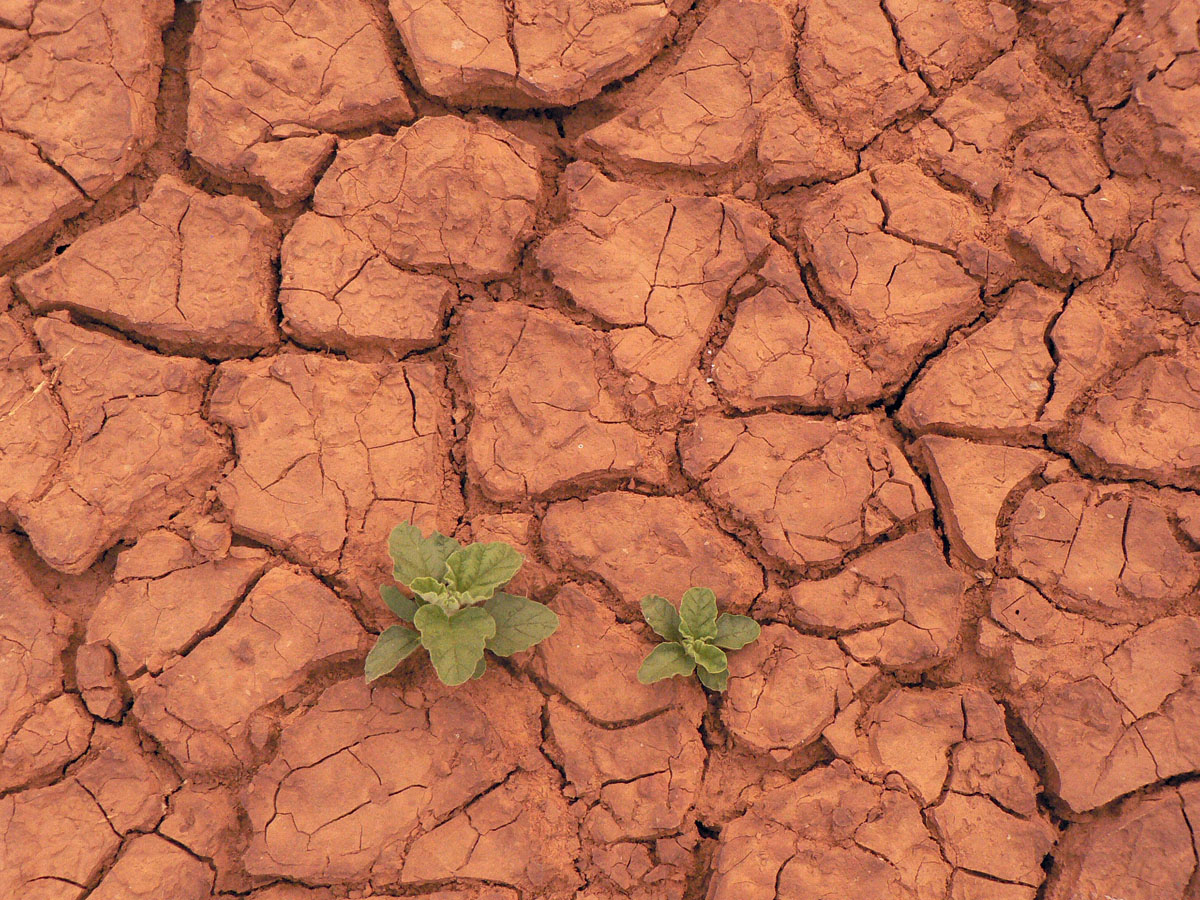
“Desertification is not at all the advance of the desert,” insists Jean-Luc Chotte, a soil specialist at the Eco&Sols* laboratory. “It is a general process of soil degradation that leads to a loss of soil productivity as well as a loss of biodiversity and ecosystem services. ” While degraded land can be found everywhere, the term ‘desertification’ is used only when this phenomenon affects arid, semi-arid, or dry sub-humid areas. It is estimated that 25% of the world’s land is degraded. That figure rises to 45% in Africa.
From Soil to Climate
How can we explain why Africa is so severely affected? “Generally, this results from overexploitation or misuse of the soil,” explains the researcher, who is also chair of the French Scientific Committee on Desertification. This overexploitation is not measured in quintals of production but rather in the ratio of production to the soil’s natural potential. Indeed, when land is cultivated, some of its chemical components (nitrogen, potassium, etc.) are extracted from the soil by plants, leading to a decline in fertility that is all the more severe the more fragile the soil is. Another harmful effect of this misuse of soil is the release of carbon stored in the soil , “which is then released into the atmosphere, thereby contributing to global warming,” emphasizes Jean-Luc Chotte.
150 million people affected in the Sahel
In the Sahel alone, 150 million people are affected by desertification, “and we know that the population will grow, and with it, food needs.” This immense challenge prompted the United Nations, as early as 1994, to launch the Convention to Combat Desertification (UNCCD). Seven years later, in 2001, the Great Green Wall project was launched with the goal of restoring, by 2030, more than 100 million hectares of degraded land between Dakar and Djibouti (watch the Global Days conference). “This wall should be viewed as a vast mosaic of landscapes in which practices are adapted to the different environmental, climatic, and socioeconomic conditions of Burkina Faso, Niger, and Chad.”
Toward an Integrated Approach
In northern Senegal, significant efforts have been made to combine annual crops with tree plantations adapted to local drought conditions. Pastoralism is also encouraged there because of its beneficial effects on the soil. “The idea is to find a tree that, by producing gum arabic, for example, will provide farmers with additional income while helping to restore degraded land, ” continues Jean-Luc Chotte. Documenting best agroecological practices and mapping ecosystem health allows us to prioritize areas “where intervention will have the greatest impact on communities and biodiversity, since we cannot address all degraded land.” Given the immensity of the task, this is a way to keep our feet… on the ground.
Check out theUM podcasts, now available on your favorite platform (Spotify, Deezer, Apple Podcasts, Amazon Music, etc.).
*Eco & Soils (IRD – CIRAD – INRAE – Institut Agro)